Get Full Government Meeting Transcripts, Videos, & Alerts Forever!
Get email alerts on the Budget Process Timetable topic
No spam. Unsubscribe anytime.
Palm Bay finance team outlines FY2026 timetable, earlier planning and new review process
Summary
City finance staff presented a reorganized FY2026 budget process at a workshop, urging earlier council engagement, explaining statutory TRIM deadlines and previewing an ERP-driven change that will start FY2027 planning in January.
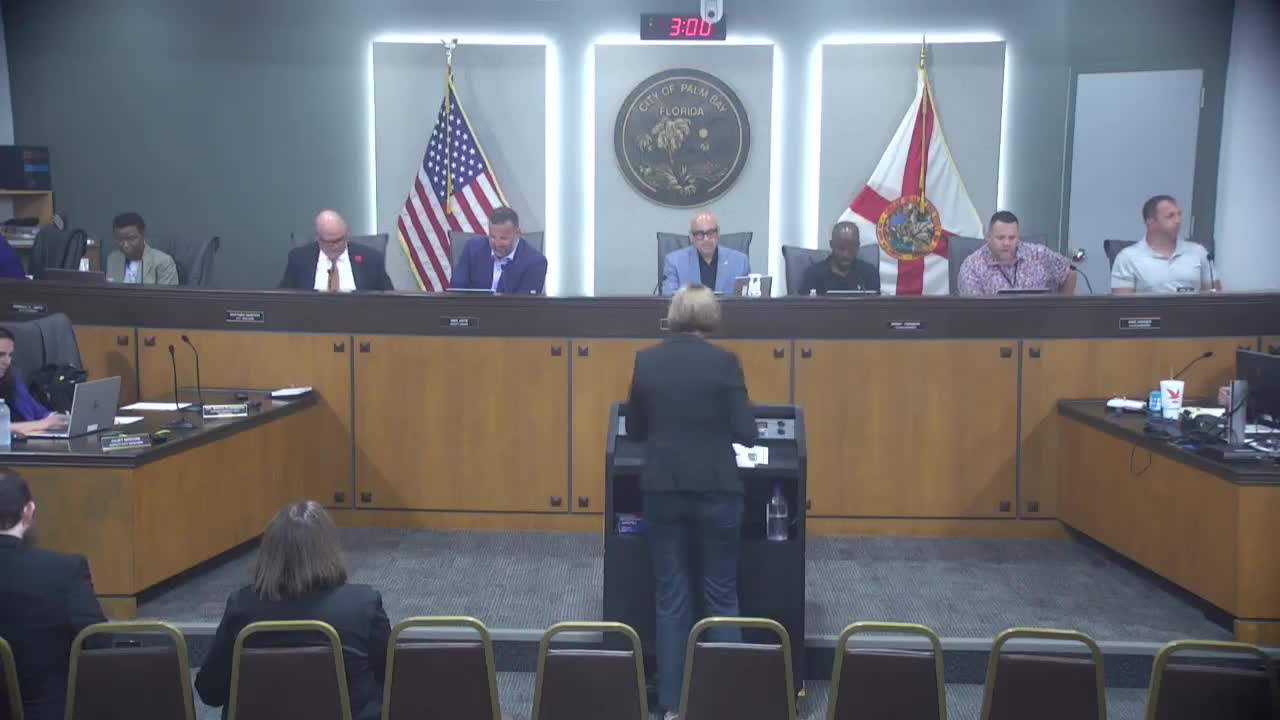
City of Palm Bay finance staff presented a reorganized timetable and process for the fiscal year 2026 budget at a council workshop, asking council members for direction on priorities and warning that statutory deadlines will compress the formal adoption schedule.
At the June workshop Assistant Finance Director Angelica Collins introduced the team and described the meeting as “more of a strategic planning session,” saying staff want council guidance before the departments finalize requests. “We will talk a little bit about the council priorities… and specifically fiscal year 2026 budget data and capital data,” Collins said.
The presentation explained why the city is moving to earlier engagement. Jessica Hinchman, budget program administrator, said the city is shifting from a city-manager-driven, siloed process to one that begins in January for FY2027 so council goals can shape department requests. Under the new approach, departments will be limited to submitting requests that map to council goals in the new ERP system: “If they don’t check the box or they don’t correspond to a goal, it’s not a request that is gonna be coming through,” Hinchman said.
Staff gave the schedule council members will need to follow to meet state requirements. The finance team said a heavy data workshop is scheduled for July 8; the property appraiser’s final values are due July 1; certification of taxable value and a proposed millage will be on the July 17 regular meeting; staff aim to publish a proposed budget by July 31; optional additional workshops are available in August; and two statutorily required public hearings under Florida’s Truth in Millage (TRIM) process will be held in September. Collins emphasized the timeline’s legal sensitivity: “If we are out of compliance… they could hold any type of revenue from us in the upcoming year.”
Staffers also told council members the FY2026 presentation will show higher multi‑year capital numbers than past budgets because the new format will display previously approved multi‑year projects and their future-year impacts. Shane Bird, analytics lead, summarized the volume of departmental requests and urged council focus on recurring priority items so staff can recommend sustainable funding approaches. Sean Spillers, capital and asset program administrator, said staff plan to maintain a five-year capital plan and to include CPI-based forecasting for future equipment and project costs.
Council members asked clarifying questions about notification and publication requirements; Attorney’s Office staff said they will review whether other local outlets meet statutory notice requirements. City Manager Mr. Morton and the finance team asked council for general guidance on prioritizing infrastructure, public safety and other council-identified top needs ahead of the July workshop.
The workshop closed with staff saying the July 8 session will present more complete FY2026 numbers and rate options, including a demonstration of what different proposed millage scenarios would look like once the county’s certified values are in.