Get Full Government Meeting Transcripts, Videos, & Alerts Forever!
Get email alerts on the Facility Renovation topic
No spam. Unsubscribe anytime.
Erie officials press for urgent roof work at Miller Brothers building as funding debate centers on water reserve vs. ARP interest
Summary
At a study session, Erie officials described a collapsed section of the Miller Brothers roof and structural problems at the Marsh Street facility, and discussed seeking roughly $1 million now for emergency roofing while weighing whether to use the water reserve fund or ARP interest to pay for it.
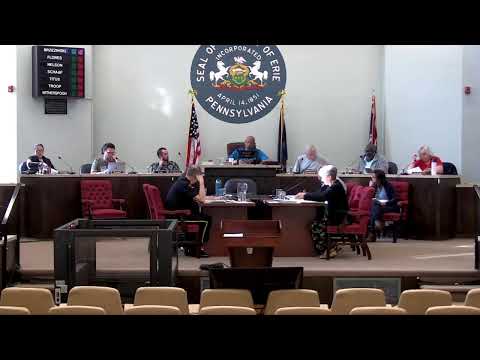
Erie town officials discussed an urgent request to roof part of the recently acquired Miller Brothers building and debated which municipal fund should pay for the work during a study session.
The council and administration said a section of the Miller Brothers roof collapsed over the winter and must be closed before the next winter; at the same time, engineering monitoring shows increasing cracking at the town's Marsh Street facility, where fire mechanics currently work. Administration described the roofing work as the first step of phase 1 of a multi-phase $30,000,000 (approx.) project to relocate and consolidate public-safety maintenance and emergency operations into Miller Brothers.
Why it matters: council members emphasized public-safety risk if the Marsh Street facility continues in its present condition and said getting a new roof on Miller Brothers quickly is central to allowing phased moves and preventing further weather damage to the newly purchased building.
Administration described the project plan and funding options. The town purchased Miller Brothers in late 2022 for just under $2.8 million, and officials said the spatial and design analysis identified three phases: phase 1 (space for the fire mechanics and the immediate roof work), phase 2 (an emergency operations center), and phase 3 (other consolidated city services). Administration said a design firm estimates phase 1 will cost about $9.5 million, and earlier estimates put the entire project near $30 million.
Officials said the immediate request under discussion is roughly $1 million to put a new roof on the most at-risk portion so that further work and bidding for the rest of phase 1 can proceed this fall. Administration said asbestos and possible lead paint have been identified in limited areas and will require additional testing; that remediation would be an extra cost beyond the immediate roofing request.
On alternatives to cover the urgent roofing work, council members and staff debated whether to withdraw from the town's water reserve fund or to use available ARP interest and other sources. Administration said about $1,200,000 exists in ARP interest and recommended using that balance to cover the immediate roofing need if possible. Several council members and one speaker who described the history and rules of the water reserve fund argued that the reserve is a purpose-built sinking fund governed by ordinances and that withdrawing money would require a supermajority vote; they cautioned the reserve has grown by investment and was intended for capital over many years.
Officials described other financing options they are pursuing for later phases or to reduce the town share: federal Department of Homeland Security grants for the emergency operations center (the administration said an EOC request advanced close to final stage last year but congressional appropriations were later reallocated), reapplying for congressional appropriations, HUD Section 108 financing, 1% municipal loans, and low-interest loans administered through the state fire commissioner. Administration also said it had submitted grant applications for approximately $1 million toward phase 1.
On Marsh Street, staff said cracks have been actively monitored and that the next short-term step is to install steel plates on the floor to spread truck loads until the department can vacate the building; staff said engineers will continue monthly (or more frequent) monitoring and that the plates are a temporary mitigation to reduce point loads from larger modern fire apparatus.
Council members asked for and were told that environmental testing documents and the environmental review recently completed for Miller Brothers are available in the meeting packet and could be distributed digitally. Administration said the architects (Roth Mars) and consultants (Bostwick was named for prior studies) are actively working on design and bid timing, and that the administration would like to go out to bid for the roof in late summer so installation can occur before winter.
No formal vote was recorded on the funding request during the study session. Council members discussed placing the funding item on the next meeting agenda and noted that the water reserve fund requires a supermajority to withdraw; several members voiced preference for using ARP interest or other available funds rather than the water reserve if a supermajority cannot be secured. The session closed with staff and council agreeing to carry the item forward for formal action at an upcoming meeting.
The discussion repeated that the project addresses public-safety and asset-protection priorities, but that additional capital needs across departments and uncertain grant outcomes make choosing a funding source a policy decision the council must weigh in a formal vote.
Ending: Administration asked whether the council preferred to proceed with agenda placement for a vote at the next meeting; that procedural question was left for the following meeting, and no appropriation was approved at the study session.