Get Full Government Meeting Transcripts, Videos, & Alerts Forever!
Get email alerts on the Ordinance Amendments topic
No spam. Unsubscribe anytime.
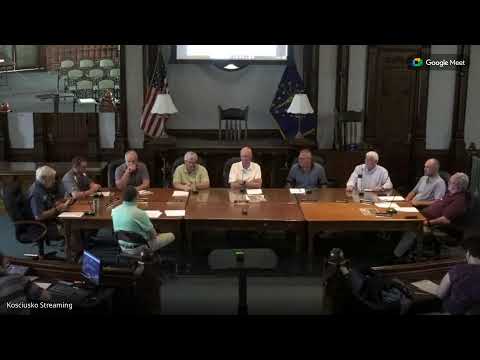
Area plan commission begins phased review of zoning ordinance changes, debates CAFOs, venues, shooting ranges, containers and permits
Summary
Commissioners reviewed the first “bite” of proposed zoning ordinance cleanups and debated whether to list confined feeding operations as permitted uses, add wedding venues, address shooting ranges, clarify industrial/ag product processing, and change rules for cargo containers, occupancy permits and fence permits.
Kosciusko County planning staff presented the first tranche of proposed zoning ordinance amendments and led a wide‑ranging discussion about how the county should classify several uses, including confined feeding operations, wedding venues, shooting ranges, industrial processing, battery manufacturers, wineries and cargo containers.
Staff said the package focuses on “low hanging fruit” — clarifications and additions to Table A of permitted and exception uses across zoning districts. Key items discussed included:
- Confined feeding operations (CFO/CAFOs): Staff proposed adding combined/confined feeding operations and equine stables and training to the agricultural uses list. Commissioners and members of the public discussed whether listing confined feeding operations as a permitted agricultural use reduces local notice and hearing opportunities. Staff said the Indiana Department of Environmental Management (IDEM) and the state permitting process already require public notice for large animal feeding operations and that counties historically have treated them as agricultural uses; a board member and other speakers urged greater transparency, suggesting two separate exception categories for smaller confined feeding operations (CFOs) and larger confined animal feeding operations (CAFOs) to acknowledge differing environmental impacts and setbacks.
- Wedding and commercial venues: The draft would add “commercial venue” (including weddings) to the table and define it to exclude state‑defined mass gatherings (the state definition cited in discussion was 5,000 or more people), allowing the county to treat wedding venues as a specific use and apply standards for parking, lighting and noise while distinguishing them from very large mass gathering events.
- Shooting ranges: Staff proposed adding public and private shooting ranges as identified uses rather than leaving them only as legal nonconforming operations. Commissioners discussed locating new ranges in appropriate districts, and several members recommended moving certain shooting‑range entries into exception uses so the board can review them in context of nearby residences and safety concerns.
- Industrial uses and agricultural product processing: The draft adds agricultural product processing as a permitted use in certain industrial districts (to reflect facilities such as regional co‑ops). Commissioners debated whether some forms of processing — for example rendering facilities — should be exception uses requiring additional review because of odor, waste handling and other impacts.
- Emerging industries (battery production, carbon sequestration): Commissioners flagged battery manufacturing and carbon‑sequestration facilities as uses that may require special oversight (fire safety, hazardous materials). Staff suggested treating these as exception uses to allow site‑specific review and to give fire and other emergency services a chance to weigh in.
- Wineries/distilleries: Commissioners discussed whether small on‑farm wineries or distilleries should be added as exception uses because of possible traffic, noise and special event activity; an example was cited where a winery previously operated under a home‑based business approval.
- Cargo containers and prefabricated buildings: The draft refines rules for permanent and temporary cargo containers, proposes screening and color requirements for non‑industrial districts and suggested relaxing color requirements in industrial districts or when containers are fully screened. Commissioners discussed how converted containers used as residences or barns would be regulated (treated as a residence or accessory structure, not as cargo storage) and added that temporary containers placed for construction should be given a short grace period to obtain a permit.
- Occupancy permits and fences: Staff recommended clarifying occupancy‑permit practices — occupancy certificates are issued on request and staff checks setbacks and site compliance — and removing temporary occupancy permits that staff said are not used. Commissioners debated whether to require permits for fences (to help prevent fences in utility easements or across drainage tiles) and whether exemptions should apply for agricultural fences; supporters said a permit could prevent future disputes and noncompliant installations, while opponents raised concerns about enforcement and unintended outcomes such as narrow maintenance strips between adjacent fences.
Staff said this was the first of several monthly “small bites” of ordinance changes; commissioners asked staff to revise language, add state definitions by reference where helpful (for example mass gathering), and return with updated text. The commission did not adopt amendments at the meeting but directed staff to prepare revised language for future hearings.