Get Full Government Meeting Transcripts, Videos, & Alerts Forever!
Get email alerts on the Home Inspection Liability topic
No spam. Unsubscribe anytime.
Work group examines limits on home‑inspector liability, industry and insurers weigh tradeoffs
Summary
A Virginia work group discussed proposals to restrict home inspectors from limiting liability after inspections, with trial lawyers, insurers and inspectors offering competing views on consumer protection, insurance availability and regulatory fixes.
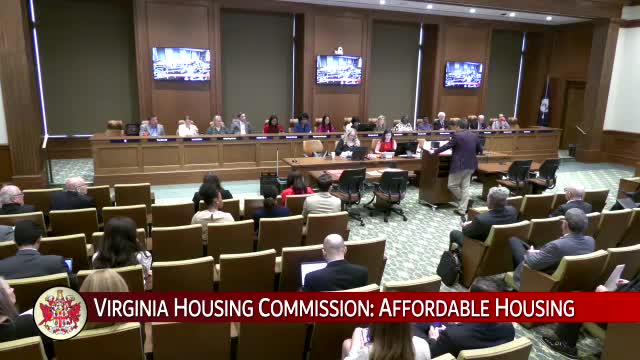
A Virginia legislative work group on housing heard competing views on whether state law should prevent home inspectors from capping their liability, a change supporters say would give homebuyers a practical remedy when inspections miss major defects.
Supporters, led by Senator Scott Serval, told the Affordable Housing Solutions: Landlord, Tenant and Real Estate Law Work Group that caveat emptor and current limits in home‑inspection contracts leave buyers without meaningful relief when major defects surface after closing. "If you have a home inspector who does a really thorough job, finds all the problems, the realtor ain't gonna call him back again because he's gonna ruin his commission," Serval said, arguing the present system disincentivizes thorough inspections.
Why it matters: Panelists said the gap between the apparent thoroughness of many inspection reports and the legal remedies available produces real, expensive harms for buyers. That has led sponsors to propose statutory changes that would remove or raise caps in home‑inspector service contracts and align liability with insurance limits required by licensure rules.
What speakers told the work group - John Altmiller, a civil litigator with decades of real estate experience, described Virginia's legal baseline as caveat emptor and the state Residential Disclosure Act, saying that buyers who obtain an inspection often lose legal leverage unless they can prove fraud or concealment. "The home inspections...create an impression of thoroughness that is in fact really illusory," Altmiller said. - Joe Hudgins of the Independent Insurance Agents of Virginia surveyed national insurance offerings and told the panel there are commercial products that combine general liability and professional liability for inspectors. He said a variety of products exist and noted that increasing exposure (by removing contractual caps) would likely increase premiums, but the market does offer professional‑liability coverage in many states. - Thomas Brown, a veteran home inspector and trainer representing the Virginia Organization of Real Estate Inspectors, urged caution about relying on litigation as the primary fix and recommended looking at licensure and training changes instead. "If we wanna address this issue, I would suggest that we look at the license law, not more litigation," he said.
Details and tradeoffs discussed - Legal baseline: Speakers repeatedly referenced caveat emptor (buyer beware) and the Residential Disclosure Act as limiting sellers' and buyers' remedies absent proof of concealment or fraud. - Contract terms: Present industry practice often uses contracts that limit an inspector's liability to the price of the inspection or a modest multiple; panelists said many contracts are adhesions (non‑negotiable) presented to buyers under time pressure. - Insurance landscape: Panel testimony summarized state variation. According to testimony, 18 states require professional‑liability coverage for inspectors; about 11 require general liability only; roughly 20 states require nothing. Massachusetts was cited as a state that both requires professional liability and limits agreements that restrict liability. - Practical effects: Litigators said buyers often face high litigation costs and limited recovery even when defects are significant; inspectors and insurers warned that removing caps could raise premiums and lead to litigation frequency changes.
Next steps: Work group members did not adopt legislation at the session. Several members asked staff to research statutory models used in other states, the regulatory role of the Department of Professional and Occupational Regulation (DPOR), and insurance product availability to better calibrate any proposed statutory change.
Ending: The work group left the topic open for further study and asked staff to return with comparative law research and additional insurance market information before pursuing specific statutory language.