Get Full Government Meeting Transcripts, Videos, & Alerts Forever!
Get email alerts on the Scams Financial Exploitation topic
No spam. Unsubscribe anytime.
Fairfax ramps up anti‑scam outreach as APS reports $19 million in fiscal 2024 losses
Summary
County and partner agencies described expanded Silver Shield outreach, the multidisciplinary APS Financial Exploitation Task Force and persistent challenges prosecuting largely international scams; officials urged regional coordination and proactive public messaging.
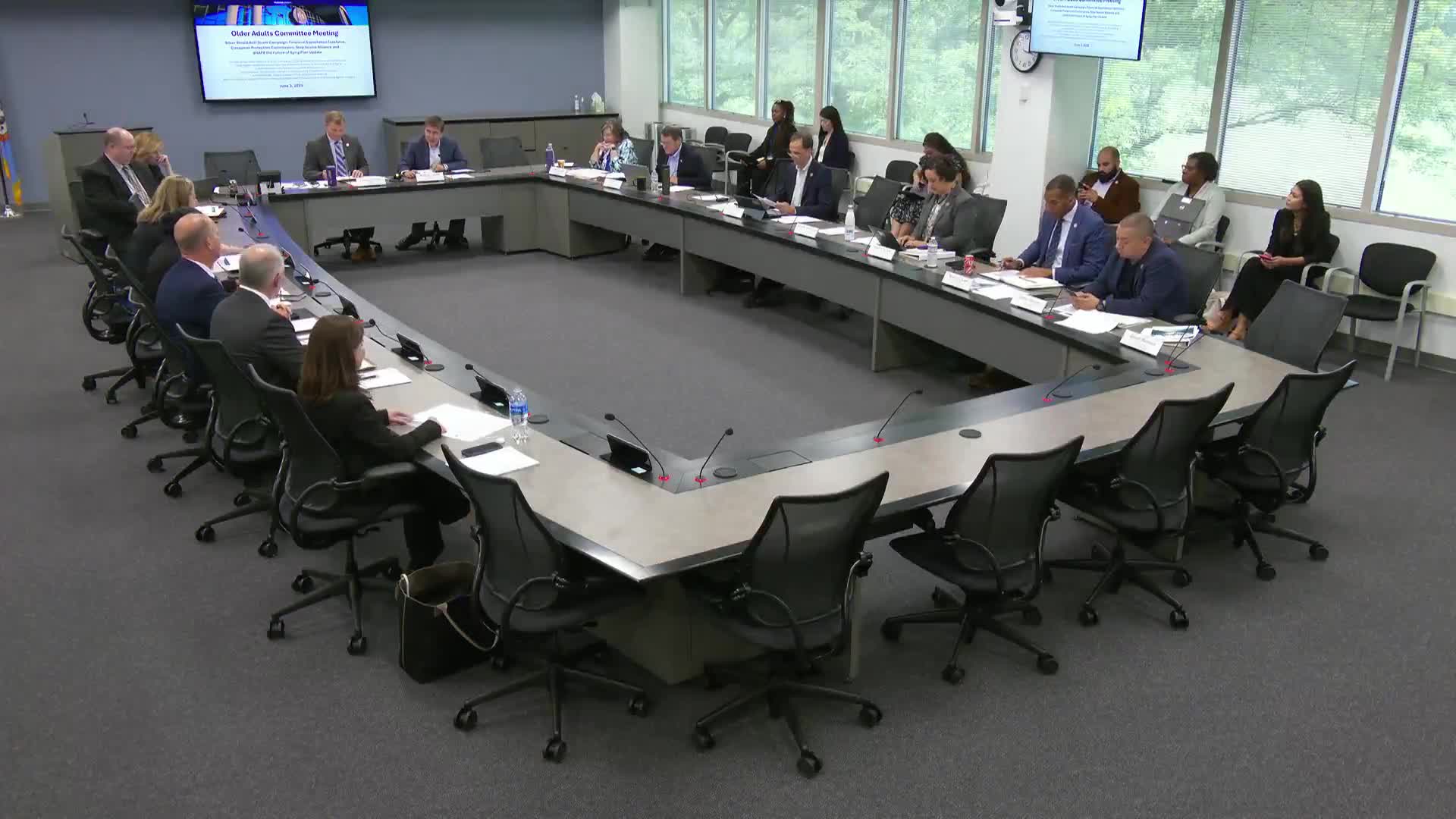
Fairfax County officials and partner organizations on Friday updated the Board of Supervisors' Older Adults Committee on local efforts to prevent and respond to scams targeting older and vulnerable adults, and described limits to law‑enforcement remedies when perpetrators operate overseas.
The presentations, led by Melissa Smarr of Land Development Services and T.V. Nagasi of the Department of Family Services, reviewed the Silver Shield anti‑scam campaign, the county's Financial Exploitation Task Force and outreach work by the Consumer Protection Commission. Supervisor Alcorn opened the meeting by congratulating the Fairfax Area Agency on Aging on receiving a 2025 U.S. Aging Achievement Award for a virtual‑reality project the committee had seen earlier.
Why it matters: Local adult protective services (APS) reports show large dollar losses and limited recovery when scammers move funds out of reach. Fairfax officials said prevention and coordinated communications are the most effective tools available locally because many perpetrators and payment rails are international or quickly become hard to trace.
Melissa Smarr, Code Specialist 3 with Land Development Services and longtime coordinator of the Silver Shield campaign, traced the program to a 2017 Board matter and said the county has held outreach events across senior centers, libraries, community centers, homeowners associations and faith groups since the campaign launched. "we have been doing the Silver Shield anti scam campaign, since the board matter was passed," Smarr said, noting the program launched at Lincolnia Senior Center on Sept. 13, 2017 and that the county has delivered roughly 160 events and reached about 60,000 people in eight years. She said a large ‘‘scam jam’’ event held April 30, 2025 drew 280 participants and 19 vendors from federal, state and county agencies.
T. V. Nagasi, assistant director in the Department of Family Services, described the APS Financial Exploitation Task Force as a multidisciplinary review team that handles the most serious exploitation reports referred by APS. "APS investigations do not replace the work of law enforcement," Nagasi said, and noted that Virginia Code subsection 63.2‑1605 requires APS to report every financial‑exploitation allegation to law enforcement. Nagasi said the task force model includes law enforcement, the Office of the County Attorney, federal partners and consumer‑protection agencies and that the model has recovered roughly 20% of reported losses in cases the task force reviewed.
Nagasi and the county's written slides said APS recorded about $19,000,000 in reported losses in fiscal year 2024 from 159 financial‑exploitation victims who came through APS; task‑force work helped recover about 20% of those losses. The presenters and commissioners cautioned that APS figures reflect only the subset of scams reported to APS and that the full universe of incidents affecting county residents is not known.
Examples cited by Smarr and other panelists included text‑message scams mimicking E‑ZPass and DMV notices, “jury duty” extortion schemes in which victims were pressured to buy cryptocurrency, IRS and Medicare impostor schemes, and romance scams. Smarr described one recent county employee who lost $4,700 in a Bitcoin‑conversion jury scam, and another retired teacher who lost $263,000 over six months in a romance scam.
Captain Richard Cash, assistant commander of the Fairfax County Police Department Financial Crimes Unit, explained prosecution challenges. "The quicker we know about the scam, the better chance we have of catching the money," Cash said. He told supervisors that many operations are run from overseas, that funds often move quickly through intermediaries and cryptocurrency, and that investigations frequently depend on rapid reporting and international cooperation.
Jason Cradiville, chair of the county's Consumer Protection Commission, described a proposal the commission is developing to simplify public messaging: a three‑step prompt adapted from an international campaign — "Pause, Question, Protect" — to give people three concrete actions to take when they suspect a scam. Cradiville said the commission's outreach committee has focused on making short, repeatable guidance rather than long lists of scam types.
Board members pressed for more proactive communications when scams circulate widely. Chairman McKay and several supervisors urged pursuing regional coordination so residents traveling and banking across the Washington region receive a single, recognizable message. McKay said the county lacked a rapid, visible public alert when the recent E‑ZPass/DMV text messages circulated, and urged county staff and partners to use major, high‑profile scams as public‑education opportunities.
Resources and supports listed in the presentations include the Fairfax Area Agency on Aging's Nova Elder Link money‑management program, the Financial Empowerment Center in South County, counseling through the county domestic‑violence program, AARP support groups and federal complaint channels such as the FBI and Federal Trade Commission. Smarr said Silver Shield outreach earlier this year included a notice inserted in the county's personal property tax mailing that reached about 650,000 residents.
What’s next: officials said Silver Shield will move into the Fairfax Area Agency on Aging as of Oct. 1 to provide a permanent home for the campaign and that the Consumer Protection Commission will continue developing short, repeatable messaging. Multiple supervisors said they would seek regional partners through the Metropolitan Washington Council of Governments (COG) and other interjurisdictional bodies to align communications across the DMV.
The presenters stressed that prevention and fast reporting are the most effective local responses while investigations and prosecutions remain constrained by the cross‑border and technologically complex nature of many scams.