Get Full Government Meeting Transcripts, Videos, & Alerts Forever!
Get email alerts on the Housing Strategy Fund Transfer topic
No spam. Unsubscribe anytime.
Committee reviews transfer of $2.5 million to Syracuse Housing Strategies Corporation and plan to expand SURA urban renewal area
Summary
Syracuse committee discussed moving a $2.5 million FY2024–25 budget allocation to the Syracuse Housing Strategies Corporation and adopting a second urban renewal plan so municipal dollars may be used for private-home repairs. Committee members pressed for clearer budget and oversight details; no formal vote was taken.
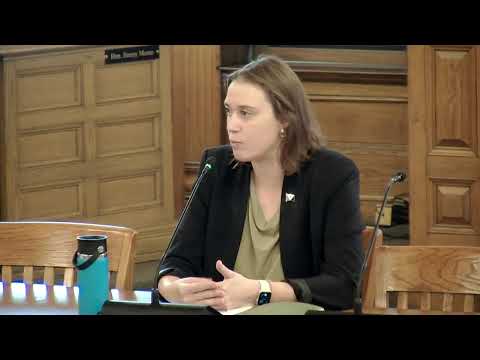
The Neighborhood Preservation Committee discussed authorizing a transfer of $2.5 million from the city's FY2024—25 budget to the Syracuse Housing Strategies Corporation and adopting a second urban renewal plan that would allow the city's funds to be used for improvements to private residences, Michelle, a Neighborhood Business Development staff member, said.
Michelle told the committee the two legislative actions under discussion are (1) adoption of a second urban renewal plan and (2) a funding agreement under which SURA would receive and administer the $2.5 million. She said the second urban renewal plan is needed to comply with New York State legal restrictions that generally limit the use of municipal funds on private homes: adopting the urban renewal plan would provide the legal mechanism for SURA to administer funds for homeowner rehabilitation under an urban development framework.
The discussion centered on how much of the $2.5 million would be available for direct homeowner assistance versus administrative costs. Committee members were told the administration estimates annual administrative needs of roughly $350,000 to $500,000, covering staffing, legal fees, audits and insurance. "The 2.5 million could be used beyond just a calendar year period," Michelle said, describing a multi-year spend-down if needed. She also said the City expects to draw on the $2.5 million at times to bridge costs while awaiting reimbursement from a separate $5 million Empire State Development (ESD) grant, which the city was told would be disbursed in three tranches (two $2 million disbursements and a final $1 million), pending remaining state administrative steps.
Committee members repeatedly asked for a clearer breakdown of how the $2.5 million would be budgeted. Several members said they were not comfortable approving the transfer without more detail on items such as the percentage allotted to administration, the number and term of any new hires and how much would flow directly to homeowners. Michelle said the Housing Strategies Corporation board would ultimately approve an annual operating budget and that a governance committee meeting is scheduled where those budget details will be further discussed.
Committee members also raised governance and sustainability questions. Some expressed concern about creating new permanent city positions funded by the allocation; others suggested the Housing Strategies Corporation could contract existing local organizations that already administer housing programs. Michelle said the plan being proposed envisions some staff capacity added to run programming and to avoid drawing staff time from other city functions, but she described hiring three to four staff as a "best case" scenario rather than an immediate step.
On program design, Michelle said the corporation plans initial household-targeted programs focused on neighborhoods identified in the housing strategy, naming Salt Springs and a neighborhood referenced in the record as "Tippill" as early targets. She described an initial fall rollout of a homeowner "block challenge" to make exterior repairs and quick improvements, followed by larger home-improvement programming in the new year. She said there would not be income restrictions on these particular city-funded dollars, distinguishing them from CDBG- or other federal funds that carry income eligibility limits: "There would not be any kind of income restrictions for these dollars," she said.
Michelle explained SURA's role and board composition: the SURA board includes the mayor, the commissioner of finance and the common council president (or the council president pro tem in the president's absence). She said a SURA resolution would authorize SURA to enter into an agreement with the Syracuse Housing Strategies Corporation to administer the $2.5 million.
No formal vote or action was recorded during the committee meeting. Committee members requested more specific budget proposals and clearer oversight language before the council considers the transfer and related legislation. Michelle and others said budget details will be discussed further at upcoming governance and Housing Strategies Corporation meetings and that the council will see the formal funding agreement and plan language before final approval.
Background and next steps: the City included the $2.5 million in its FY2024—25 budget for the housing strategy; the Syracuse Housing Strategies Corporation was established by council authorization in 2024 as a local development corporation. The proposed second urban renewal plan would run concurrently with SURA's existing urban development plan and expand the geographic area eligible for urban-renewal activities to mirror neighborhoods identified in the city's housing strategy. Committee members said they expect to receive a draft of the proposed urban renewal plan and the draft funding agreement before the item is presented to the full council.