Get Full Government Meeting Transcripts, Videos, & Alerts Forever!
Get email alerts on the County Budget topic
No spam. Unsubscribe anytime.
Bannock County assessor seeks salary increases, funding for DMV services and appraisal work
Summary
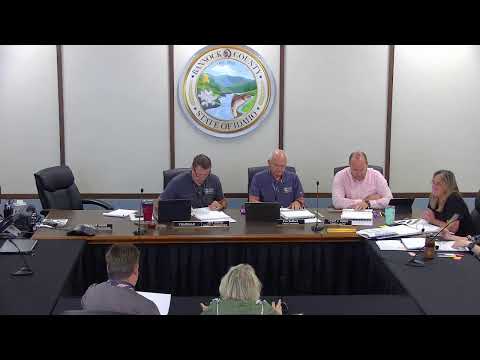
Bannock County Assessor Anita reviewed the assessor office budget, asked for salary grade increases, continued funding for training and software, and discussed DMV service changes that have reduced local admin-fee revenue.
Anita, Bannock County assessor, reviewed the assessor office budget at a county budget meeting and urged modest salary increases, continued funding for training and software, and attention to services at the county-run Department of Motor Vehicles.
The assessor told the committee that the office raised its administrative fee by $1, which “seems to have helped with our revenue,” and that a shift to more online state transactions has reduced local admin-fee income. Anita said the office has begun taking registrations by phone — which does trigger the local admin fee — and continues to offer in-person appointments and a ticket queuing system to serve walk-ins.
The revenue and service issues matter because the assessor’s office also sells certain local permits and registrations and because lost admin fees move revenue out of county coffers. “We do not get the admin fee anymore and that has really hurt,” Anita said of some online transactions handled through the state site. A budget committee member urged continued outreach to encourage residents to use local services: “Just keep getting that word out somehow to invite to invite them back.”
On staffing, Anita said one appraisal assistant position has been vacant for about a year and the office is considering whether to refill it as a part-time role. She said the office plans to hire for a certified appraiser position that is currently vacant and budgeted as a trainee at a lower grade until certification is achieved. The assessor described current front-office staffing levels as down from roughly 10 to about seven full-time employees plus one part-time worker.
The budget includes line items Anita described in detail: about $3,000 for cellular data for field iPads and hotspots; $10,000 for pictometry flyovers and software updates (pictometry is coordinated through county GIS and costs are shared across departments); $5,000 in professional services to contract an appraiser to review industrial property values; and a postage/contract-services line that this year approached $30,000 (Master’s Touch handles mailing and related services). Anita said a possible retirement payout currently budgeted at $10,000 might be reduced to $5,000 depending on final calculations.
On training, Anita said appraisers must maintain continuing education and the state has increased regional class offerings to reduce travel costs. She said the office sends staff to Boise and to nearby regional classes to accumulate required credits; the assessor noted the accepted cadence for continuing-education credits is 32 credits every two years for appraisal certification.
Anita described recent customer-service improvements — a remodeled counter, an appointment system and a ticketing queuing system — and said those changes have reduced wait times and increased in-person use. She recommended promoting the local office to recapture revenue lost to out-of-county or online transactions and to give residents an alternative when state processing is slow.
No formal motion or vote on the assessor’s budget items was recorded during this discussion.
The assessor and staff answered committee questions about shared costs for pictometry with other jurisdictions and confirmed there are no new vehicles budgeted for next year. Anita thanked the committee for the facility upgrades and said the office will monitor postage and travel lines as costs change.