Get Full Government Meeting Transcripts, Videos, & Alerts Forever!
Get email alerts on the Reentry Program topic
No spam. Unsubscribe anytime.
Progress House asks Lynnwood for $372,000 to sustain jail reentry "Change" program; council weighs short-term support
Summary
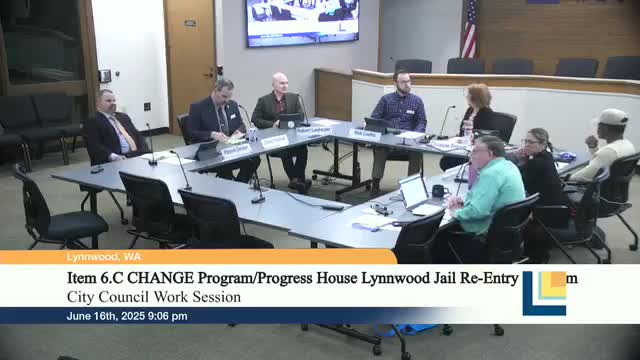
Progress House Association presented the Change reentry program that began in Lynnwood jails in January, described immediate outcomes and asked the council to fund operations through mid‑2026 (estimated $372,000) while state and federal support is pursued. Council members signaled strong interest but did not make a funding decision.
Lynnwood — Progress House Association asked Lynnwood council for near-term funding to sustain a reentry program operating in Lynnwood’s jail and court, saying the program has quickly enrolled dozens of participants and that losing the team now would erase recent gains.
What they presented: Cynthia Frederick, Progress House CEO, and Change program director Trina Kenny described a peer‑led reentry model that starts inside the jail and follows participants after release. The group said the program provides case-management, housing connections, enrollment in medication-assisted treatment where appropriate, peer coaching and an alumni network to keep participants engaged.
Frederick said the Change program draws on Progress House’s long history working with justice‑involved people and emphasized the program’s focus on relationship-building: "We have a methodology to change," she told the council, describing staff training and an emphasis on peer coaches with lived experience. Trina Kenny, the program director working directly in the jail, summarized the immediate outreach practice: "We meet them at the door," she said, describing intake, assessment and short-term supports such as a low-cost meal, bus or train fare, and transition to treatment beds or housing.
Reported results and funding request: staff told the council the program had served 76 people in its start-up period and had 58 currently active participants. Council Member Hirsch and others said the program’s initial budget need to sustain operations through June 2026 is about $372,000; Progress House said it has some federal grant support but needs city assistance to retain staff and continue the Lynnwood pilot while state funding avenues are pursued.
Why it matters: council and court staff described the program as fitting the city’s reentry and jail‑to‑treatment goals. Several council members urged city support to avoid losing trained staff and the relationships built with jail, court and community partners — a loss members said would be hard to rebuild.
Council response and next steps: multiple council members praised the work and urged quick action. Council Member Hirsch recommended funding the full year to keep the program viable until larger funding sources can be pursued; others suggested the council could consider the program in the opioid funds allocation discussion or in the next budget cycle. No formal vote or allocation was taken at the meeting.
Ending: Progress House said it can sustain the program temporarily through July but warned that longer-term staffing and program continuity require the requested city support, and the council asked staff to return with options for short-term funding and where the request would fit in Lynnwood’s existing opioid‑settlement and budget processes.