Get Full Government Meeting Transcripts, Videos, & Alerts Forever!
Get email alerts on the Short Term Rentals topic
No spam. Unsubscribe anytime.
Board of Adjustment upholds denial of Type 1 short‑term rental at 125 Glass Avenue
Summary
The Board of Adjustment rejected an appeal by an operator seeking a Type 1 short‑term rental permit at 125 Glass Ave., finding staffhad correctly applied the owner/operator rules; vote was 6—5.
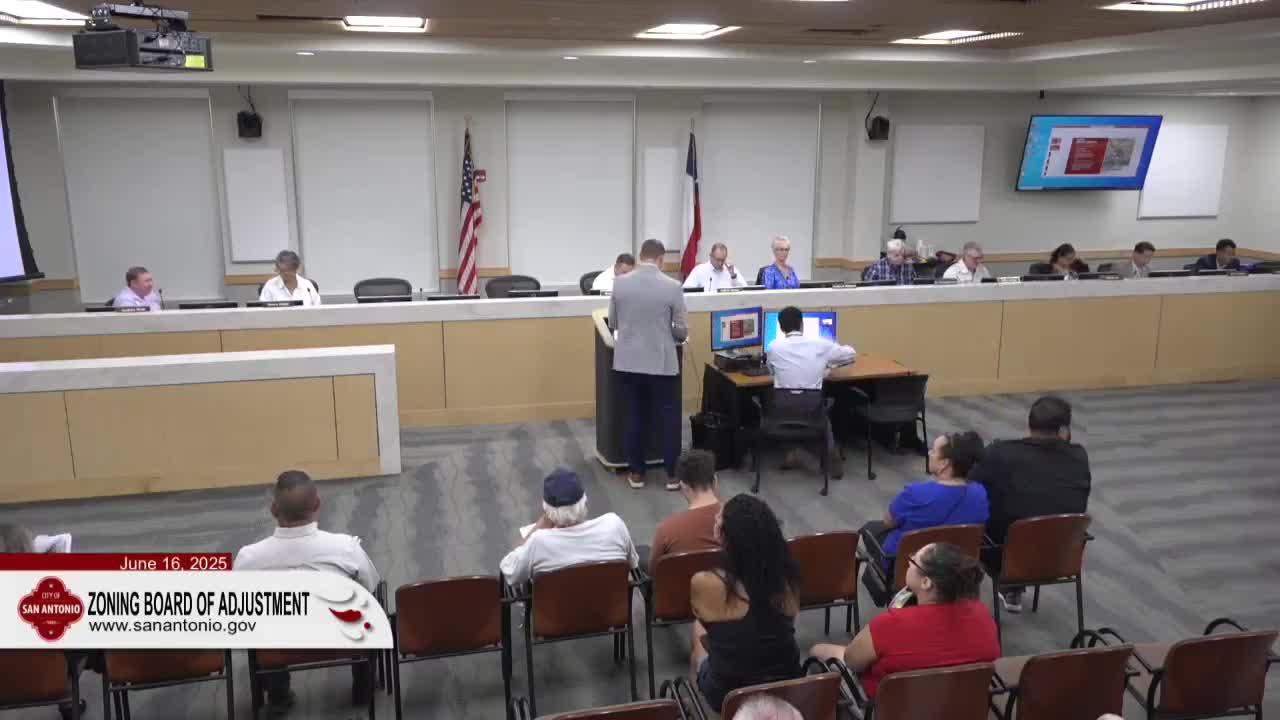
The City of San Antonio Board of Adjustment on Monday denied an appeal by an applicant seeking a Type 1 short‑term rental (STR) permit for 125 Glass Avenue, upholding a staff decision that the property does not meet the ordinancecriteria for an owner‑occupied or operator‑occupied Type 1 permit.
The board voted 6—5 to deny the appeal after hearing city staff, the applicant and public comment. Staff argued the application did not show the owner/operator is "generally present," and that the evidence better fits a Type 2 (commercial) STR application.
City planner Tyler Adam explained staff's position to the board: "Type 1 permits are issued when a property is occupied by the owner or an operator who is generally present. The application we reviewed did not demonstrate the operator was generally present at this address, and the property's recent history and online listings raised concerns." He told the board the property had a history of unresolved code issues that only recently had been addressed by the current owner.
Applicant Alyssa Thomas told the board she lives at 125 Glass and submitted a site plan, a driver's license showing the address and an owner authorization document. "I live here; I maintain the property and help manage several STRs for the owner," Thomas said. She also told the board she was willing to provide additional documentation and to adjust the site plan's reported sleeping areas to match city occupancy calculations.
Board discussion centered on how the STR ordinance defines "generally present" and whether an operator who is an agent of a corporate owner can qualify for Type 1 status. Commissioners who opposed the appeal emphasized staffconcerns about advertising that showed the entire house as available for short stays and city records showing multiple prior enforcement contacts.
Commissioner Bragman, who supported the appeal, said the applicant had supplied multiple pieces of residency evidence and asked whether staff could better define the acceptable documentation. But a majority of commissioners found the record insufficient. The roll call recorded five votes to grant the appeal and six to deny it; the denial stands, and the staff decision remains in effect.
The operator can still apply for a Type 2 permit or provide additional documentary evidence if she seeks a new Type 1 application. Staff said enforcement tools (including listing takedowns by online platforms and spot checks) remain available if future listings do not match permit status.
The board's decision follows months of exchanges between staff, the applicant and the property's owner about permits, outstanding building work and hotel occupancy tax reporting; staff told the board some prior issues were resolved after the property changed ownership last year.
Ending
The applicant may reapply or pursue a Type 2 STR permit; the Board's decision leaves intact staff's finding that the record does not meet the existing Type 1 owner/operator residency standard.