Get Full Government Meeting Transcripts, Videos, & Alerts Forever!
Get email alerts on the Accessibility topic
No spam. Unsubscribe anytime.
City presents ADA transition plan update; public hearing and possible adoption scheduled for July 8
Summary
City staff briefed council on an updated Americans with Disabilities Act transition plan that inventories barriers, incorporates PROWAG guidance and proposes administrative structures and priorities. Staff proposed a public hearing and potential adoption on July 8, 2025.
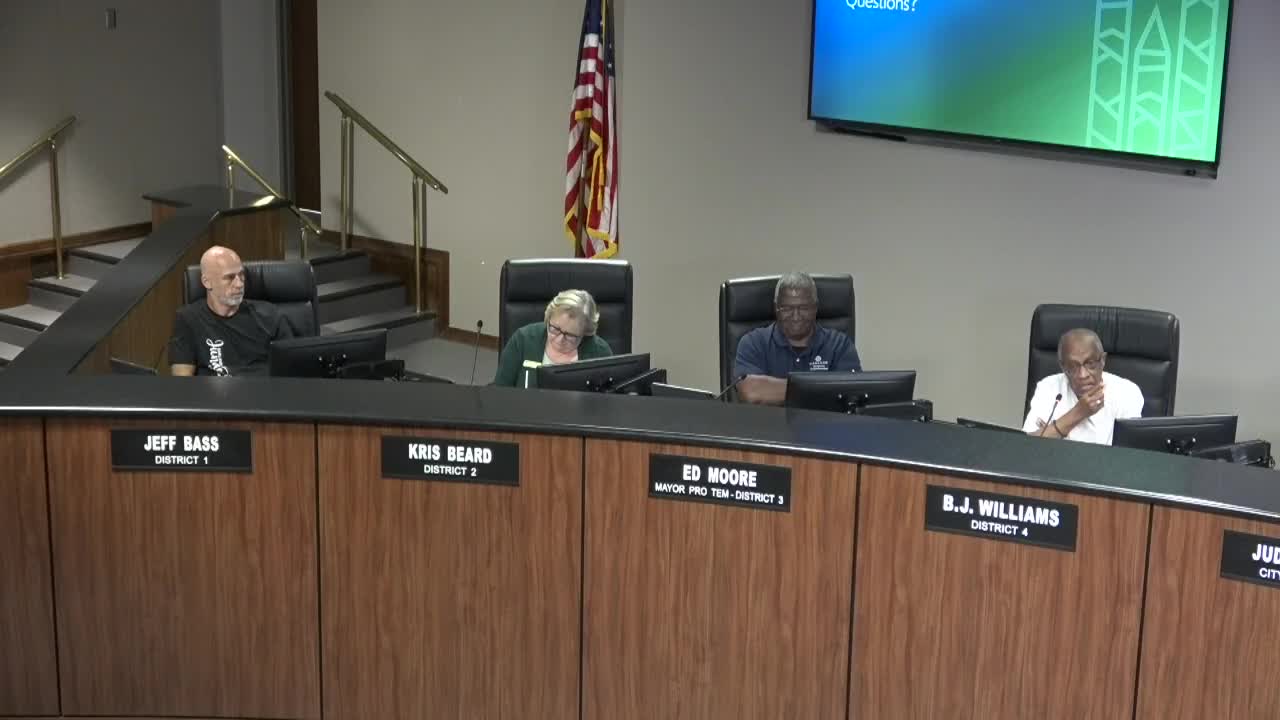
City staff presented an update to Garland’s Americans with Disabilities Act (ADA) transition plan on June 16, 2025. The briefing described the plan’s purpose, scope and schedule and asked council for direction to move to a public hearing and possible adoption at the July 8 council meeting.
Staff described the ADA transition plan as a systematic inventory of physical and programmatic barriers, a prioritization method for removing barriers, and a framework to guide implementation. The updated plan expands beyond building retrofits to include pedestrian facilities and program accessibility, and it references national guidance known as PROWAG (Proposed Accessibility Guidelines for Pedestrian Facilities in the Public Right‑of‑Way) and the ADA standards adopted since the city’s 1993 transition plan.
Key plan components described by staff include an inventory of older projects and CIP work, methods for self‑evaluation, designation of an ADA coordinator, establishment of an ADA liaison committee (an administrative committee representing relevant departments), procedures for public input and complaint handling, and sampling of buildings, parks and intersections to estimate remaining accessibility needs. Staff noted that many CIP projects done since 1993 were built to the standards then in place and that some features may not meet current standards after later rule changes (the presentation referenced PROWAG final recommendations published late in 2024).
Council members asked whether sidewalks are required as part of the plan. Staff explained that the ADA does not require construction of new sidewalks in locations that currently have none; however, street reconstruction projects generally include bringing pedestrian facilities up to current standards. Staff proposed a public hearing and possible adoption of the updated transition plan at the July 8 council meeting.
Why it matters: an updated ADA transition plan sets priorities for removing accessibility barriers across city facilities and public rights‑of‑way, clarifies compliance responsibilities and outlines a public process for input.
What comes next: staff will prepare the public‑hearing record and return the plan for possible adoption on July 8, 2025.