Get Full Government Meeting Transcripts, Videos, & Alerts Forever!
Get email alerts on the Public Health topic
No spam. Unsubscribe anytime.
City staff studying MD Health Pathways telehealth proposal; customer‑service impacts, opt‑out volumes and software costs noted
Summary
City staff briefed the council on MD Health Pathways, a utility‑billing opt‑out telehealth program. Staff reported contract review with legal counsel, estimated call‑center impacts if 10%+ of customers opt‑out, recommended further negotiation and an implementation return in about two months, and cited a recommended spring 2026 start if pursued.
City staff and customer service leaders briefed the Garland City Council on June 16 on MD Health Pathways, a third‑party telehealth service linked to utility billing that would be implemented on an opt‑out basis. Staff outlined program mechanics, potential customer‑service impacts, identified software and staffing needs, and described a timeline for further negotiation and possible implementation.
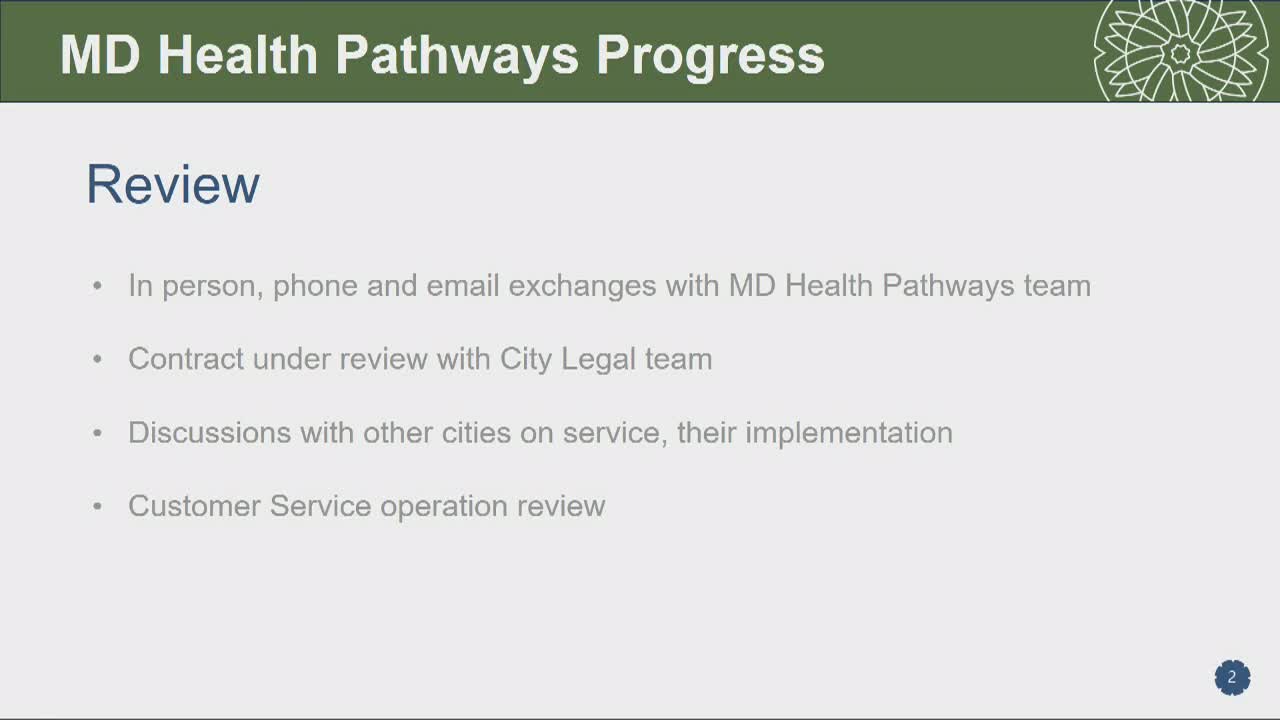
Staff said MD Pathways provided a draft contract that the city attorney’s office is reviewing and that staff have spoken with other Texas cities that implemented the program to collect lessons learned. Staff highlighted these operational points:
- Opt‑out volumes: other cities have reported a wide range of opt‑out rates (Ferris ~5%; Crandall ~19%). Using Garland’s customer counts, staff estimated that a 10% opt‑out would yield roughly 7,700 customer opt‑outs and higher volumes if opt‑out rates matched other cities. City call center capacity currently handles roughly 4,300 calls without hold during busy times and averages about 4,500 calls at peak, so staff warned that initial opt‑out periods could overwhelm current call‑center staffing without changes.
- Implementation timeline and public education: staff reported other cities used extensive public‑education campaigns (Henderson reported a 120‑day public education period and roughly 12 months from initial conversations to contract execution and program start). MD Pathways recommended spring 2026 as a feasible implementation window for a large city like Garland, with a pilot approach suggested (for example, starting with churches or schools).
- Customer‑service and software needs: the city’s CIS (utility billing) vendor recommended not changing billing line items until a larger CIS upgrade is completed; staff said the full CIS project runs through 2026 and that integrating a new billing line for MD Pathways would require technical work. Staff estimated an implementation cost of roughly $70,000 to make the software change, plus about $1,000 to update bill printing, and identified additional staffing needs for the opt‑out period.
- Next steps: staff recommended continued negotiation of contract terms, definition of software and staffing needs, clarification of data‑transfer procedures (for rental properties and frequent account turnover), and returning to council with an update in about two months (staff suggested the second meeting in August). Legal review is ongoing.
Why it matters: the opt‑out model can produce large initial call volumes and customer questions. The program could reduce avoidable emergency care use, according to MD Pathways, but staff emphasized operational, data and billing integration work is necessary to protect customers and city operations.
What comes next: staff will continue legal review, refine CIS and customer‑service requirements and return to council with an implementation recommendation and contract terms in roughly two months if the council elects to proceed.