Get Full Government Meeting Transcripts, Videos, & Alerts Forever!
Get email alerts on the Land Use Process topic
No spam. Unsubscribe anytime.
Council presses EDC on decision to use state GPP process for Brooklyn Marine Terminal plan
Summary
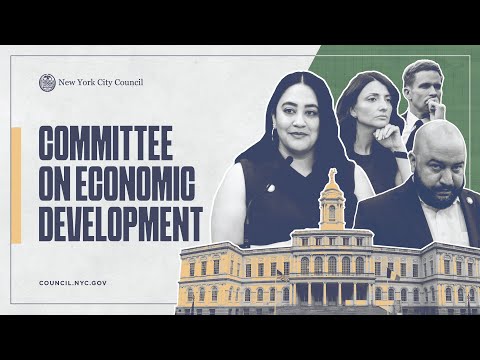
Majority Leader Amanda Farias, chair of the New York City Council Committee on Economic Development, opened an oversight hearing by asking why the Brooklyn Marine Terminal redevelopment is being advanced through a state general project plan — a process she and other members said sidesteps the city's standard land‑use review and reduces opportunities for local democratic oversight.
Majority Leader Amanda Farias, chair of the New York City Council Committee on Economic Development, opened an oversight hearing by asking why the Brooklyn Marine Terminal redevelopment is being advanced through a state general project plan — a process she and other members said sidesteps the city's standard land‑use review and reduces opportunities for local democratic oversight.
"We will also be examining the decisions to bypass the city standard uniform land use review procedure in favor of the state's expedited general project plan process," Farias told the Economic Development Committee during opening remarks.
The question matters because ULURP (the city's Uniform Land Use Review Procedure) requires formal review by community boards, borough presidents and the council; GPPs are the state's tool for projects characterized as having regional importance and can limit those local review steps. Council members warned that advancing the Brooklyn Marine Terminal, a 122‑acre site spanning Red Hook and the Columbia Waterfront, through a GPP could reduce transparency and community leverage over final commitments.
Council member Alexa Aviles, who represents the Columbia Waterfront and serves as a co‑chair of the task force convened to advise the plan, told EDC that the GPP approach "has the authority to bypass citywide zoning regulations, limiting oversight of the council and other key city agencies." Aviles and several colleagues said the community and city institutions deserve a city‑led land‑use review that allows local priorities to influence final approvals.
Andrew Kimball, president and chief executive officer of the New York City Economic Development Corporation (EDC), said the land‑swap and ownership transfer at the center of the proposal were negotiated with state partners and that the GPP is customary for "regionally important" transactions. Kimball told the committee the planning and engagement for the vision plan included more than 4,200 participants, six advisory groups and a 28‑member task force, and said "leadership agreed that to move into the GPP process, the task force would need to approve the BMT vision plan by a two‑thirds majority vote."
But council members and multiple community speakers said meetings and task force deliberations have not been adequately transparent. Residents and several task force members said the Columbia Waterfront neighborhood — which would host much of the proposed housing and public space — lacked direct representation on the task force themselves. John Laveau, a long‑time Columbia Waterfront resident, told the committee: "The community where piers 7 through 10 are contains the most housing under this plan and will feel the brunt of redevelopment; the BMT task force does not include a representative for the Columbia Waterfront."
EDC officials said the state GPP process includes its own neighborhood condition studies and environmental review during scoping, and that both state and city review bodies — including the Empire State Development Corporation and the Public Authorities Control Board — would have to approve actions that follow the task force vote. EDC also said that, if the task force approves the vision plan, the GPP scoping and environmental review would begin this fall.
Council members said they intend to continue asking for detailed documentation, including the task force minutes, the MOU that led to the land swap, and the specific milestones EDC used to secure federal and state grants. Several members pressed for assurances that any commitments to affordable housing, local hiring and resiliency would be enforceable and visible to the council during implementation.
The BMT task force was scheduled to vote on advancing a vision plan within days of the hearing; council members said they would continue oversight work while the task force and EDC proceed through the GPP scoping process.
Ending: Committee staff said it will follow up with EDC for materials requested at the hearing. The task force vote and the start of formal GPP scoping were the next steps mentioned on the record; council members and community groups said they will continue seeking added transparency and legally binding commitments as the process advances.