
House Energy and Commerce hearing on SCORE Act divides stakeholders over athlete rights and NCAA authority
Get AI-powered insights, summaries, and transcripts
Sign Up Free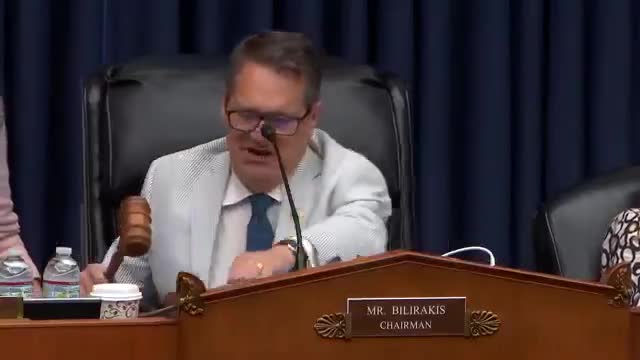
Summary
Witnesses and members split at a House Energy and Commerce subcommittee hearing over the SCORE Act discussion draft and the recently approved House v. NCAA settlement, debating federal preemption, liability protections, revenue sharing and athlete protections.
The House Energy and Commerce subcommittee held a legislative hearing on a discussion draft called the SCORE Act, a proposal meant to create a national framework for name, image and likeness (NIL) rights and other changes after the recently approved House v. NCAA settlement.
The committee’s chairman, Representative Gus Bilirakis, opened the hearing by describing the draft as “designed to bring predictability, fairness, and long term balance” and said it was intended to replace the current “patchwork of state laws.” He said the draft was built around clarity, stability and support for student athletes.
The hearing laid bare deep divisions. Ramogi Huma, executive director of the National College Players Association (NCPA), told the committee the NCPA “is opposed to the SCORE Act,” calling the NCAA and many conferences “a predatory industry that exploits college athletes” and arguing the draft would insulate institutions from liability and restrict athletes’ rights. Huma urged stronger, enforceable safety protections and said the bill’s language would block athletes’ access to labor protections and limit remedies if institutions violate athletes’ rights.
Sharika Montgomery, commissioner of the Big South Conference, and William King, associate commissioner for legal affairs and compliance at the Southeastern Conference, urged congressional action to create a uniform federal standard and to codify elements of the settlement. Montgomery said a federal standard would give student athletes consistent “guarantees” around scholarships and degree-completion protections. King said federal legislation and preemption of state laws are needed to preserve a national competitive structure and to give institutions a path to implement the settlement and related revenue-sharing rules.
Ashley Kozad, a former Division I swimmer and recent student-athlete representative, told members that uniform NIL rules would reduce confusion for athletes who currently face conflicting state laws. Kozad also said classifying athletes as employees would “be incredibly detrimental for the majority of student athletes” and could end opportunities for many nonrevenue and Olympic sports.
Members pressed witnesses on multiple fronts: the bill’s treatment of antitrust and labor law, how the settlement’s revenue-share rules would work in practice, safeguards against pay-for-play or fake-NIL deals, agent regulation and how to avoid a two-tier system that advantages large, high-revenue programs.
Ranking Member Jan Schakowsky and other Democrats expressed concern that the draft, as written, would grant too much power to the NCAA and conferences while removing athletes’ legal remedies. Several members, including Representative Kathy Castor and Representative Lori Trahan, emphasized athlete safety, citing past deaths and abuse cases and urging enforceable safety standards with party-level enforcement.
The hearing concluded without formal committee action; witnesses were invited to respond to follow-up questions for the record. Members on both sides said they would continue intercommittee negotiations with Judiciary and Education and the Workforce committees to refine the draft.
The hearing brought forward competing priorities: institutional stability and uniformity advocated by conference officials, and enforceable protections and legal remedies urged by athlete advocates and some members. That tension will shape next steps as lawmakers consider whether and how to translate the settlement and the SCORE Act discussion draft into federal law.