Get Full Government Meeting Transcripts, Videos, & Alerts Forever!
Get email alerts on the Early Childhood Funding topic
No spam. Unsubscribe anytime.
Buncombe County committee votes to extend current early‑childhood grants for one year
Summary
A Buncombe County committee voted to continue current early‑childhood grant awards at existing levels through June 30, 2026, allowing staff to reallocate any unused funds later through a condensed process; providers told the panel that timely funding is critical for staffing and school‑year planning.
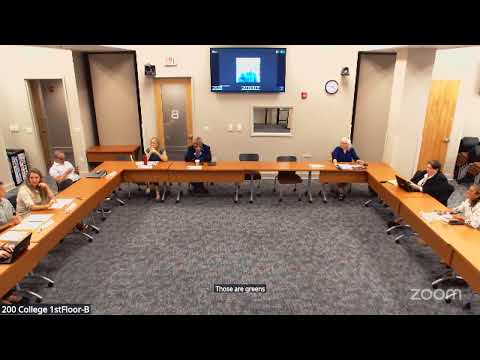
A Buncombe County early‑childhood grants committee voted to continue funding existing grantees at their current award levels through June 30, 2026, and authorized staff to reallocate any unused funds later through a condensed application process.
Committee members said the step was intended to preserve program stability while staff gathers more information about providers’ remaining needs. “Having reliable funding in place before the school year allows us to staff, prepare instructional models, and anticipate everything to come with an academic year,” said Betsy Stackslider, director of the Buncombe County Schools Learning Labs.
The vote followed a period of committee discussion about three timing options: (a) extend current awards through June 30, 2026; (b) run a condensed competitive application and make new awards to start in the fall; or (c) combine a short extension with a limited reopen for applications. After hearing from local providers about operational strain and the workforce implications of delayed funding, a committee member (Carol) moved to adopt option (a) — continuing current awards at the same amounts — with staff authorized to reallocate any unused funds later through a shorter application process. The motion was seconded and approved by voice vote.
Representatives from multiple grantee organizations told the committee that timing uncertainty already has affected classroom openings, teacher retention and budget planning. “If we do not have that funding confirmed prior to our board meeting to pass a budget, we were gonna have to do serious staffing cuts,” said Marcia Whitney, president and CEO of Werner Center for Early Learning. Caroline (last name not specified), speaking for Buncombe Partnership for Children, said child‑care organizations are “stretched to the max” and that a three‑month extension would be “very helpful.”
Staff told the committee the current allocation figure listed on the agenda materials was $253,265 for a particular line item and that a modest 2 percent increase had been reflected in recent calculations; staff also noted roughly $78,000 in leftover funds that could be used to help bridge gaps. Committee members acknowledged the county would need to draw on available fund balance if the full one‑year continuation is approved.
Committee members also agreed to solicit additional written or in‑person information from grantees about two items staff said would be most helpful in evaluating extensions or reallocations: (1) projected fiscal impact to support an extension (projected costs and whether spending is one‑time or ongoing); and (2) any changes to scope of work compared with the current award. Commissioner Jennifer Wharton said she wanted explicit information on both the fiscal and scope‑of‑work sides before larger changes are made.
The committee opened the meeting to brief, on‑the‑record remarks from grantees present; staff said they would also collect input in writing or at a follow‑up meeting to ensure equity for organizations not present. The committee's action is intended to preserve stability for programs that operate classrooms tied to the school year and to give staff time to design a targeted process to reallocate unused funds or invite new applicants later in the fiscal year.
The committee approved the minutes from the Feb. 4 meeting and adjourned. The panel noted a future meeting may be scheduled in July to finalize follow‑up steps and to allow staff time to consult with grantees and present estimated fiscal impacts of the one‑year continuation.