Lifetime Citizen Portal Access — AI Briefings, Alerts & Unlimited Follows
Nebraska law changes cut expected Good Life District revenue; Grand Island staff to amend local ordinance
Loading...
Summary
Members of the Grand Island City Council were briefed June 10 on LB 707, a recent Nebraska law that changes the Good Life District funding formula and reduces the predictable, existing-business share to $5 million annually; staff said it will return in July with code amendments.
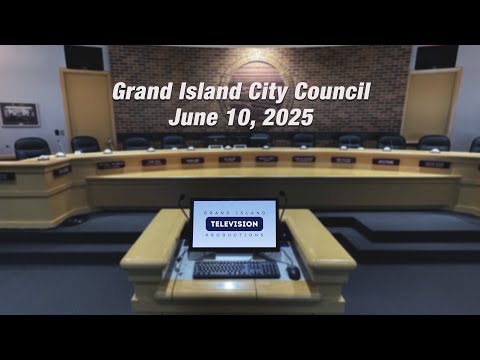
Members of the Grand Island City Council spent more than an hour on June 10 discussing LB 707, a recent act of the Nebraska Legislature that changes the funding formula and several definitions governing the city’s Good Life District economic-development program.
"I'm here to provide you an update on a recent act of the Nebraska legislature called LB 707," City staff member Carrie Fisk told the council, beginning the presentation. Fisk said the law will shift the 2.75 percentage-point sales tax that had been captured locally into state collections, with the state returning up to $5,000,000 annually to the city from existing businesses in the district and splitting sales tax from new businesses with the state.
The change reduces the predictable revenue the city had expected. Fisk said program revenue had been projected at roughly $7.5 million before the legislative change; under LB 707 the reliable, existing-business share will be capped at $5 million. The law also creates detailed definitions for what counts as a "new" or "relocated" business and imposes a cap on how much private applicants may spend on non–revenue-producing items.
City attorney Laura McAloon and other staff explained how the statute limits the city’s discretion in one area: after the new law, the council cannot add parcels to the Good Life District as easily as before; the statute effectively fixes the district boundary while allowing removal in specified circumstances. McAloon said staff would propose amendments to the local program ordinance in July to conform to the state changes.
Council members pressed staff on implications for the transformational sports-complex project and on the pending Woodsonia application for Good Life assistance. McAloon said the city had followed advice offered during the legislative session and had not executed any final agreements while the law was pending; staff reported ongoing discussions with Woodsonia’s counsel and bond counsel and said Woodsonia was still evaluating whether and how to revise its application.
Several council members urged prompt action. Council president Sheard summarized the mood: "The state giveth, the state taketh away, which is very frustrating," and urged staff to pursue concrete next steps. Council members asked whether the city could proceed if Woodsonia withdrew; staff replied the city could use existing code to run an RFP for development of city-owned property or otherwise proceed without that private applicant, though plans might be smaller or slower.
Staff also described technical details that will change project planning: bonding capacity may fall because of lower guaranteed revenue; some expenditures will count for the city but not for private developers; the state will collect the taxes and return funds after deducting its processing fee; and the distinctions between city-eligible and developer-eligible expenses will require the city to split its program ordinance definitions.
City staff requested guidance on timing and on how long to wait for Woodsonia to revise its materials. They said they intend to return in July with a code amendment reflecting the new state process and that they are evaluating whether to run an RFP for either a sports complex, housing, or both. Staff also said financial advisers recommend waiting for actual sales data before relying on future revenues as collateral for long-term financing.
What happens next: staff will prepare and present amendments to the city’s Good Life District ordinance at a July meeting; staff will continue discussions with Woodsonia and may open an RFP process for city-owned property if Woodsonia withdraws or amends its plan.
(See "Votes at a glance" for formal motions recorded later in the meeting.)
*Notes on nomenclature and transcript spelling:* the presenters and packet used several spellings for the Fairgrounds name; the correct local spelling is "Fonner Park." The council direction and next steps summarized above reflect staff presentations by Carrie Fisk and Laura McAloon and the subsequent council discussion; no final ordinance on LB 707 implementation was adopted at the June 10 meeting.