Get Full Government Meeting Transcripts, Videos, & Alerts Forever!
Get email alerts on the Critical Infrastructure Security topic
No spam. Unsubscribe anytime.
Commission holds closed session on Capitol security, then approves critical information infrastructure upgrades
Summary
The commission met in closed session under the Open Meetings Act to discuss security measures and later approved a recommendation described as a critical information upgrade/infrastructure; both votes passed unanimously.
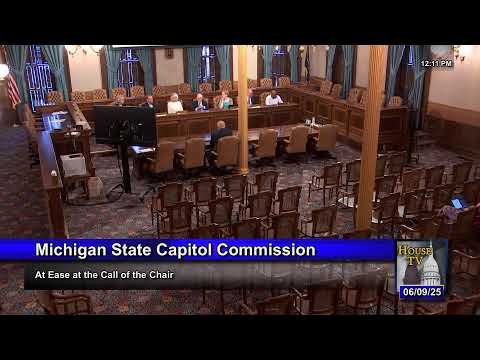
The Michigan State Capitol Commission voted to meet in closed session to receive and deliberate a security proposal from the executive director and later approved recommended critical information infrastructure upgrades.
Chair Candler moved that the commission enter a closed session "under section 8(h) of the Open Meetings Act to receive and deliberate a proposal from the commission's executive director regarding security measures as pursuant to the Freedom of Information Act section 13(1)(u)." Commissioner Oberlin seconded. The secretary then called the roll; Chair Candler, Vice Chair Bauer, Commissioner Hobbs, Commissioner Land, Commissioner Oberlin and Commissioner Starr all voted yes. The chair announced that two-thirds of members had voted for the closed session and the commission adjourned to it.
Commissioners returned from closed session and, later in the meeting, Commissioner Land moved to "approve the critical information upgrade/infrastructure." The motion was put to a roll-call vote that recorded six yes votes; the chair said all six members voted yes and the item was approved.
During the public portion of the meeting commissioners and staff also discussed drone use around the Capitol and potential regulatory or permitting approaches for third-party drone operations. Executive Director Rob Blackshaw said the commission had received requests to fly drones over the Capitol for photography and described discussions with staff and lawmakers about defining restrictions, geofencing, and a potential checklist or permitting process for approved flights. He said Representative Bill Brock and Representative Ron Robinson had been involved in related legislative conversations and that staff's default approach for unsolicited drone requests was to deny permission until formal procedures were in place.
Blackshaw framed the closed-session rationale as limiting public disclosure of security practices that would make them ineffective if widely known. "We have a recommendation to implement some practices and some policies that if they were revealed publicly, there'd be no reason to do them," he said.
The transcript does not record detailed measures discussed inside the closed session; the recorded public actions are the vote to enter closed session and the subsequent approval of the critical-information upgrade.