Get Full Government Meeting Transcripts, Videos, & Alerts Forever!
Get email alerts on the Infrastructure Bridge topic
No spam. Unsubscribe anytime.
State authority plans mill-and-overlay and cable dehumidification on Mount Hope Bridge; full deck replacement stays a multi-year project
Summary
The Rhode Island Turnpike and Bridge Authority told Portsmouth officials it will mill and overlay the Mount Hope Bridge this summer to improve rideability and is advancing a dehumidification project and a multiyear, full deck‑replacement study.
The Rhode Island Turnpike and Bridge Authority said it will mill and overlay the Mount Hope Bridge and pursue a longer-term deck-replacement plan and cable dehumidification system to extend the 96-year-old span's life.
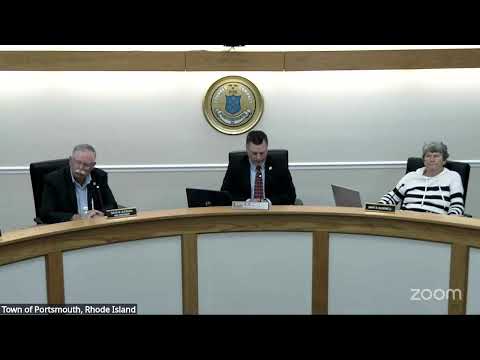
Laurie Karen Silvera, executive director of the authority, told the Portsmouth Town Council that contractors will micro-grind (remove roughly ½ to ¾ inch of the top surface), patch as needed, then place an ultra-thin bonded polymer asphalt overlay. The contractor has estimated roughly 30 hours per lane for the active work; the authority said that work could require short, around-the-clock closures and that officials are discussing whether one full closure for about 72 hours or two weekend closures would minimize overall disruption.
The overlay is an interim measure to improve rideability. “We know that the bridge needs a complete deck replacement. That is in our capital plan,” Silvera said, noting the full replacement is in the authority’s five‑year planning horizon. She said the authority has an RFQ out for a consultant to study full replacement options, including orthotropic steel-deck alternatives, and that the study will evaluate sequencing and traffic management.
Eric Seabury, RITBA director of engineering, described the planned surface work: micro‑grinding to remove the existing buildup and a polymer-based ultra‑thin bonded overlay that uses fine aggregate and a controlled screed to produce a smooth surface. He said one lane can be paved at a time and that the milling process will leave the bridge unpassable until it is patched and paved.
The authority also described a cable dehumidification project intended to slow wire corrosion inside the main cables. Silvera said the authority completed cable airflow testing in 2024, has a design, went out to bid for construction and expects bids due July 9 for the dehumidification work. She said the authority has a federal PROTECT grant award of roughly $17,000,000 to help fund the dehumidification work.
Councilors pressed the authority on safety and timing. Seabury said the bridge is safe: recent inspections produced the usual, tracked findings for a 96‑year‑old suspension bridge and did not indicate an imminent safety risk. He described chronic delamination of a 2‑inch unreinforced concrete overpour above a steel grid as the reason long-term replacement is necessary.
Officials discussed scheduling. The authority said it would not perform major work before July 4 and is coordinating with local police, fire and town managers to pick dates that limit business and commuter disruption; they said late summer or after Labor Day are possibilities. The authority anticipates some night work and noise for short stretches and will provide public notice if a closure is required.
Councilors also raised related service issues during the presentation: the authority said E‑ZPass customer-service call volumes and aging transponders (many from about 2008) have created high demand; replacement transponders cost about $10 and the authority is providing testing at several nearby AAA locations and coordinating additional customer service resources.
Why this matters: Mount Hope is a key East Bay crossing. The authority's immediate overlay plan aims to restore “rideability” quickly; the dehumidification and planned full deck replacement are intended to extend the bridge's service life but will require multi‑year planning and likely staged closures.
The authority said it will notify the town and public once contractor schedules are set, and councilors asked the authority to prioritize minimizing consecutive closures and to coordinate with first responders when setting dates.