Get Full Government Meeting Transcripts, Videos, & Alerts Forever!
Get email alerts on the Property Law Marketable Record Title Act topic
No spam. Unsubscribe anytime.
Real property lawyers tell committee bill would restore longstanding expectations under Marketable Record Title Act
Summary
The House Judiciary Committee heard testimony on House Bill 4524, a proposed fix to the Marketable Record Title Act that supporters say will preserve older recorded restrictions and easements relied on by subdivisions, condominiums and commercial developments.
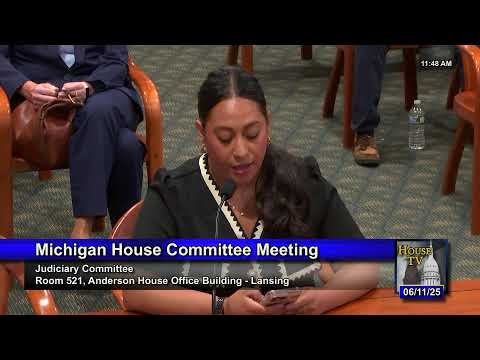
House Bill 4524 received detailed testimony in the House Judiciary Committee from the Real Property Law Section of the State Bar and representatives of title insurers, realtors and commercial property interests who said the bill clarifies and restores longstanding expectations under the Marketable Record Title Act (MRTA).
David Pearson of the Real Property Law Section told the committee the MRTA, enacted in 1945, was intended to simplify title searches by permitting a 40-year cut-off for title matters. A 2018 amendment, he said, unintentionally allowed older restrictions and easements to be extinguished unless claimants filed detailed notices. "What we did was put together a committee which came up with a reform package," Pearson said. "What this bill does is clarify some of that language to make clear that in effect, if you have an easement that's old, you still have an easement."
Pearson and other witnesses described practical problems after the 2018 change: many subdivisions and condominium and homeowners associations depend on recorded restrictions and shared easements for common areas, parking and drainage; losing those interests would create legal and operational chaos for associations and commercial centers. The bill, as described by witnesses, would exempt recorded restrictions up to 75 years old (back to Jan. 1, 1950) from the notice-and-claim requirement and thus preserve those interests without a filing.
Emily de Dagnostini (participating by Zoom) and representatives of the International Council of Shopping Centers and the Michigan Realtors supported the bill; those groups signed in as proponents or submitted cards of support. De Dagnostini said the 2018 law "threw out the baby with the bathwater" and that the current draft is a negotiated solution after years of incremental fixes and stakeholder engagement.
Witnesses noted an expiring statutory extension: since 2019 the legislature had delayed full effect of the 2018 MRTA changes by two-year extensions; they said that grace period runs out in September, making committee action time-sensitive.
Committee members asked technical questions about titles, recording references and the logistics of a two-year grace period already provided under the 2018 amendment. Representatives emphasized the bill is intended to reflect how the title industry and property owners had understood MRTA operation before the 2018 change.
Ending: Committee members said they expect additional drafting and a substitute prior to a final vote; proponents urged prompt action to avoid the September expiration of the current extension.