
AV Foster Friends outlines resource center, seeks funding and measurable outcomes
Get AI-powered insights, summaries, and transcripts
Sign Up Free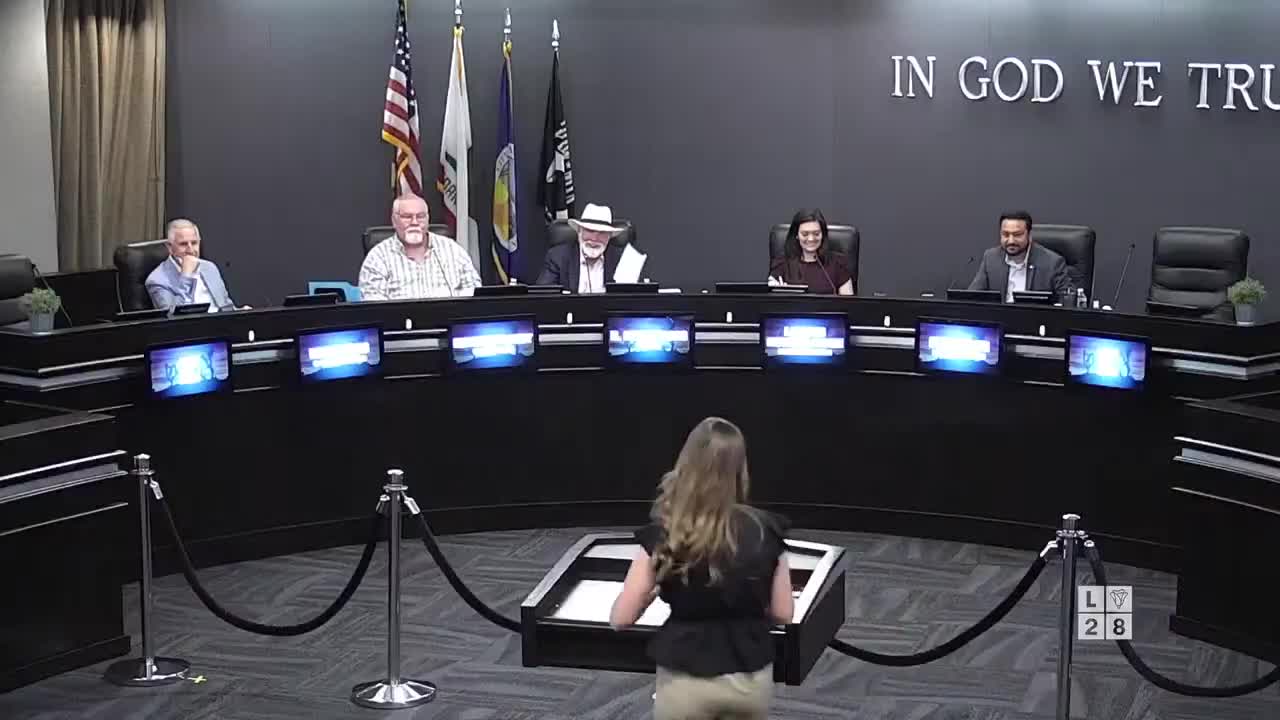
Summary
AV Foster Friends presented the Antelope Valley's only Foster Family Resource Center in downtown Lancaster, described services and volunteer model, and asked council to review business proposals and metrics for social‑enterprise programs seeking $100,000 per pilot.
Representatives of AV Foster Friends presented to the council on June 10 to describe a new Foster Family Resource Center in downtown Lancaster and to outline program plans and funding needs.
Director Kate Downing said the center — housed in a building formerly known as Mini Moa — will provide clothing, hygiene items and practical supports for local foster families, and the organization is fully community-funded and volunteer-run. Downing said the center offers respite care, monthly support groups that serve roughly 60 people with dinner and training, family days and a plan to launch social-enterprise business proposals intended to provide paid job experience and revenue for the nonprofit.
Downing told council the Antelope Valley has about 1,500 children in foster care and roughly 700–1,000 more in kinship care; the speaker said about 58% of foster families in the Antelope Valley cease fostering within a year (cited as exit‑survey data). The organization said it has copies of three business proposals and asked the council to consider encouragement or support for seed funding; staff and council members asked for measurable metrics and tracking plans before committing public funds. Downing said the group has seen 100% retention among foster families who participate in their programs, and that the enterprise pilots are requesting about $100,000 apiece to fund initial six‑month operations with the plan that programs become self-sustaining.
Council members asked for concrete metrics and for the organization to leave copies of the proposals; at least one councilmember said he wanted to see tracking and clear success criteria before funding. Downing left proposals and material with staff for follow-up.