Get Full Government Meeting Transcripts, Videos, & Alerts Forever!
Get email alerts on the Transportation Policy topic
No spam. Unsubscribe anytime.
Encinitas Planning Commission backs VMT exchange program to let developers build bike/ped projects to mitigate travel impacts
Summary
The commission unanimously recommended that City Council adopt a Vehicle Miles Traveled (VMT) exchange program that allows developers to construct prioritized bike and pedestrian projects as CEQA mitigation for significant VMT impacts.
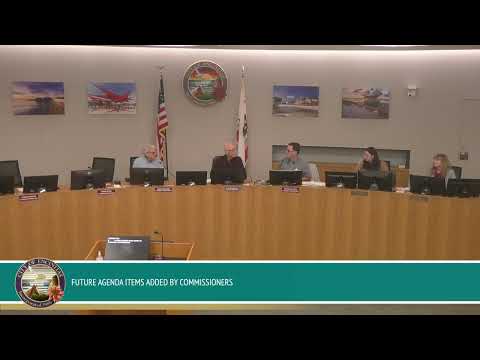
The City of Encinitas Planning Commission on Thursday recommended city council adopt a Vehicle Miles Traveled (VMT) exchange program that lets developers construct specified bike and pedestrian improvements as CEQA mitigation for project transportation impacts.
Senior mobility planner Evan Jednak told commissioners the exchange program was directed by the City Council after the city adopted VMT analysis guidelines to comply with state law that replaced Level of Service as CEQA’s transportation metric. "Developers must physically construct these projects. They're not paying an in lieu fee to the city for construction," Jednak said, summarizing the program’s central requirement.
Why it matters: Senate Bill 743 and subsequent state guidance require local jurisdictions to measure transportation impacts using VMT rather than traffic congestion. The exchange program offers developers an option to reduce project VMT by building locally‑identified bicycle and pedestrian projects that are currently unfunded — ensuring mitigation is “additional” and delivered at build‑time, staff said.
How it works: Staff and its consultant developed a prioritized list of unbuilt Active Transportation Plan (ATP) projects, divided into high‑ and medium‑priority tiers. Each candidate improvement has a planning‑level unit length, an estimated daily VMT reduction using state guidance (CAPCOA), and a cost estimate. When a proposed project has a significant VMT impact, applicants first apply on‑site or frontage treatments and travel demand management measures; remaining VMT can be mitigated using the exchange program by selecting eligible projects according to the program’s priority hierarchy (high priority within 0.5 mile, then high priority serving schools/key destinations, then other high priority, then medium priority).
Staff said cost estimates are planning‑level and that cities will not take money in lieu of construction: the developer performs the work and must complete it before certificate of occupancy. Consultant Katie Cole (Fair & Pears) said unit costs reflect historical construction data and the likely difference between low‑cost striped bike facilities and higher‑cost sidewalk gap closures.
Public input and CEQA: Staff prepared an initial study and a draft negative declaration for the program and held a 30‑day public review period. The study found no significant environmental impacts requiring mitigation measures. Commissioners asked about selection priorities and whether the list would remain dynamic; staff said the list will be maintained and projects that are built or otherwise funded would be removed.
Commission action: The commission voted unanimously, 3-0 with two commissioners absent, to forward the VMT exchange program to city council with staff’s recommendation for adoption.
Next steps: The Planning Commission’s recommendation moves the program to the City Council for final adoption. If adopted, staff will administer the list of eligible projects, review proposed mitigation choices for individual developments, and update the list as projects are completed or funded.