Get Full Government Meeting Transcripts, Videos, & Alerts Forever!
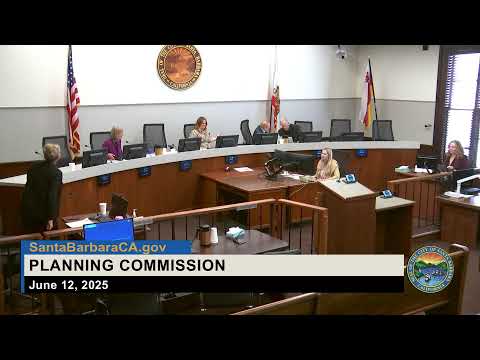
Planning Commission backs adaptive reuse ordinance with changes to unit size and eligibility
Summary
The Santa Barbara Planning Commission voted to recommend a city ordinance to incentivize converting nonresidential buildings into housing, with commissioners asking staff to shorten the eligibility age to five years and tighten average unit-size limits; the commission also urged faster work on in‑lieu fee options for inclusionary requirements.
The Santa Barbara Planning Commission voted unanimously June 12 to recommend an amendment to the Santa Barbara Municipal Code to create a citywide adaptive reuse program that would make it easier for existing nonresidential buildings to convert to housing. Vice Chair Boss and five commissioners supported the recommendation after adding changes the commission requested, including reducing the minimum building age for eligibility from 10 years to five years and setting lower average unit‑size limits for projects that use the ordinance’s incentives.
The ordinance would add Section 30.1850.045 to Title 30 of the municipal code and implement Housing Element Program 1, the staff report said. Dana Falk, the city’s long‑range project planner, told the commission the measure is “an incentive zoning program” that gives by‑right development incentives—density, open‑yard, parking and setback relief—if a conversion meets the ordinance’s definition and requirements. Falk said staff recommends the commission: amend the municipal code, find the ordinance exempt from CEQA under CEQA Guidelines §15061(b)(3), and find it consistent with the general plan.
Why it matters: Santa Barbara adopted its housing element in December 2023 and the state certified it in February 2024; the element directs the city to expand tools to create housing. Staff and several housing advocates argued adaptive reuse can convert vacant commercial floor area to housing more quickly and at lower cost than ground‑up construction, particularly in mixed‑use and multiunit zones in the city’s inland area.
Key provisions and limits: Falk summarized several features included in staff materials that applicants would need to meet to use the new…
Already have an account? Log in
Subscribe to keep reading
Unlock the rest of this article — and every article on Citizen Portal.
- Unlimited articles
- AI-powered breakdowns of topics, speakers, decisions, and budgets
- Instant alerts when your location has a new meeting
- Follow topics and more locations
- 1,000 AI Insights / month, plus AI Chat