Get Full Government Meeting Transcripts, Videos, & Alerts Forever!
Get email alerts on the Student Information System Attendance topic
No spam. Unsubscribe anytime.
District data director: Skyward, truancy tracking and rising nonpublic-school reporting drove record compliance file
Summary
The district’s student information coordinator told the Franklin County School Board the local Skyward system drives funding and compliance; the district recorded 1,141 students on its end-of-year report and is increasing outreach to homeschool, nonpublic and homeless students to ensure accurate attendance and funding records.
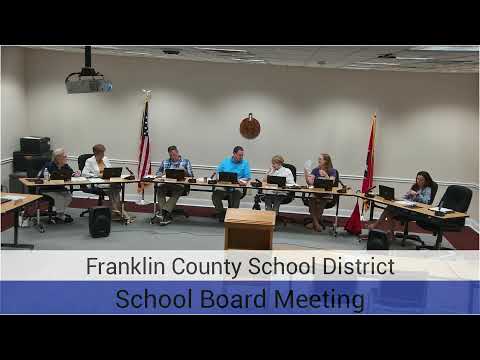
Laurie McDonald, the district’s student information and attendance coordinator, told the Franklin County School Board the student information system (Skyward) is the local source for enrollments, withdrawals, attendance and discipline and that accurate local data drives state funding.
"This is the beginning of our data locally," McDonald said, describing how the district’s Skyward entries feed the state and noting local staff are trained on the state side (DIS) to verify their own data. She said local staff work to keep student status correct across nine 20‑day funding periods.
McDonald outlined several special populations and reporting requirements: migrant and immigrant students, homeless students (defined in the presentation as lacking a fixed nighttime residence due to economic hardship), foster students who require best‑interest placement meetings, and students enrolled in nonpublic schools. She said the district’s independent homeschool population is about 72 students and that nonpublic and online schools (for example WCA and Saint Andrews) contribute a substantial number of reported students.
The presentation included quantitative details the board asked staff to track: the district’s largest end‑of‑year compliance report to date contained about 1,141 students (McDonald said last year’s comparable report was roughly 840). She said nonpublic schools were more consistent in reporting this year, which increased the district’s count and its duty to follow up on noncompliant enrollments. McDonald defined truancy as five or more unexcused days in a school year and chronic absenteeism as missing 10% of instruction (excused or unexcused except for field trips or homebound). She said excessive use of doctor’s notes can trigger recommendations for homebound services and that she conducts home visits and files truancy petitions as needed.
McDonald also described residential placements: the district keeps students enrolled, codes them to the placement and reconciles billing (she said the district pays approximately $61 per day to approved residential facilities and checks billing for holidays and snow days). She summarized the graduation cohort application process for Franklin County High School and Huntland — a four‑year cohort that requires documentation for any student who withdrew during the four‑year span — and said the district completed this year’s documentation without appeals.
Other responsibilities McDonald listed included federal civil‑rights data collection, the Tennessee Department of Education annual civil‑rights and bullying compliance report, the state alternative education survey and providing compulsory attendance letters for students applying for driver’s licenses.
Board members asked about why nonpublic reporting rose this year; McDonald said some small church‑related and online programs had been lax in prior years but were more consistent this cycle, which enlarged the district’s follow‑up workload. The board did not take action on the presentation; McDonald’s report was given for information and regular monitoring.
The board thanked McDonald for the report and asked staff to continue outreach and reconciling of nonpublic and homeschool data ahead of the next school year.