Get Full Government Meeting Transcripts, Videos, & Alerts Forever!
Get email alerts on the Zoning Amendment topic
No spam. Unsubscribe anytime.
Manteca council introduces ordinance revising permitted uses in three zoning districts
Summary
On June 12, 2025, the Manteca City Council voted 5-0 to introduce an ordinance amending Table 17.22.020-1 of the Manteca Municipal Code to change required entitlements and allowed uses in the Downtown Mixed Use, Neighborhood Commercial, and Public/Quasi‑Public zone districts and found the action exempt from further CEQA review under 15061(b)(3).
MANTECA, Calif. — The Manteca City Council on June 12 introduced an ordinance to revise the city's land‑use table, changing which uses are allowed and what types of permits they require in three zoning districts and finding the action exempt from further environmental review under the California Environmental Quality Act (CEQA) guidelines.
Deputy Director of Planning Jesus Orozco told the council the city‑initiated ordinance amends Table 17.22.020-1 of Title 17 (Zoning) of the Manteca Municipal Code and adjusts permit categories for about 25 uses in the Downtown Mixed Use, Neighborhood Commercial and Public/Quasi‑Public zone districts. Orozco said the amendment focuses on which uses require ministerial approval (by‑right), administrative ministerial use permits, or discretionary conditional use permits.
Orozco said the Downtown Mixed Use changes are intended to align zoning with the city's 2024 general plan and to encourage general retail and commercial services in the downtown. He said the Neighborhood Commercial district amendments would, among other changes, allow hotels and motels only subject to a conditional use permit. He also said the Public/Quasi‑Public district would be amended to permit general medical services and hospitals, consistent with the general plan. Because the ordinance is policy‑level and not tied to a specific site, staff recommended the council find the amendment exempt under CEQA Guideline 15061(b)(3), the so‑called common‑sense exemption.
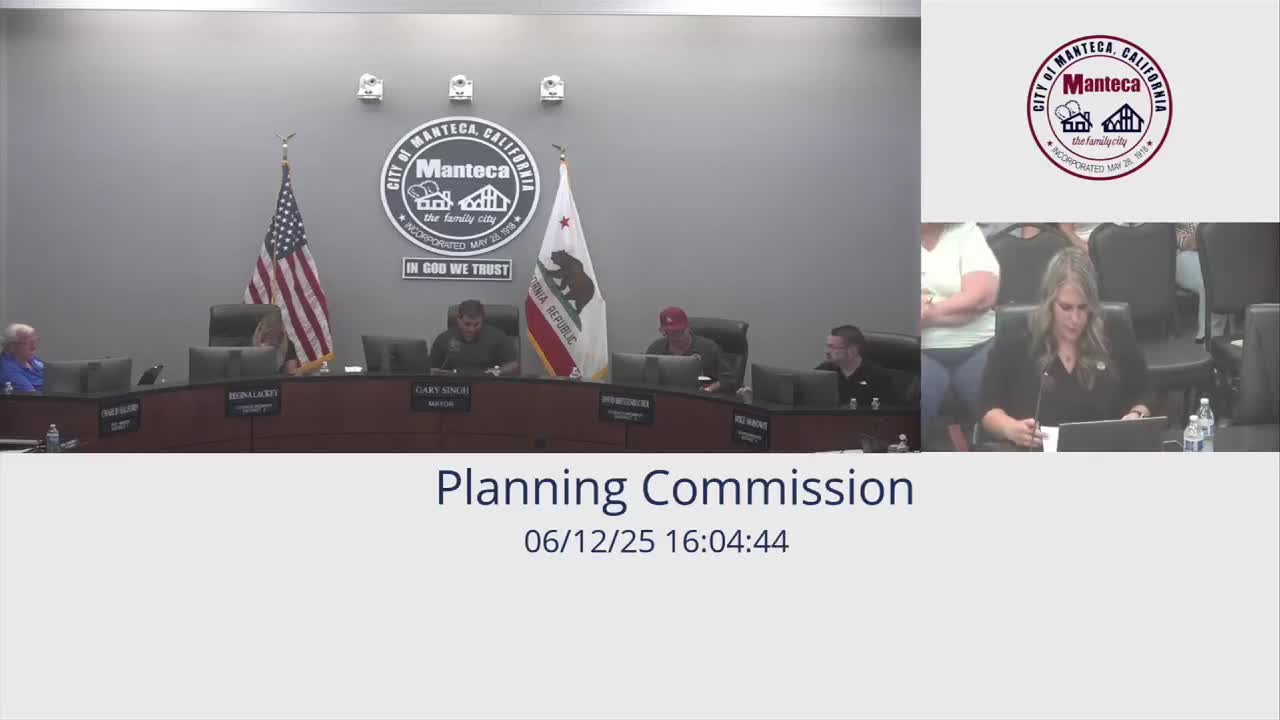
At the public hearing Cindy Wees, a resident who spoke earlier at the Planning Commission, supported the concept of tighter land‑use controls but urged the council to extend protections to properties zoned Commercial Mixed Use (CMU). She said the CMU classification "has the widest use possible allowing potential high impact uses to slide through the city's oversight without any required, additional conditional use permits," and asked why CMU was not included in the current amendment. "Why is a gas station still considered compatible? We're surrounded by homes, parks, and schools in 2025," Wees said. She urged the council to consider limiting high‑impact uses such as diesel fuel stations, 24/7 drive‑through operations, off‑sale alcohol, and facilities that require frequent large‑truck deliveries in bedroom communities.
Council members asked staff how the proposal fit into a broader zoning update. Orozco said staff is preparing a more comprehensive zoning code update that will cover development standards (for example drive‑throughs, site distance and compatibility standards) across commercial and residential zones and that those standards would be addressed in later ordinance packages.
Vice Mayor Halford moved and Council Member Breitenbucher seconded a motion to waive full reading, introduce the ordinance amending Table 17.22.020-1, and find the project exempt from further environmental review under CEQA Guideline 15061(b)(3). The motion passed on a 5‑0 vote.
The council packet and staff presentation note the Planning Commission recommended adoption by resolution; staff said additional components of the zoning code will be brought to the council for separate review in future meetings.
The ordinance was introduced; a date for a second reading or adoption was not specified in the meeting record.