Get Full Government Meeting Transcripts, Videos, & Alerts Forever!
Get email alerts on the Mental Health Diversion topic
No spam. Unsubscribe anytime.
Mental health advisory committee reports embedded court clinician, urges data sharing and diversion expansion
Summary
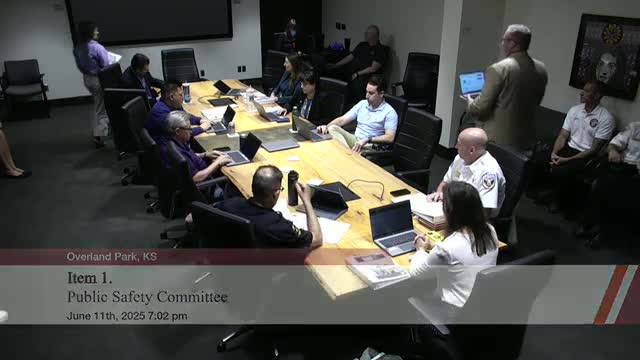
The chair of Overland Park’s Mental Health Advisory Committee told the Public Safety Committee June 11 that a behavioral health specialty court clinician will be embedded in the courts and that the committee supports using opioid-settlement funds to expand municipal-level treatment slots and data sharing with county partners.
Anne Simmons, chair of Overland Park’s Mental Health Advisory Committee, told the Public Safety Committee June 11 that the committee met a behavioral health specialty court clinician who will be embedded in municipal courts to identify candidates for mental-health diversion earlier in the process.
"We felt like it was prudent use of those monies, to do a partnership with the therapeutic community," Simmons said, referring to committee input on using opioid-settlement funds to open a spot specifically for Overland Park Municipal Court misdemeanors. She said that placement is significant because, before this partnership, slots for municipalities were not available.
Why it matters: Committee members emphasized that earlier identification and diversion for people with behavioral-health needs can keep suitable cases out of the criminal-justice system and improve local access to treatment.
Key points from the update
- Embedded court clinician: The committee said the clinician, named Eliza Rink, will be embedded in the courts and notified when cases appear to have a mental-health component so diversion options can be considered earlier.
- Opioid-settlement funding and partnerships: Simmons said the committee supported using opioid-settlement resources for a partnership with a therapeutic community that reserved a slot for municipal-court defendants. The committee also described a new substance-abuse case manager position that the police department will share with county partners; staff previously said that position is funded in part by opioid-settlement dollars and in part by the special alcohol control fund.
- Data sharing and coordination: Simmons urged the city to share municipal-level criminal-justice and police data with county partners to give a fuller regional picture and improve planning and grant-seeking. She said municipal court staff are already participating on a committee studying criminal-justice costs and fines/fees that may contribute to deeper system involvement for some people.
- Recognition and training: The committee noted Overland Park Police’s CIT (Crisis Intervention Team) platinum recognition, saying the department is the only municipal department nationally to receive that designation, and described ongoing efforts to communicate mental-health and substance-use resources more clearly on the city website.
Questions and next steps
Committee members asked for specifics about what municipal data should be shared; Simmons cited arrest and court-filing data and general criminal-justice cost data as useful. The committee said it will continue to advocate for clarity in municipal communications about behavioral-health resources and monitor how proposed federal funding changes may affect local service availability.
Simmons said the committee appreciates the city’s support and expects to remain involved as the court-clinician pilot and diversion expansion move forward.