Get Full Government Meeting Transcripts, Videos, & Alerts Forever!
Get email alerts on the Homelessness Planning topic
No spam. Unsubscribe anytime.
County and city form Housing Our Neighbors Planning Collaborative to draft homelessness response plan
Summary
Eau Claire County and city staff and community partners described the creation of a cross‑sector planning collaborative to build a community plan to prevent and reduce homelessness; presenters set a target to draft a public plan by the end of summer and described strategies learned from Milwaukee, La Crosse and Green Bay.
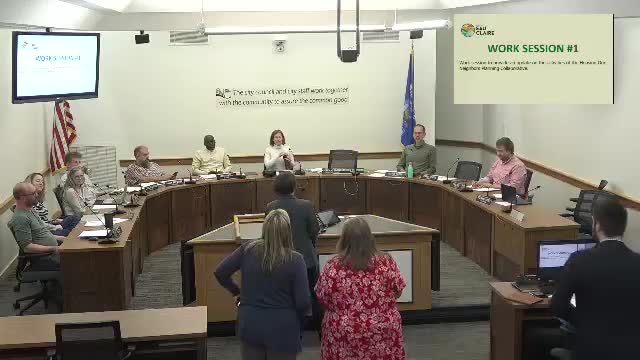
County and city human‑services staff and community partners presented a new cross‑sector Housing Our Neighbors Planning Collaborative during a June 9 council work session and described initial data, outreach and next steps toward a community homelessness response plan.
Angie Weidemann, Eau Claire County human services director, and Angie Stokes, assistant director, said the collaborative has been meeting for about nine months. The group’s stated goals are to create a shared understanding of current conditions, build a foundation for collaboration and produce a community plan that reduces homelessness by making it rare, brief and non‑recurring.
Presenters summarized local data the collaborative used to assess need: a 2024 community health assessment flagged lack of affordable housing as a top issue; an ALICE report was cited showing roughly 36 percent of county households cannot afford basic expenses; coordinated‑entry lists and shelter data were presented as evidence of rising need (presenters cited a coordinated‑entry list count in the range of 256 individuals and school‑district reports of hundreds of students experiencing homelessness); and law‑enforcement and jails data were reviewed to understand recurring contacts with the justice system.
A series of cost estimates cited in the presentation underscored the financial burden of homelessness on local systems. The presenters summarized local research showing an average cost per unhoused person across several service and legal categories in the mid‑four figures to low five figures, and noted a Sojourner shelter nightly rate cited in the discussion.
The collaborative has looked to other Midwest models. Presenters described Milwaukee County’s low‑barrier, housing‑first work and La Crosse’s joint city–county approach as instructive: Milwaukee reported notable reductions in overall and unsheltered homelessness after adopting a housing‑first strategy and using an outreach team and a named local coordinator to work directly with landlords and service providers. Presenters said the collaborative visited Milwaukee, Green Bay and La Crosse to learn models for outreach teams, master leasing, flexible funding (for security deposits and unit turn readiness) and the value of a designated backbone staff person to coordinate across agencies.
Key planning themes identified by the collaborative included: preventing people from becoming unhoused (early interventions and eviction prevention), increasing affordable and supportive housing, strengthening coordinated outreach and flexible case management, sustainable local funding for subsidies and services (not only federal grants), involving people with lived experience in planning, and centralizing communication and resource maps for service providers and the public.
Presenters said the collaborative has begun mapping local resources and will publish a public‑facing plan. They proposed a timeline to draft a community plan by the end of summer and to pursue fundraising and partnerships to support implementation; presenters estimated meaningful housing placements could occur within an 18‑month window if funding and landlord partnerships are secured, while noting that building new housing will require more time.
Speakers stressed the importance of engaging landlords, but said staff have not yet brought a concrete landlord incentive package to the table; examples from other communities include double security deposits, master leasing and quick funding for unit readiness. Presenters also said they are including people with lived experience in planning from the outset and are coordinating with existing groups such as the Dairyland Housing Coalition.
Council members and community partners voiced support and asked for specific next steps, including funding strategies and staff roles. Presenters said they will draft the plan for public feedback, identify backbone staffing and fundraising needs, and return to council and county boards with specific funding proposals.
Why this matters: presenters said homelessness is increasing locally and that coordinated planning, flexible funding and a point person to manage landlord relations and outreach are central to models that have shown results elsewhere. The collaborative’s plan will guide local investments, case management and outreach priorities.
What’s next: staff aim to produce a draft community plan for public review by the end of summer, to pursue local and philanthropic funding for subsidies and landlord incentives, and to identify a backbone staff position to coordinate the work across city, county and community partners.