Get Full Government Meeting Transcripts, Videos, & Alerts Forever!
Get email alerts on the Capital Bond Transparency topic
No spam. Unsubscribe anytime.
Jonesboro resident urges transparency on capital bond, questions emergency clause and ARPA funding
Summary
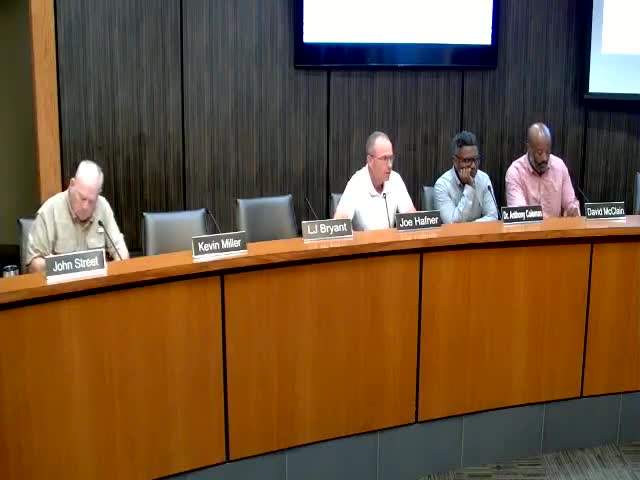
At the finance committee public‑comment period, resident Patty Lack criticized the city’s handling of a proposed capital bond package, questioning whether projects listed in an earlier capital plan remain in the current bond and objecting to use of an emergency clause that would shorten public review.
At the City of Jonesboro Finance Committee public‑comment period, resident Patty Lack urged clearer public disclosure about a proposed capital bond package and raised specific questions about earlier capital‑plan items that she said do not appear in the bond now before council.
"When you look at the old capital plan that was presented back in September ... there were some items in here that are not mentioned in the bond that is being presented right now," said Patty Lack, who gave her address as 4108 Forest Hill Road. Lack asked whether $8.25 million in remaining ARPA funds mentioned in the earlier plan remain part of the current bond package and whether a previously discussed land purchase on Carraway is still included.
Lack told the committee she was not opposed to city improvements but said the public had a right to know which projects would be funded and why the timeline changed. She said the initial capital plan was presented in September, followed by a gap in public information until a new capital plan appeared in April, and that the absence of clear updates has left residents unsure which proposal the council will consider.
Lack also referenced counsel’s description of an "emergency clause," which she said City Attorney Chris Moore explained typically applies to an immediate danger to life or property, and asked why the bond package would be presented under such an emergency timeline rather than following the usual three‑reading ordinance process and a return to the finance committee for more review.
A committee member responded during public comment that market conditions for municipal financing change daily and that staff aim to secure favorable interest rates rather than delay while rates fluctuate. The committee member said that schedule pressures and the bond‑marketing timeline are factors in how quickly the city moves from an authorizing resolution to bond sale activities. The committee member did not identify a statutory requirement that an ordinance must be returned to finance before council consideration.
Lack and other commenters urged the council to follow Jonesboro’s rules and procedures and to provide clearer documentation on which projects and funding sources appear in the current bond proposal. The public comment concluded with the meeting adjourned; no action on the bond ordinance occurred during the finance committee meeting.
A committee follow‑up requested: staff or bond counsel provide a clear explanation of timeline, what projects are included in the current bond package versus earlier capital plans, and whether any ARPA funds or congressional appropriations mentioned in earlier plans remain allocated to the current proposal.