Get Full Government Meeting Transcripts, Videos, & Alerts Forever!
Get email alerts on the Special Session topic
No spam. Unsubscribe anytime.
Minn. legislator says bipartisan talks continue; special session likely to settle taxes, health and bonding
Summary
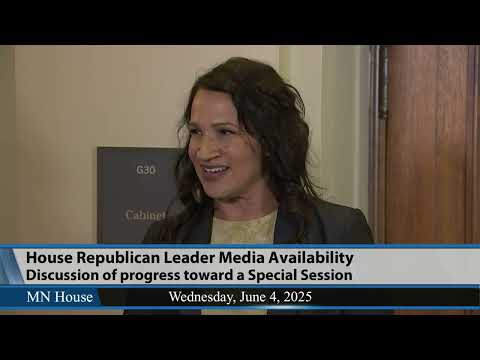
An unnamed legislator said bipartisan negotiations over tax, health care for undocumented immigrants, transportation and a $700 million bonding proposal are ongoing and that a special session called by the governor could occur soon.
An unnamed legislator, a legislator, said bipartisan negotiations over multiple 2025 bills are continuing and that "I would say special session should be called soon. Again, the governor is the 1 that needs to do that depending on the work, and that's really where we stand."
The comment came during a question-and-answer session about where talks stand on a slimmed-down tax bill, transportation and health provisions — including coverage for undocumented immigrants — and a proposed $700,000,000 bonding package. The legislator said there is not a date set and that negotiations remain active across committee chairs in both chambers.
Why it matters: A special session would let lawmakers address unresolved differences outside the regular session, potentially affecting taxes, public health coverage, transportation policy and capital projects paid by bonding. The legislator said bipartisan discussions "have not broken down in any way," but that substantive differences remain.
On the tax bill, the legislator referred to a "skinning down version of the tax bill," saying leadership had reviewed the offers and that the version under consideration raised concerns. "That skinny down version has a lot of concerns with it," the legislator said, adding that if language is changed or provisions are moved, members will "take a look at the final language." The session did not produce final text or a commitment to vote.
Transportation provisions drew specific attention. The legislator said there were "some county things in the collar counties and some of the things that were that were pointed out," and that chairs have been working through those concerns.
Health legislation and coverage for undocumented immigrants were discussed as a separate point. The legislator said the undocumented coverage piece "was never part of the discussion" originally and that it had been assumed it would travel as part of the health bill. Noting friction with DFL members, the legislator said one option under consideration is breaking that provision into a standalone bill, but that would require "a guaranteed contingency that, save funding for MDH or whatever that might look like," meaning assurances about funding and enactment.
On noncompete policy, the legislator said rollback of the noncompete ban remains under discussion: "Is something that we are still definitely talking about, and that work is going on with both the commissioner and with the, with the leaders and or I shouldn't say with the leaders, but with the committee chairs and those that have been working on that." No final action was announced.
The legislator addressed whether members receive per diems while out of session, saying they could not speak for other members but described a personal practice: "I don't take per diem personally, on any special sessions or anything, but I can't speak to other members."
On bonding, the legislator said discussions continue around a proposed $700,000,000 bonding bill. "That's a $700,000,000 bonding bill is what has been proposed and talked about from the very beginning," they said, noting limited room for additional programs but leaving open the possibility of agreement.
Other items mentioned included data-center tax provisions and removal of sustainable aviation fuel (SAF) from a version of the tax bill; the legislator said SAF "was a priority. That was stripped out."
No vote or formal action was taken during the session. The legislator said timing between a call for a special session and gaveling in would be "fairly quick, but giving people a fair time," emphasizing that members are back in their districts and would need some time to return if the governor calls a session.
The session included multiple questions from reporters and at least one outspoken audience member but no recorded motions or votes. The legislator repeatedly emphasized ongoing bipartisan talks and that no date for a special session had been set.
Looking ahead: Officials will await the governor's decision to call a special session; the legislator said it remains possible at short notice and that final action depends on negotiations and final bill language.