Get Full Government Meeting Transcripts, Videos, & Alerts Forever!
Get email alerts on the Lighting And Public Safety topic
No spam. Unsubscribe anytime.
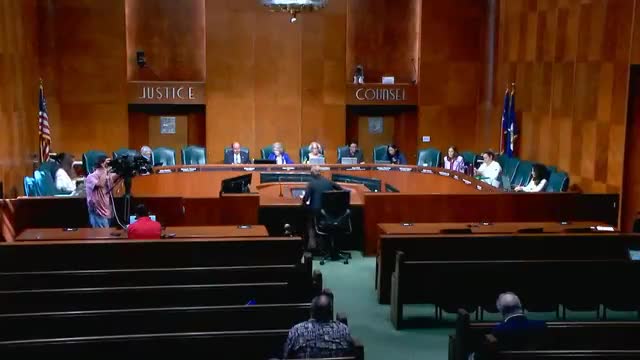
Advocates press committee on light pollution and efficient lighting as public-safety and grid-resilience measures
Summary
Light-pollution advocates and a community garden volunteer told the Resilience Committee that properly designed, lower-wattage, targeted lighting improves safety, reduces health harms and can decrease electrical load.
Debbie Moran, a light-pollution advocate, and Steve Goldberg, a Westbury Community Garden volunteer, urged the Resilience Committee to consider light pollution as a public-health and grid-resilience issue and to schedule a fuller demonstration of proper lighting for committee members.
Moran described light pollution as “misused lighting, not all lighting” and linked excessive nighttime lighting to sleep disruption and health consequences. She asked the committee to allow a full presentation and demonstration; chair Twila Carter and council members agreed to schedule a follow-up so members could see live examples and the committee could better evaluate enforcement and design options.
Why it matters: Advocates told the committee that properly directed, lower-wattage fixtures can improve pedestrian visibility at crosswalks, reduce glare for drivers and pilots, limit health harms from nocturnal light exposure and lower electricity consumption. Steve Goldberg showed before-and-after photographs from a site near the Westbury Community Garden, noting a switch from an 80-watt fixture to a 32-watt fixture reduced light trespass and lowered electrical load.
Moran described health research linking nighttime light exposure to suppressed melatonin and downstream health risks, and she provided the committee with a packet of accident-site photos and references. “When we put daylight outside our bedrooms at night, it suppresses the hormone melatonin and that both interrupts sleep,” she said. Moran asked the committee to invite her group back for a demonstration and a fuller briefing; council members agreed that a presentation would be useful and that staff would coordinate scheduling and logistics.
Goldberg highlighted an example where the community garden purchased and installed lower-wattage fixtures for a neighboring commercial development and reported better pedestrian visibility and reduced electrical demand after the change. Multiple council members and mayoral-office staff expressed interest in a joint demonstration and in identifying opportunities to promote efficient, properly shielded fixtures across the city.
Committee directions: staff agreed to follow up with Moran and Goldberg to schedule a demonstration and to explore education and enforcement gaps around the city’s lighting ordinance. No formal vote or policy change occurred at this meeting.