Get Full Government Meeting Transcripts, Videos, & Alerts Forever!
Get email alerts on the Environmental Protection topic
No spam. Unsubscribe anytime.
Council approves wastewater-service extensions; environmental groups warn of harm to Jollyville Plateau salamander
Summary
The council approved two service-extension requests for properties near FM 620 despite unanimous Environmental Commission opposition and warnings from conservation groups that the projects would exceed the city's impervious-cover rules and threaten the federally listed Jollyville Plateau salamander.
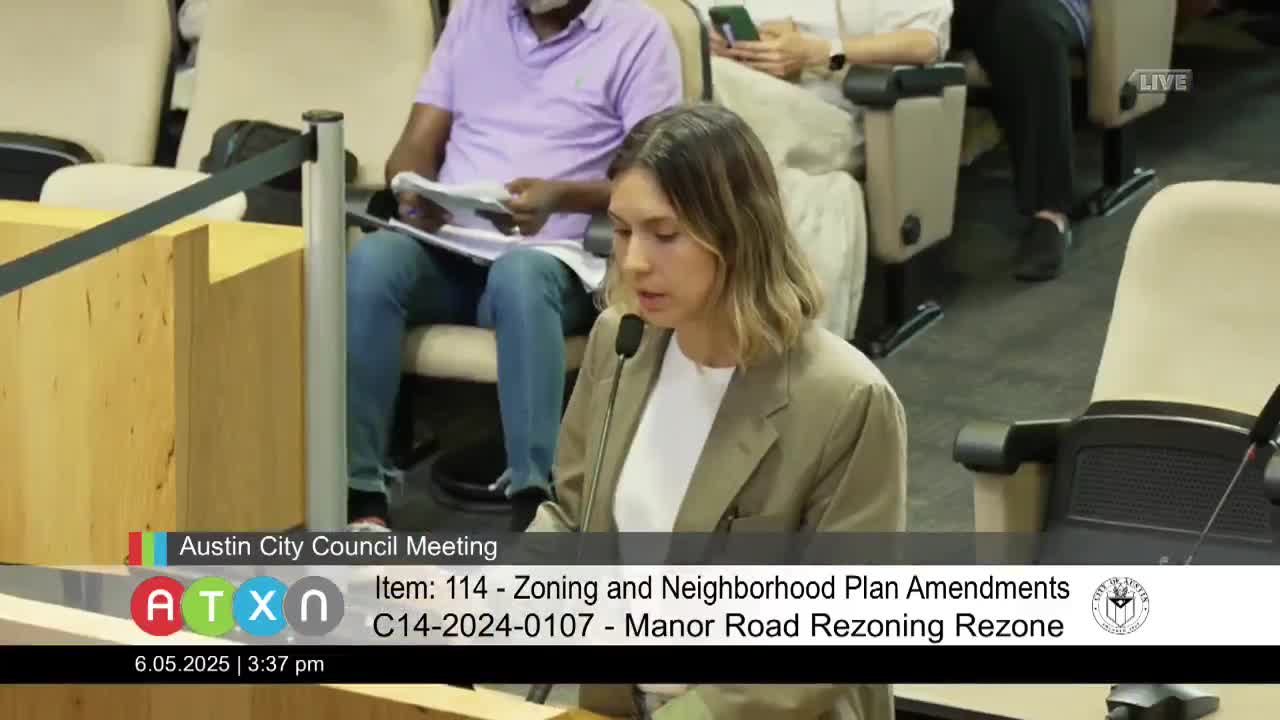
The Austin City Council approved two wastewater service-extension requests on the consent agenda (agenda items 16 and 17) on June 5 after public comment that included conservation groups, scientists and developer representatives.
The requests concerned extensions for parcels near Farm-to-Market Road 620. Several speakers urged the council to deny the extensions, saying the approvals would permit development that exceeds the city’s impervious-cover rules and would harm downstream habitat for the federally listed Jollyville Plateau salamander. Azalea Rodriguez (Texas representative, Defenders of Wildlife) told council the proposal would “pave over 59% of the site, which is triple Austin’s 20% impervious-cover limit,” and said approval would “invite other developers to bypass environmental safeguards.” Craig Naser and Roy Whaley of the Sierra Club echoed that call; Naser described the developer’s position as “bullying” and noted the Environmental Commission recommended denial 10–0.
The developer and project proponents argued the extensions would enable workforce housing and that upsizing the utility lines would yield systemwide benefits. A project proponent told council the wastewater improvements would be about $2,000,000 and that the development would deliver a workforce-housing project that otherwise would not be feasible without service.
Councilmember amendments and the final consent tally: several council members registered No votes on these items during the consent vote (Council Members Ryan Alter, Michael Siegel, Tim Kaine [note: name placeholder as transcript uses different names], and Mark Duchin were recorded by the clerk as voting no on items 16 and 17). The consent agenda passed and the service extensions were approved despite the dissent; council directed staff to proceed consistent with the actions taken on the consent agenda.
Why it matters: the Environmental Commission had issued an emphatic, unanimous recommendation against these service extensions; local conservation groups warned approving them would set a precedent for other parcels released from the city’s extraterritorial jurisdiction after state-level changes. Commenters also highlighted the tension between infrastructure-driven affordable-housing goals and local environmental protections.
Ending: Council approval clears the way for the requested wastewater service. Councilmembers who voted against the items said they were doing so to uphold watershed and endangered‑species protections; supporters said the decisions will enable workforce housing and infrastructure upgrades that will serve broader areas. As with other consent items, staff follow-up memos and project-level engineering reviews are the expected next steps.