Get Full Government Meeting Transcripts, Videos, & Alerts Forever!
Get email alerts on the Budget And Finance topic
No spam. Unsubscribe anytime.
Flower Mound parks board approves five-year parks CIP recommendation; bond funds to cover major projects
Summary
The parks board unanimously recommended the five-year parks capital improvement plan to be forwarded for funding with 4B sales tax and recent bond proceeds; board members debated priorities and timing for the CAC and park projects.
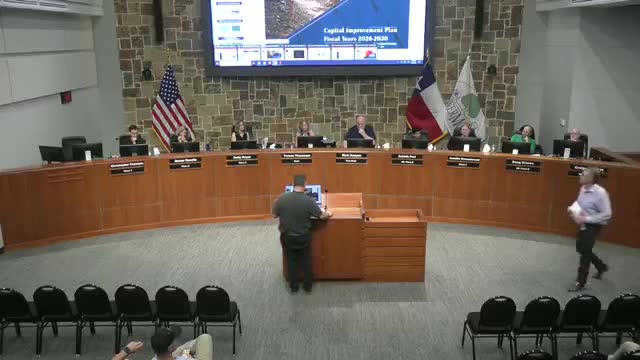
The Flower Mound Parks Board on June 5 voted unanimously to recommend a five-year capital improvement program for parks projects that allocates bond proceeds and 4B sales tax revenue to multiple projects, including design work for a Community Activity Center (CAC) renovation, Leonard and Helen Johns Community Park design, trail segments, and Trotter Park improvements.
The board's recommendation will be forwarded to the Community Development Corporation and ultimately incorporated into the town budget process. The vote came after a lengthy staff presentation of the proposed five-year plan and a detailed explanation from the town CFO of why more sales-tax funds must be allocated to operations and maintenance.
The plan steers significant bond funds to design and initial construction across several priorities: CAC expansion and renovation; design and construction funding for Leonard and Helen Johns Community Park; Twin Coves Park phase 2 design; trail projects divided across the five-year period; and synthetic turf fields at Bakersfield Park. The staff presentation estimated year-one needs, soft costs for design and engineering, and an ongoing annual allocation for park-and-trail amenities and playground replacements.
John Zagorski, the town chief financial officer, told the board the town changed its financial approach because legislative caps on operating revenue growth and a lower outlook for sales-tax growth have squeezed the general fund. The town used cash financing heavily in prior years; with inflationary pressures and a more constrained revenue environment, Zagorski said bond financing and a shift of certain costs to debt service will preserve services while letting capital projects proceed. "We need a more balanced approach and one that focuses on planning for the future," he said, describing the shift in funding.
Board members asked staff to prioritize some projects for faster delivery, notably the CAC renovation and Chinn Chapel turf conversion; staff said design work and procurement steps would begin in fiscal year 2026 and that reimbursement resolutions and the timing of bond issuances could allow some early work to proceed.
The formal motion was moved "as presented in the agenda caption" and passed unanimously on roll call. The board then confirmed the July 3 meeting is canceled and set the next regular meeting for August 7, 2025.
The vote recorded on June 5 demonstrates the board's support for a multi-year plan to use recently voter-approved bonds and 4B sales-tax revenue while setting aside funds for increased operations and maintenance costs now expected to be paid from sales-tax revenues rather than the general fund.
Key financial context provided to the board: the town's park-related 4B sales-tax fund will shoulder higher operations and maintenance charges in fiscal 2026 (staff cited several million dollars of increased O&M/debt-service needs); the town will continue to pursue grants and other revenue sources, but staff asked the board to accept a strategy that uses bonds for capital while preserving service levels through a combination of limited sales-tax allocation and long-term planning.