Get Full Government Meeting Transcripts, Videos, & Alerts Forever!
Get email alerts on the Animal Welfare topic
No spam. Unsubscribe anytime.
Hallandale Beach delays expanded animal-control ordinance after graphic neglect videos and liability debate
Summary
Commissioners viewed multiple videos of animal neglect, debated a proposed rewrite of Chapter 6 addressing impoundment, sterilization and microchipping, and voted 5-0 to table the ordinance and schedule a workshop for more study and edits.
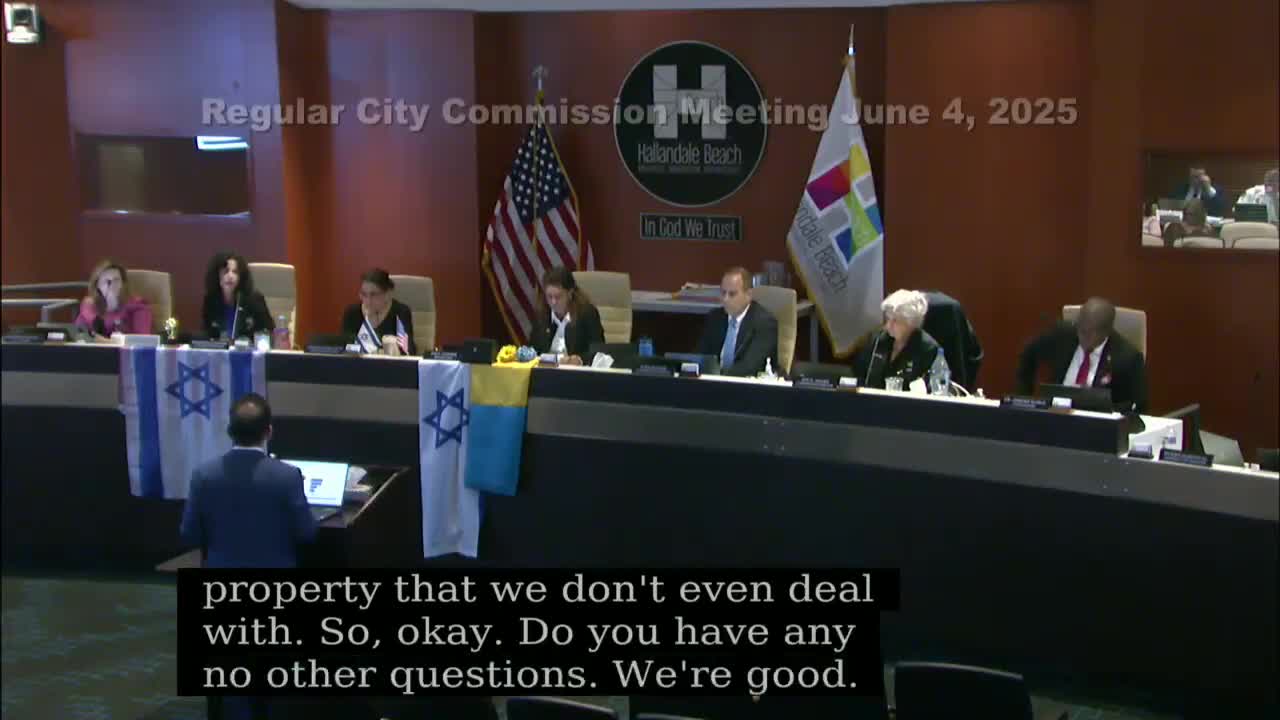
The Hallandale Beach City Commission on first reading heard an extended presentation and emotional testimony about local animal neglect before voting unanimously to table a proposed overhaul of Chapter 6 (Animals) and schedule a workshop for further review.
The ordinance — described in the agenda as amending provisions relating to animal control, custody and welfare, shelter requirements, impounding stray or neglected dogs, sterilization, and microchipping — was presented during the meeting by Commissioner Annabel Lee Matab (sponsor) and Vice Mayor Michelle Lazaro (cosponsor). Matab opened by asking the commission to watch videos documenting recent neglect and abuse cases in the city and urged a stronger local response.
Matab and other speakers showed multiple body-camera and rescue videos of animals recovered in Hallandale Beach neighborhoods. The commission heard accounts of dogs found with severe skin disease and infestations, animals kept in makeshift cages in heat, and one scene in which children were found in a residence alongside a neglected puppy. Matab said rescuers and volunteers have repeatedly encountered animals that were not spayed or neutered and linked program cuts at the county level to rising overpopulation.
Speakers described a series of individual cases by name (animals in the videos were referred to as Faith, Omari and Rocco among others) and named local advocates who assisted with rescues, including Anna Bueno of Paws to Care Coalition and retired investigator Mike Bittnell. Matab urged the commission to adopt ordinance language that would give local officers clearer authority and sanctions.
City staff and counsel warned of operational and legal consequences if the city assumed more direct responsibility for impoundment and sheltering. Chief Michael told commissioners that, in conversations with Broward County Animal Care, the county had said it would attempt to pick up loose animals "within 72 hours" but that response time was inconsistent. The City Attorney explained that accepting legal custody or becoming a de facto animal-control agency would create additional statutory duties and raise the city’s legal exposure.
Mayor Joy Cooper emphasized liability concerns tied to sheltering animals, noting the city’s fiduciary duty to limit exposure to lawsuits and referencing prior costly settlements involving animal incidents. City staff said the city already pays private veterinarians to board animals in specific cases and maintains a modest fund for sterilization; staff also cited a roughly $20,000 existing budget line and an estimated implementation startup figure that staff earlier projected could approach $300,000 in the first year under a full program.
Commissioners probed several specific policy choices embedded in the draft ordinance: whether animals found by city officers would be held 72 hours (county standard) or five days (language in the draft); how sterilization and microchipping requirements would be enforced or funded; whether the city would require written agreements with rescues; the degree to which the county’s reduced low-cost spay/neuter services had driven street-breeding; and the need for written liability releases if the city housed animals while awaiting county pickup.
After roughly two hours of presentation and questioning — during which commissioners and staff discussed enforcement tools already in the city code, county practices and the limits of local authority — the commission voted unanimously to table the ordinance and hold a dedicated workshop to refine language, clarify operational roles, and resolve liability and funding concerns.
A motion to table the item and schedule a workshop passed on roll call, with Mayor Joy Cooper, Vice Mayor Michelle Lazaro, Commissioner Butler, Commissioner Adams and Commissioner Annabel Lee Matab recorded as voting yes. At the vote the mayor asked staff to coordinate calendar availability for a workshop and for staff to bring proposed cleanup edits and concrete policy options back to the commission.