Get Full Government Meeting Transcripts, Videos, & Alerts Forever!
Get email alerts on the Forest Restoration topic
No spam. Unsubscribe anytime.
Coconino County, Flood Control District and partners accelerate San Francisco Peaks forest restoration
Summary
Coconino County, the Flood Control District and federal and nonprofit partners described ongoing timber-thinning, prescribed-fire and steep-slope projects meant to reduce wildfire risk on the San Francisco Peaks and lower the chance of post-fire flooding in Fort Valley and Flagstaff.
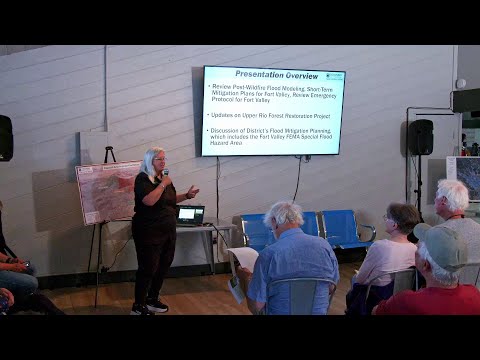
Coconino County and the county Flood Control District on Tuesday outlined a stepped-up effort of forest-restoration projects on the San Francisco Peaks, saying work already under way and contracts expected this year will reduce the risk of large, high-severity fires that can trigger damaging post-fire floods.
The effort covers several projects on both sides of Highway 180, including Wing East and Wing West, the Hock and Derfer projects, steep-slope work at LaRue and treatments inside the Fort Valley Experimental Forest. Jay Smith, forest restoration director for the Coconino County Flood Control District, said the district will invest about $3 million this year and about $2.4 million next year toward those projects and other work in the Upper Rio watershed.
“Our plan is to get this done to protect our communities and protect the San Francisco Peaks,” Jay Smith said, describing partnerships that split work so multiple contractors can complete larger areas within a season. Smith said the Hock project was divided into five management areas so three contractors could complete it within a year.
The projects rely on multiple partners. The Nature Conservancy is managing the Hock project while Coconino County and the Flood Control District fund it. The National Forest Foundation is working on the Derfer project, and the Greater Flagstaff Forest Partnership, Lowell Observatory and congressional directed spending from U.S. senators were cited as funding contributors for other projects.
Matt McGrath, district ranger for the Flagstaff Ranger District of the Coconino National Forest, described the restoration approach as a mix of commercial mechanical thinning, prescribed fire and public education. He said the aim is to “reduce the potential for catastrophic fire” and restore more natural fire regimes so future fires pose less threat to homes and downstream communities.
McGrath showed before-and-after satellite imagery of Wing East and said crews remove slash piles when feasible to reduce the need for later pile burns. He also described steep, rocky areas such as LaRue that require specialized equipment or helicopter work; he and other presenters said steep-slope work is more expensive than typical mechanical treatment but can cover larger, higher-risk acres than a helicopter-based option at the same cost.
Jay Smith and McGrath said only one project (Wing West) currently has enough merchantable timber to pay for its harvest costs; most projects require public funds to remove dead-and-down material and slash that has little commercial value but increases post-fire flood risk if left in place.
Officials credited the multi-agency partnerships and recent contract activity with moving many projects from planning into implementation. Matt McGrath said the combination of completed and contracting projects in the Upper Rio watershed “is changing the long term trajectory” of wildfire risk around the Peaks.
The presenters left maps and project information on display and said staff from the Flood Control District, the Forest Service and partner organizations will remain after the presentation to answer parcel-level or technical questions.