
Boise outlines multi‑facility water renewal plan, WIFIA financing and FY26 rate proposal
Get AI-powered insights, summaries, and transcripts
Sign Up Free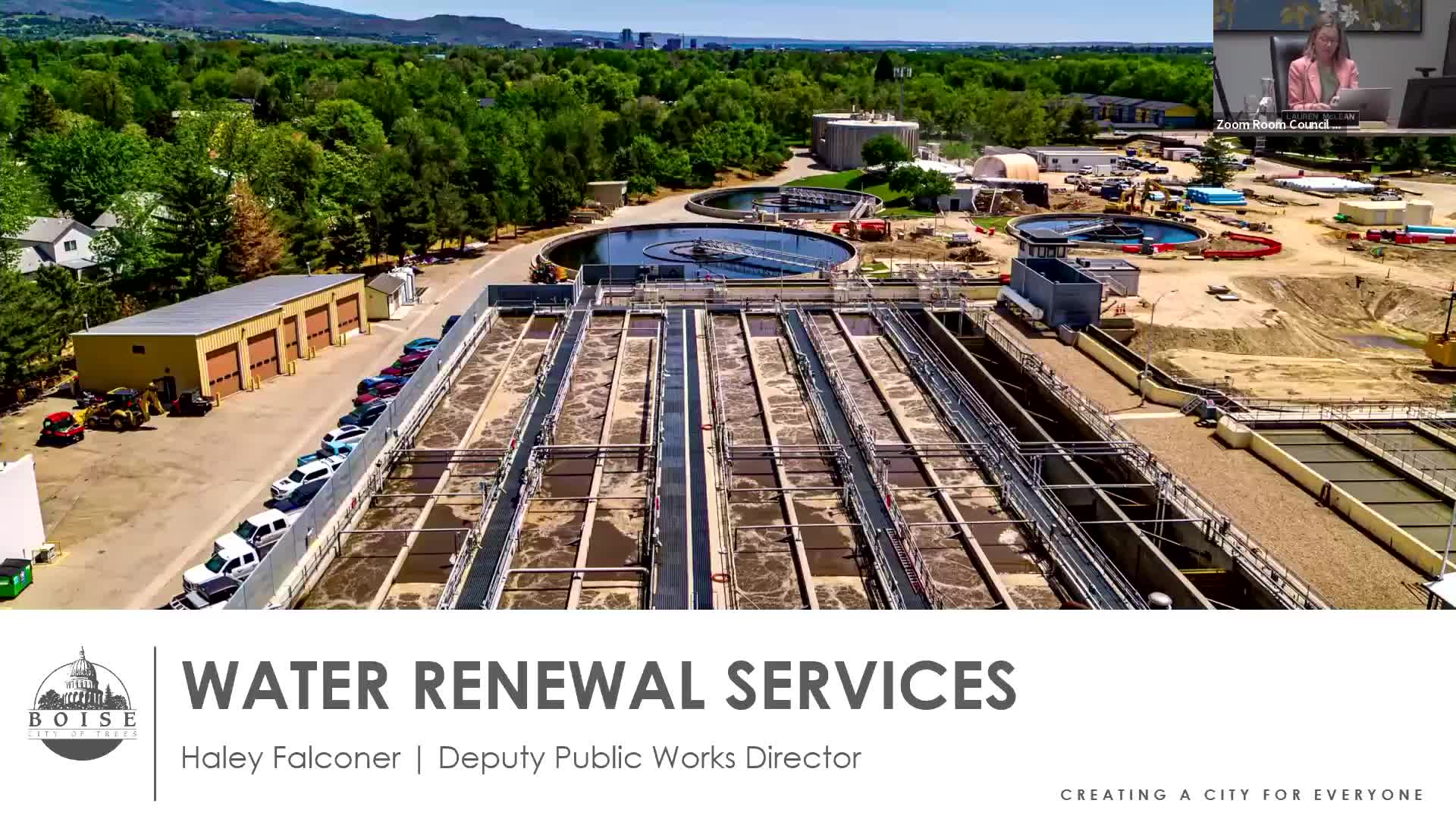
Summary
Utility staff described simultaneous treatment and collection projects, federal WIFIA financing and a FY26 recommended 9.9% water renewal rate (estimated $58/month for typical residential use); staff warned of higher construction costs and regulatory drivers such as phosphorus and possible future ammonia limits.
City water‑renewal staff gave the Boise City Council an update on system condition, current projects and financing plans tied to a 10‑year capital program.
"It's multiple facilities, over a thousand miles of pipe, 29 lift stations. We serve 3 communities about 30,000,000 gallons per day of treatment right now," Haley told the council, summarizing the scope and scale of Boise's water renewal system and the planning drivers: growth, regulatory compliance, condition and resiliency for climate-change impacts.
Staff reviewed progress on Lander Street and West Boise treatment facilities (capacity expansions, ultraviolet disinfection, and future phosphorus-removal work), collection‑system and lift‑station projects, and a recycled‑water program intended to add capacity and reuse options. Haley described construction‑market pressures — a roughly 50% national increase in construction costs since 2020, amplified locally — and said the utility has adjusted scopes, phased projects and added program management and early procurement strategies to reduce schedule and price risk.
Financing: staff reminded the council that a November 2021 bond authorization (voter approval ~81%) allows up to $570 million of borrowing for utility projects. That authorization was split for WIFIA and other bond financing: roughly $399 million was identified for WIFIA; the initial WIFIA loan authorization is $264 million of which $40 million has been drawn, and the city has issued approximately $80 million in other bonds ($70 million spent to date), according to the presentation. Haley said WIFIA proceeds are supporting recycled water work, West Boise and Lander Street projects, and some collection work.
On rates, staff proposed a 9.9% water‑renewal rate increase for FY26, which Haley said would increase the average residential monthly water‑renewal charge to about $58. "The rate recommendation for water renewal for FY 26 is 9.9%," Haley told council. Staff also noted existing affordability programs (one‑time emergency assistance and hardship discounts) and said coordination with regional utilities on affordability was ongoing.
Regulatory drivers: Haley told council the Clean Water Act and state rulemaking inform permit limits, and singled out phosphorus limits in current permits and a possible future tightening of ammonia limits driven by sensitive species as examples that could drive future capital needs. Staff listed upcoming construction contracts and said the utility would bring guaranteed‑maximum‑price packages and other procurement actions to council in the coming months.
Councilmembers asked about bringing more work in house, regulatory examples and the timing of bond draws; staff said some planning and demolition work has been brought in house, and that the financial team determines when to access remaining bond/WIFIA proceeds. Staff stated they expect the bond proceeds to be spent by 02/19/30 with a 30‑year funding horizon for repayment.