Get Full Government Meeting Transcripts, Videos, & Alerts Forever!
Get email alerts on the Sudan Humanitarian topic
No spam. Unsubscribe anytime.
U.N. reports rising displacement and cholera spread in Sudan; South Sudan receiving refugees
Summary
The U.N. briefing said conflict-driven displacement in Sudan is increasing and cholera cases are rising in River Nile state; humanitarian agencies report thousands of refugees and returnees arriving in South Sudan amid constrained resources.
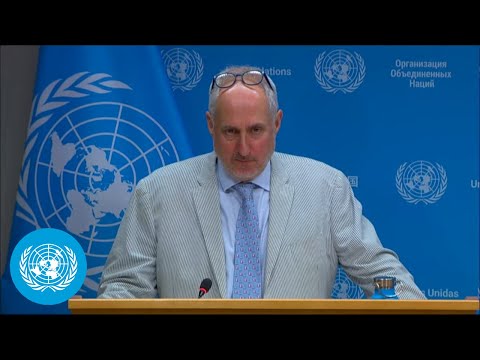
The United Nations spokesperson summarized humanitarian developments in Sudan and neighboring countries, reporting rising displacement and a growing cholera outbreak in parts of the country.
Citing the International Organization for Migration (IOM), the spokesperson said "nearly 9,700 people in Khartoum state alone were recently displaced from Al Saleh in Umdurma locality due to conflict." She added that IOM reported more than 9,000 people fled Dibebat town in South Kordofan last week and that displacement continued in North Darfur.
On cholera, the briefing said daily cases are falling in Khartoum state but increasing in River Nile state: "in the past two weeks ... more than a hundred and 80 cumulative cases and 4 deaths" were reported in River Nile. The spokesperson said most cases were concentrated in Atbara, Barbar and Damar and that many reported cases arrived from other states, evidencing cross-regional spread.
The briefing also covered refugee flows into South Sudan. U.N. refugee agency data cited by the spokesperson said 4,000,000 people have fled Sudan into neighboring countries since the start of the war; the spokesperson reported that in May alone 15,000 people arrived in the border town of Renk in South Sudan and that several hundred protesters in Renk had demonstrated after transportation services stopped.
Why it matters: sharp and sustained displacement, outbreaks of communicable disease and funding shortfalls combine to stretch humanitarian operations, creating urgent needs for food, water, shelter and health care in multiple states.
The spokesperson said humanitarian partners are working to scale up assistance where possible but face access, security and resource constraints.