Get Full Government Meeting Transcripts, Videos, & Alerts Forever!
Get email alerts on the Gaza Aid Access topic
No spam. Unsubscribe anytime.
U.N.: Gaza aid deliveries limited; fewer than 400 truckloads collected since crossing reopened
Summary
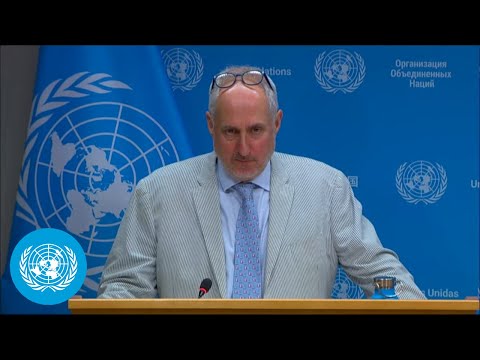
At a U.N. press briefing, the spokesperson said repeated denials of access and restrictions at crossings have left U.N. teams able to collect "fewer than 400 truckloads" of supplies since the Karim Shalom crossing reopened, and recent Israeli clearances approved only a small number of precleared trucks.
The United Nations spokesperson said the U.N. has been able to collect "fewer than 400 truckloads" of supplies for Gaza since the Karim Shalom crossing reopened, and that trucks and convoys continue to face denials of access.
The spokesperson said U.N. teams submitted dozens of pre-cleared truckloads for additional Israeli clearance but that only a small fraction were approved to enter the Israeli side of Karim Shalom (also spelled Karim Sholem in the briefing). She told reporters that of multiple attempts to move supplies, "these denials prevented our teams from carrying out interventions as critical as, as, trucking water to those who need it." The briefing noted one denied attempt yesterday was to retrieve fuel, which U.N. staff said is urgently needed.
Why it matters: the U.N. and partners say large-scale humanitarian operations require sustained, predictable safe access. The spokesperson framed the problem as a mix of denied clearances, restrictions on what can move through crossings, and security constraints inside Gaza that block distribution.
Details: the spokesperson said U.N. teams recorded 13 access attempts across the Gaza Strip yesterday, with six denials; she said some convoys that were allowed to enter carried only flour. She added that U.N. and partner staff on the ground have repeatedly tried to coordinate secure routes through a militarized zone in the south to reach people in need.
The briefing also described disruptions inside Gaza: medical facilities are suspending operations in parts of northern Gaza, and staff and patients were evacuated from one Indonesian-run hospital; the U.N. said no hospitals remain functional in North Gaza. The deputy humanitarian coordinator visited Al Hal Ali Hospital in Gaza City and reported staff describing shortages of critical supplies, including antibiotics. The spokesperson said U.N. partners report that in the past three weeks more than 100,000 people were forced to flee parts of North Gaza.
The spokesperson characterized some losses of delivered supplies as the result of looting and what she described as "self-distribution" by people who fear delays in future deliveries. When asked about a report that a nongovernmental group had delivered nearly 6,000,000 meals, the spokesperson said the U.N. has no independent means to verify that specific number and that distribution channels and facilitation vary.
The U.N. press briefing highlighted that the U.N. and partners continue to push for the unrestricted flow of assistance and safe, predictable access; the spokesperson said a strong, unified Security Council voice urging humanitarian access would be the ideal outcome of the council meeting on Gaza.
The briefing closed with the spokesperson noting that attempts to retrieve fuel and to truck water were among the operations prevented by denials of access, warning that without fuel some critical services and life-saving interventions will soon have to suspend operations.