Get Full Government Meeting Transcripts, Videos, & Alerts Forever!
Get email alerts on the Workforce Vacancy topic
No spam. Unsubscribe anytime.
Mendocino County holds AB 2561 hearing: HR reports ~12% vacancy rate, retention metrics and hard-to-fill roles
Summary
At a required public hearing under AB 2561, county HR presented vacancy and recruitment data, described retention efforts and identified hard-to-fill positions; the Board approved the staff presentation unanimously.
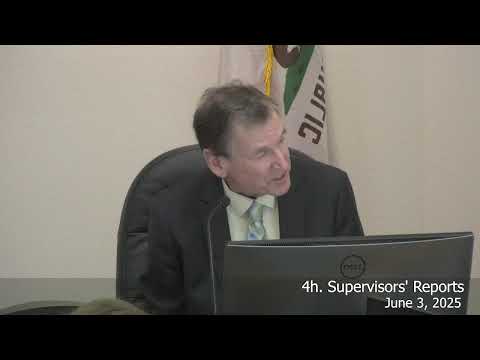
The Mendocino County Board of Supervisors held the public hearing required by Assembly Bill 2561 on June 3 and voted unanimously to accept the staff—s presentation on vacancies, recruitment and retention efforts.
Sherry Johnson, the county—s human resources director, told the board that AB 2561 requires annual public discussion of vacancies and staffing strategies and that proper notice had been given. Johnson and HR manager Brandy Dalzell presented countywide vacancy and recruitment statistics and outlined recruitment and retention activities.
Key points from HR—s presentation - Countywide vacancy rate: Dalzell reported a countywide vacancy rate near "almost 12 percent" as of the pay period ending May 10. - Activity and workload: HR said departments submitted a large number of staffing requisitions in 2025; staff reported roughly 189 position requisitions in the period cited, 127 recruitments underway, approximately 1,618 applications screened, 75 exams conducted and 12 formal referrals (eligibility lists). HR explained that those figures cover requests across multiple departments and recruitment stages. - Bargaining-unit thresholds: AB 2561 requires extra disclosure when a single bargaining unit exceeds 20% of total allocated full-time positions. HR said one such unit was the county—s Public Attorneys Association (MCPA) and clarified that Teamsters-represented probation (McPhee) also exceeds the 20% threshold; HR said neither had requested the additional unit-level data at this hearing but could do so under the law. - Retention and hiring challenges: Dalzell reported a retention-rate measure "at or around 99%" for a defined period and listed retention measures the county is using — onboarding and anniversary surveys, training and a "coffee with HR" program. She and Johnson also flagged several hard-to-fill roles including licensed social-service positions and Public Health Nurse (PHN) roles that require special certifications or master's-level credentials.
Board concerns and exchange about arithmetic Several supervisors pressed HR on apparent inconsistencies between a near-99% retention snapshot and a countywide turnover/hiring-savings target of 6% used in budget planning. Supervisor Williams and others asked how both figures could coexist and whether relying on a 6% natural attrition assumption to realize budget savings was realistic. HR and the CEO—s office responded that the retention metric is a point-in-time measure that fluctuates and that the 6% figure is a conservative, budget-level assumption to be monitored and adjusted during the year.
Action The board voted to accept the staff presentation and comply with AB 2561's requirement that the county discuss vacancies, recruitment and retention. The motion to approve the presentation was made by Supervisor Mulhern, seconded by Supervisor Williams and carried unanimously (5-0). HR will provide additional unit-level information if any bargaining unit requests it under the statute and will continue to report on recruitment and retention metrics during quarterly updates.
Context AB 2561, enacted by the California Legislature and signed by the governor, requires public agencies to hold one public hearing each fiscal year about vacancies, recruitment and retention and to provide unit-level data when requested for large bargaining units. The hearing is intended to increase transparency on staffing challenges that affect service delivery.