Get Full Government Meeting Transcripts, Videos, & Alerts Forever!
Get email alerts on the Housing Rezoning topic
No spam. Unsubscribe anytime.
Redlands council certifies EIR and approves rezoning to meet state housing targets, Davis abstains on two parcels
Summary
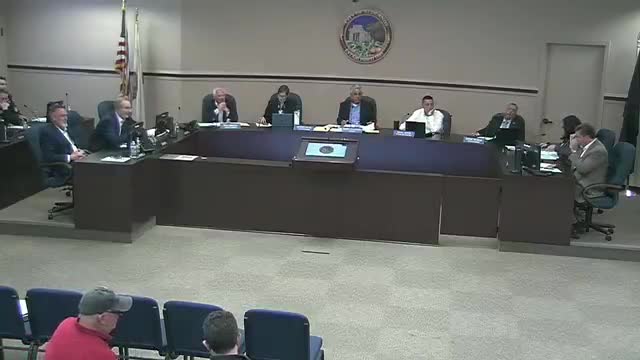
The Redlands City Council on Tuesday certified the final subsequent Environmental Impact Report (EIR) and approved a package of general-plan and zoning map amendments to implement the city’s sixth-cycle housing element, a rezoning program city staff said is necessary to meet the region’s assigned housing need.
The Redlands City Council on Tuesday certified the final subsequent Environmental Impact Report (EIR) and approved a package of general-plan and zoning map amendments to implement the city’s sixth-cycle housing element, a rezoning program city staff said is necessary to meet the region’s assigned housing need.
The rezoning package, which the council adopted by roll-call vote and introduced an ordinance to amend the zoning map, changes several East Valley Corridor and North Redlands parcels from commercial, industrial or agricultural designations to medium- and higher-density multifamily zones in order to increase residential capacity and provide a 20% buffer against potential development shortfalls identified in the Regional Housing Needs Allocation (RHNA).
Staff said the rezoning implements the housing-element program adopted in 2022 and certified by the state Department of Housing and Community Development, and that the Southern California Association of Governments assigned Redlands a RHNA of just over 3,500 units for the cycle. Kevin Berry, senior planner, told the council the rezoning would remove most of the affected parcels from the East Valley Corridor specific plan and rezone them to R2 or R3 multifamily or raise allowable density on one site that will remain in the specific plan.
The council heard public comment from several residents and stakeholders. Steve Rogers, who addressed the council during the public hearing, questioned removing properties from a specific plan and expressed concern about the thoroughness of the city’s traffic analyses. Bruce Laycock and other speakers urged the council to move forward to enable more housing development. The city clerk reported three written comments, including one from the San Bernardino County Flood Control District; staff said flood-control concerns would be addressed at subsequent development review because the action before the council was limited to rezoning.
As required by CEQA, staff circulated a draft subsequent EIR and received two formal comment letters; the final EIR includes responses, findings of fact, a mitigation monitoring and reporting program, and a statement of overriding considerations supporting approval. City staff told the council the EIR takes a programmatic approach comparing hypothetical build-outs under existing and proposed zoning.
Following the public hearing, the council adopted three resolutions to certify the final subsequent EIR and approve the related general-plan, specific-plan and concept-plan amendments, and introduced Ordinance No. 2983 to amend the zoning map. The council’s vote was recorded by roll call; Councilmember Davis noted she would abstain from participation on the rezoning of two parcels (0292-165-10 and 0292-167-02) and was noted as abstaining on those parcels in the motion record. The remainder of the rezoning package was approved by the council.
Staff said the planning commission had recommended approval at its April 22 hearing. City staff and the city’s environmental consultant were available to answer council questions during the meeting. The ordinance introduction begins the formal adoption process; the city clerk will publish required notices and the ordinance will return to the council at a later meeting for final reading and adoption.
The council’s action removes the immediate zoning barrier to development on the rezoned parcels but does not authorize any specific construction; design, engineering and project-level environmental review will be required before permits are issued. Several speakers urged the council to ensure traffic and infrastructure impacts are addressed during project-level review.