Get Full Government Meeting Transcripts, Videos, & Alerts Forever!
Get email alerts on the Fire Safety topic
No spam. Unsubscribe anytime.
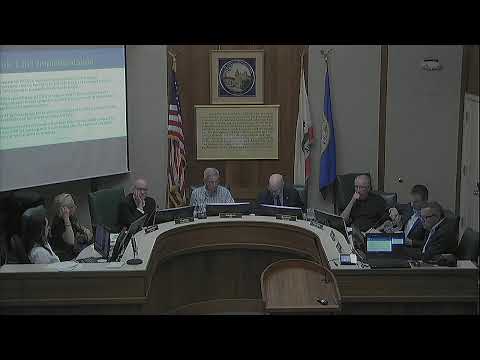
Council introduces ordinance adopting 2025 Fire Hazard Severity Zone map and schedules adoption
Summary
The council introduced an ordinance to adopt the California State Fire Marshal's 2025 fire hazard severity zone map for Carmel-by-the-Sea and directed staff to transmit the updated map to state agencies; council found the action statutorily exempt from CEQA.
The City Council on June 3 introduced an ordinance to update Carmel-by-the-Sea's local code to adopt the California State Fire Marshal's 2025 fire hazard severity zone map.
Planning staff said the update reflects the state-prepared map and does not change Wildland-Urban Interface (WUI) boundaries already used for applicable regulations. Community Planning and Building staff explained that adopting the state map causes certain Chapter 49 requirements to apply in designated hazard areas, including defensible-space maintenance near structures, fire-resistant planting for new landscaping in affected zones, home-hardening standards for new construction and a property-disclosure requirement when affected parcels are sold.
Staff recommended the council find the ordinance statutorily exempt from CEQA under Public Resources Code provisions and related CEQA guidelines, introduce the ordinance and waive additional reading, and set a July meeting for final adoption. Council voted to introduce the ordinance and waive further reading; staff will transmit the adopted map to the California Department of Forestry and Fire Protection (Cal Fire) and the state board as required.
Council and staff discussed practical concerns raised during public comment: how defensible-space requirements will be applied in environmentally sensitive habitat, what appeal process is available if property owners are directed to remove vegetation, and whether grant or other financial assistance might be available to households that cannot afford fuel-reduction work. Staff said the city will coordinate outreach, that defensible-space work is targeted to reduce fuel ladders immediately adjacent to structures rather than clear-cutting properties, and that staff will explore grant and partnership options (including local non-profit and fire-department resources) to assist property owners with costs.
The ordinance language references Government Code section 51178 and the city's Chapter 49 standards; staff will return with the formal adoption on July 1.