Get Full Government Meeting Transcripts, Videos, & Alerts Forever!
Get email alerts on the Health Housing topic
No spam. Unsubscribe anytime.
County to bring $2 million opioid-settlement request for recovery housing to upcoming agenda; commissioners press for clawback protections
Summary
Deputy County Administrator Lindy Smith requested $2,000,000 from opioid-settlement funds on June 3 to support recovery housing infrastructure; the board agreed to place the item on an upcoming agenda for formal approval and asked counsel to examine possible clawback terms.
Deputy County Administrator Lindy Smith presented a proposal on June 3 asking the Board of Commissioners to allocate $2,000,000 from the county’s opioid-settlement funds to support recovery housing infrastructure. The board agreed to place the item on an upcoming agenda for a formal vote and directed staff and counsel to draft an agreement.
Smith said a developer is at risk of losing other funding — including Low-Income Housing Tax Credit (LIHTC) and an Environmental Protection Agency grant for the project — without additional local funding to close a reported $4 million shortfall. Smith provided a written brief in the meeting packet and invited commissioners to ask questions before the item returns for formal approval.
Vice Chair Taylor spoke in favor of the allocation but said he was uncomfortable giving a large sum to a for-profit developer without safeguards. "I really wish that this company had a nonprofit arm that was building it," Taylor said. He asked whether the county could include contract language allowing some or all funds to be returned if the developer raises more money than needed. Smith said staff would draft an agreement and corporation counsel said the question would be addressed in negotiations.
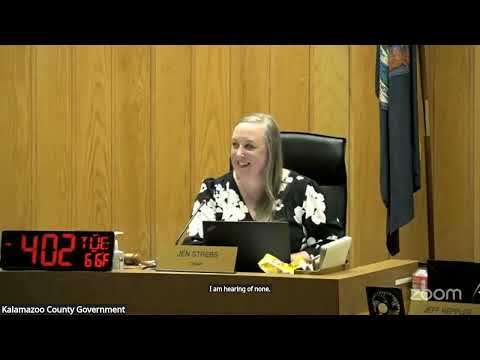
Chair Strips and other commissioners stressed the project’s role in the local opioid-recovery continuum and the multiple funding partners involved. Commissioner Strebs voiced strong support for moving the recommendation forward, saying the project prioritized deeply affordable units and recovery supports and that planned additional opioid-settlement receipts should keep the task-force budget on track.
Corporation Counsel acknowledged the request and said legal staff would examine whether the county can include recoupment or clawback provisions in the funding agreement.
Ending: County staff will bring a funding agreement and resolution to the board at an upcoming meeting for formal approval; commissioners requested that counsel explore contract provisions that would allow the county to recover funds if outside fundraising reduces the project’s need.