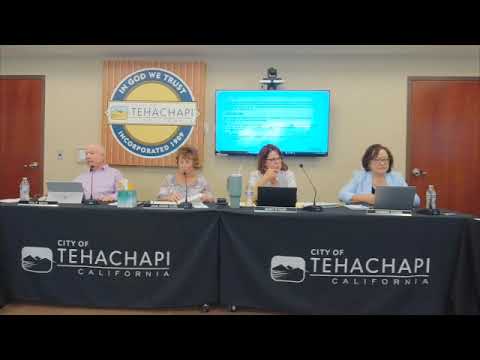
Tehachapi council approves three-year police MOU with pay increases, night differential and longevity pay
Loading...
Summary
The Tehachapi City Council voted 4-0 to adopt a three-year memorandum of understanding (MOU) with the Tactical Police Officers Association that increases base pay and adds a night-shift differential and a flat-rate longevity schedule for sworn officers.
The Tehachapi City Council voted 4-0 to adopt a three-year memorandum of understanding (MOU) with the Tactical Police Officers Association that increases base pay and adds a night-shift differential and a flat-rate longevity schedule for sworn officers.
The agreement covers fiscal years 2025 through 2028. Year one of the contract provides a 5% salary increase. For the next two years the contract provides an either/or adjustment: an additional 5% or an annual cost-of-living adjustment (whichever is higher). The MOU also adds $1 per hour for regularly scheduled night shifts (6 p.m. to 6 a.m.) and replaces percentage-based longevity payments with a flat payment schedule at 5, 10, 15 and 20 years of service, subject to performance and minimum-hours requirements.
City Manager Corey presented the negotiated package to the council, saying staff and the bargaining unit reached common ground after renewed negotiations. "This is a 3 year agreement, fiscal year 2025 through 2028," Corey said during the presentation, noting the pay structure is intended to make budgeting easier and to support recruitment and retention.
Police leadership described the personnel and operational rationale for the package. The police chief told the council the department had recently filled many vacancies, now has only one vacant patrol position and is running officers through the academy and field training. The chief said the department serves a day population substantially larger than the city’s resident population because nearby communities and visitors bring additional calls for service.
The contract sets conditions for longevity pay: officers must be in “good standing,” have a satisfactory or above performance evaluation, work at least 1,040 regular hours in the prior year (including hours designated by the chief) and will receive a one-time flat payment following their anniversary date. The agreement specifies there will be no retroactive longevity payments for past service.
Council members asked about budget impacts and staffing levels. A resident commenter, identified as Claudia, asked whether the increases would consume a large share of sales-tax revenue and whether police expenses had grown from earlier years; she described an apparent rise in police-related general fund spending compared with prior years. Finance Director Hamed Jones and city staff replied that the council forecasted these adjustments and concluded they are sustainable within the city’s projected revenues, including revenue from Measure S, the 2022 local sales-tax measure voters approved to support public safety and infrastructure.
Before the vote, a councilmember asked whether the MOU was primarily for retention. The police chief said it was intended for both recruitment and retention, noting the department competes with larger agencies for experienced officers. The chief said a more stable, experienced workforce reduces training and recruitment costs over time.
The council authorized the mayor and city manager to sign the MOU and to make minor technical changes if required by CalPERS review before final execution. The council recorded a 4-0 vote with one member absent.
Ending: The MOU is intended to take effect for the 2025–2028 term pending final administrative review by CalPERS. The council and staff framed the agreement as aligning with priorities voters set in 2022 and as a tool to stabilize staffing and limit ongoing recruitment costs.