Get Full Government Meeting Transcripts, Videos, & Alerts Forever!
Get email alerts on the Workforce And Benefits topic
No spam. Unsubscribe anytime.
Officials describe rising insurance costs, recruitment push and $19 million in retroactive pay already disbursed
Summary
OMB and personnel officials told the committee that government health-insurance costs rose about $19.9 million from FY24 to FY25, that a recruitment campaign is under way, and that $19 million in retroactive wages have been paid under the referenced statute; collective bargaining and overtime remain fiscal pressures.
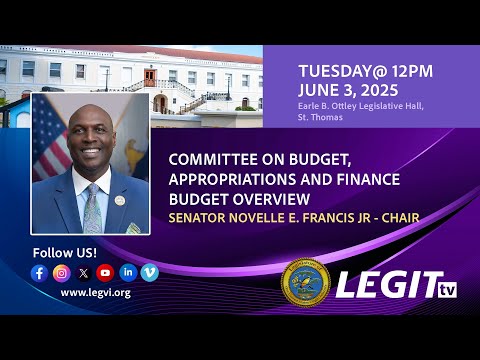
Officials at the June 3 budget hearing detailed workforce numbers, bargaining status, health‑insurance cost trends and the administration’s approach to retroactive wage payments.
Cindy Richardson, director of the Division of Personnel, said central government employed 5,887 people — 3,008 in the St. Thomas–St. John district and 2,879 in the St. Croix district — and that the total government workforce (including semi-autonomous agencies) is roughly 10,008. She highlighted ongoing turnover: the division processed 2,362 personnel actions year-to-date, including 418 hires and 2,225 separations.
Richardson said health insurance costs rose to about $226.1 million in FY25 from $206.2 million in FY24, an increase of roughly $19.9 million (about 9.7%). She said employees currently contribute approximately 27% toward premiums and that the health-insurance board is negotiating new contracts; the administration is anticipating a rate increase effective Oct. 1, 2025.
Josh Springett, chief negotiator for the Office of Collective Bargaining, said the office negotiated six contracts in FY25 and is in active negotiations with 15 bargaining units overall. Director Reimer and Springett referenced Act 89‑85 in the hearing; OMB said $19 million has been paid to date in retroactive wages under that law to current and retired employees.
Lawmakers pressed officials about overtime in public-safety agencies and the government’s plans to reduce it. McCurdy said finance and OMB are working with agencies such as the Virgin Islands Police Department, the Bureau of Corrections and fire/EMS to reduce overtime costs. McCurdy said the VIPD has implemented a plan that he expects will generate about $5 million in savings.
Personnel officials described a forthcoming recruitment campaign they plan to deploy locally, regionally and nationally; Richardson said the effort is intended to attract a broader pool of applicants for vacancies, including skilled trades and technical positions needed for recovery-related construction. The Division of Personnel also said it is coordinating with schools and colleges for outreach.
The committee asked for a breakdown of hires by job category and whether the FY26 budget includes money for salary increases or pension changes; OMB said the FY26 budget includes a small fixed amount for salary adjustments and that a proposed 3% employer GERS contribution increase was not included in the current FY26 projections because it could not be reliably quantified at the time the budget was prepared.