Get Full Government Meeting Transcripts, Videos, & Alerts Forever!
Get email alerts on the Environmental Policy topic
No spam. Unsubscribe anytime.
Guam Legislature advances bill to exempt branded paper bags from disposable-bag ban
Summary
The Legislature moved Bill 1 21–38 COR to third reading as amended to add a narrow exemption for branded paper bags to the Choose to Reuse Plastic Act of 2018. Supporters said the change helps luxury and boutique retailers; opponents said the floor amendments broadened the exemption beyond what was heard in committee.
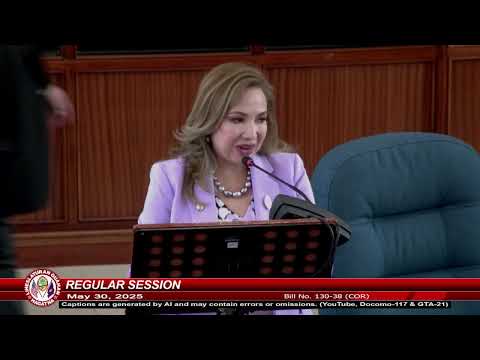
The Guam Legislature on the floor advanced Bill 1 21–38 COR, as amended, to third reading after senators approved an amendment that would exempt branded paper bags from portions of the Choose to Reuse Plastic Act of 2018.
The bill, introduced on the floor by Senator Perez and cosponsored in its opening remarks by Senators Duenas, Borja, Vice Speaker Atta, Senator Calvo, Senator Boonya Barnes, Senator Salas Matanani, Senator Saint Augustine, Senator Gumataltau and Speaker Blas, would amend Section 54B102 of Chapter 54B, Title 10, Guam Code Annotated to add further exemptions to the 2018 law. During floor debate the sponsor said the legislation "is about balance. It's about ensuring that Guam remains competitive as a premier shopping destination while continuing to protect our environment." (Senator Perez)
Nut graf: Supporters said the change responds to written testimony from luxury retailers and the Guam Environmental Protection Agency (GEPA) and is time sensitive because the existing ban was set to affect those bags soon. Opponents on the floor said amendments adopted during debate expanded the exemption beyond what was considered at the public hearing and would effectively roll back a key aspect of the island's plastic- and paper-bag restrictions.
Senators described the amendments in two steps. First, the floor adopted an amendment that inserted the word "paper" into the statutory definition of a "branded bag," so the exemption would explicitly cover "paper bag[s] used by a retailer that display the name, logo, trademark, or other marks of distinction." A subsequent amendment to that amendment added language to ensure the definition could cover marks of distinction of "the manufacturer or retailer of the product sold," a change proponents said was necessary to include duty-free and boutique retail outlets that sell third‑party luxury goods.
Proponents, including the bill's sponsor and the chair of tourism, said testimony from luxury retailers and GEPA supported the carve-out. GEPA's written testimony, as cited on the floor, said branded bags "do not contribute to environmental degradation or illegal dumping" and recommended clarifying the definition to prevent misuse. Several senators argued the exemption could help preserve retail operations that rely on branded bags as part of the customer experience and brand presentation to international visitors.
Opponents raised procedural and policy concerns. A senator who identified herself as the "general lady from John Lee" objected on the floor, saying the adopted amendments "backdoor[ly] repealed the law" and that broadening the exemption islandwide should have been the subject of a public hearing. Other senators said the amendment as adopted could allow every retailer to use branded paper bags, which they said would undercut the public-policy goal that encouraged reuse and reduced disposable bag litter.
The motion to place Bill 1 21–38 COR, as amended, on third reading passed after a voice/hand-raise vote on the floor; no roll-call tally was recorded in the transcript. The bill will return for third-reading consideration on the Legislature's voting file.
Ending: The debate on the floor reflected a split between lawmakers prioritizing immediate retail relief and those urging preservation of the plastic- and paper-bag restrictions established in 2018. The bill's sponsor said she will continue to press the measure forward; opponents said they will note the change in scope when the bill returns for final action.