Get Full Government Meeting Transcripts, Videos, & Alerts Forever!
Get email alerts on the Social Services topic
No spam. Unsubscribe anytime.
OCCK tells commissioners it served about 500 Dickinson County residents last year; awarded $900,000 grant for mobile assistive-technology vans
Summary
Representatives from OCCK briefed the Dickinson County Commission on services delivered in 2024–25, year-to-year demand increases, transportation statistics and a new federal grant to buy accessible vans and loanable assistive equipment.
Representatives from OCCK told the Dickinson County Board of Commissioners on Tuesday that the nonprofit served roughly 500 people in Dickinson County last year, provided 15,000 rides in county service areas and plans to use a new federal grant to buy accessible mobile service vans.
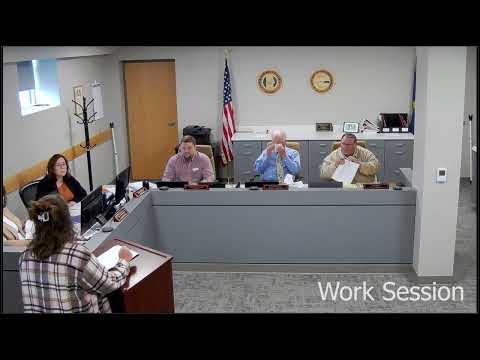
The presentation, delivered by OCCK staff during the county’s budget work session, outlined aging- and disability-focused services, infant–toddler therapy, personal-assistant hires and transportation partnerships with regional health providers.
OCCK said it “served 500 people here last year,” and that it provided technology services to 59 local residents, while infant–toddler services reached about 100 children, according to the presentation. The agency reported hiring 96 personal assistants countywide last year, 69 of whom were Dickinson County residents, and said it returned nearly $3,000,000 to the county economy through local purchases and payroll.
Sheila (OCCK representative) said the organization does not turn people away and that federal funding fluctuations are expected next year. “We don’t know what will happen; we’re excited to develop as much as we can and build reserves,” she said.
Trell Rinter, who runs OCCK’s transportation department, told commissioners OCCK provided about 15,000 rides in Dickinson County last year, roughly 10,000 of which were for employment. He said the agency gave about 7,002 round trips on routes connecting Salina, Solomon and Abilene for work-related travel, and described partnerships with Salina Regional Health Center and the Memorial Foundation to offer no-cost rides for medical appointments.
Jenny (OCCK community outreach staff) described localized outreach across the county’s towns, listing donated durable medical equipment and small assistive-technology placements: walkers, shower chairs, wheelchairs and toilet risers supplied via OCCK’s equipment-reuse program. She recounted individual cases in which the agency arranged urgent rides, installed assistive devices, and helped residents apply for Medicaid or Social Security — in some instances enabling people to remain in their homes or attend job programs.
Sheila said OCCK applied for and was awarded a federal grant of about $900,000 to buy two larger accessible vans (each van’s fitted cost described as roughly one-quarter of a million dollars) and several hundred thousand dollars of loanable assistive equipment. The vans will be stocked with equipment OCCK can deploy to rural communities that cannot travel to Abilene, the presentation said.
Commissioners asked about the sustainability of services and whether rising demand or federal cuts would force service changes. OCCK representatives said they had not requested an increase in county funding this budget cycle, and that they are working to build reserves and rely on grant funding and local hiring. Commissioners encouraged OCCK to provide brief biannual updates to the commission.
The commission did not take formal action on OCCK funding at the meeting; the presentation was informational and included a request to continue partnership and periodic reporting.
OCCK staff said they will continue local grantwriting and partnerships and invited commissioners to request shorter updates through the year.