Get Full Government Meeting Transcripts, Videos, & Alerts Forever!
Get email alerts on the Substance Use Recovery topic
No spam. Unsubscribe anytime.
Center for Hope asks county to consider opioid‑abatement funds to expand peer recovery coaches; reports $22,000 budget shortfall
Summary
Center for Hope representatives told Bannock County commissioners the recovery center has two outreach locations, works with courts and jails, operates free services including recovery coaches and QPR training, and seeks county opioid‑abatement funding to sustain peer recovery work while reporting a $22,000 deficit.
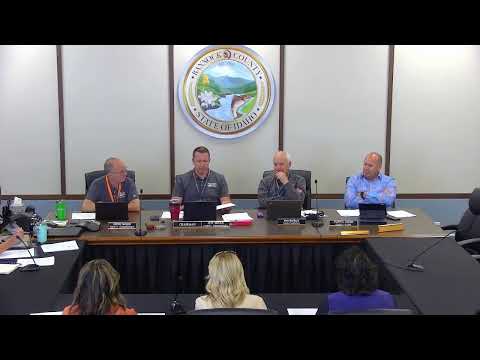
At a meeting of the Bannock County Board of Commissioners, Heather Moore, co‑owner and registered nurse with Center for Hope, and April Crandall, contracted chief financial officer and board member, described the recovery center’s operations, outreach and funding needs and asked commissioners to consider using county opioid abatement funds to support peer recovery services.
Moore said Center for Hope has operated since 2016 and maintains two outreach centers—Center for Hope South and Center for Hope North—with additional outreach in Soda Springs, American Falls, Blackfoot and Rexburg. "We have outreach in Soda Springs and also in American Falls and in Blackfoot as well," Moore said. She described ongoing collaboration with courts, drug court, and the county jail to connect people being released to recovery coaches who help with reentry and access to housing, food and treatment.
Terry Harrelson, a certified peer recovery coach at Center for Hope South, described peer support activities and services such as resume help, sober activities and community referrals. "We're able to model good recovery, and at the centers, we're able to create a safe place for people to come and do a resume, have meetings. We have meetings there. We have sober activities," Harrelson said.
April Crandall told commissioners the nonprofit is fiscally responsible but is operating with a $22,000 deficit in the current year and maintains reserves to cover funding shortfalls. "We strive to maintain operational reserves from year to year, in case grant funding becomes short in years," Crandall said.
Moore and Crandall asked commissioners to consider the county’s approved opioid abatement strategies (Exhibit A) and noted that Exhibit A under section b includes items 6, 7 and 12 that support expanding peer recovery centers and related services as allowable uses of abatement funds. "The exhibit a for the approved opioid abatement strategies… we at least cover the under section b, number 6, 7, and 12, as far as support of expanding peer recovery centers and that type of thing. That is allowable for those funding," Moore said.
Commissioners who spoke praised Center for Hope’s role in reducing recidivism and alleviating county burden on jails and courts. One commissioner said the center’s work creates alternatives to incarceration and helps the county by reducing repeated jail and hospital use.
Center for Hope representatives said all services are free to the community, they provide QPR (question, persuade, refer) training and that the center has used opioid‑related funding in neighboring counties (Bingham, Madison and Caribou) to support recovery coaches. They said they would use opioid abatement funds responsibly to expand recovery coaching and reentry services that connect people leaving custody to community resources.
The presentation requested that commissioners consider directing opioid‑abatement funding toward peer recovery work to address a local treatment and reentry gap; commissioners expressed support and appreciation for the center’s services.