Get Full Government Meeting Transcripts, Videos, & Alerts Forever!
Get email alerts on the Child Protection topic
No spam. Unsubscribe anytime.
Bright Tomorrows reports 259 forensic interviews last year, urges flexible county support as state grant restricts spending
Summary
At a Bannock County commissioners meeting, Cassidy Roski of Bright Tomorrows described a high caseload of forensic interviews, noted improvements in scheduling, and warned that a new one‑year state allocation carries spending limits that leave gaps for the center’s operating needs.
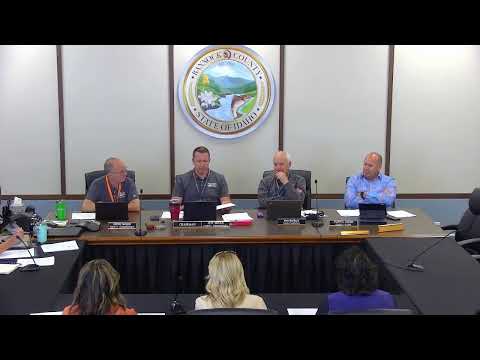
At a meeting of the Bannock County Board of Commissioners, Cassidy Roski, executive director of Bright Tomorrows, told commissioners the child advocacy center conducted about 259 forensic interviews last year and is seeing shorter wait times for new reports.
Roski said Bright Tomorrows provides trauma‑informed, child‑friendly forensic interviews so law enforcement and the Idaho Department of Health and Welfare can focus on investigations. "When a child makes a disclosure of abuse, rather than having law enforcement or health and welfare talk to the kids in the principal's office or the police department, they come to our center that is child friendly, we're trauma informed," Roski said.
The center also meets with parents to offer support and provides counseling services during and after investigations. Roski estimated the center completed about 259 forensic interviews last year and said counseling caseloads were “mid‑twenties.” She said the center had been busy early in the year, then saw a slowdown in mid‑April that worried staff, but that recent staffing availability has allowed the center to offer same‑ or next‑day appointments when law enforcement refers a new report.
Roski described staff changes: until two weeks earlier the center had three full‑time staff and a part‑time clinical director; she said two former interns were recently hired, increasing counseling and interview capacity. "Having these interns now hired full time, we can double our counseling numbers," she said.
On funding, Roski said the state's child advocacy network secured a one‑year state allocation of $3,000,000 for child advocacy centers beginning July 1. She warned the money is restricted to direct victim services and will not cover many operating expenses. "We were told those funds would be under unrestricted. And then as it came down to it, that's not accurate. So they're very specific to direct victim services, and there are lots of expenses they're not going to approve," Roski said. She asked commissioners to continue providing flexible, unrestricted support from county allocations and community partners such as United Way to cover items the state grant will not.
Roski also described a facility fee arrangement: law enforcement agencies pay a facility fee that contributes to costs such as USB drives and recording equipment used during interviews; she said the center’s check from law enforcement and the county is combined with the commissioner support.
Commissioners thanked Bright Tomorrows for its work. A commissioner noted the center fills a role the county cannot provide and said the center’s services ease burdens on jails, courts and hospitals.
Roski closed by reiterating the center’s capacity concerns and the challenge of spending a large, time‑limited grant on narrowly eligible expenses.
Bright Tomorrows presentation to the commissioners focused on caseload, staffing gains through hiring interns, and a funding challenge created by a sizable but restricted state allocation. The center requested continued flexible county support to cover operating costs the state grant will not pay.