Get Full Government Meeting Transcripts, Videos, & Alerts Forever!
Get email alerts on the Public Health Mosquito Control topic
No spam. Unsubscribe anytime.
Revere public health, Mosquito Control District outline summer spraying plan and safety measures
Summary
City public health staff and Northeast Massachusetts Mosquito Control described larviciding, surveillance and adulticide schedules for Revere, announced two barrier-treatment dates for school and park properties, and outlined resident request procedures and safety protocols.
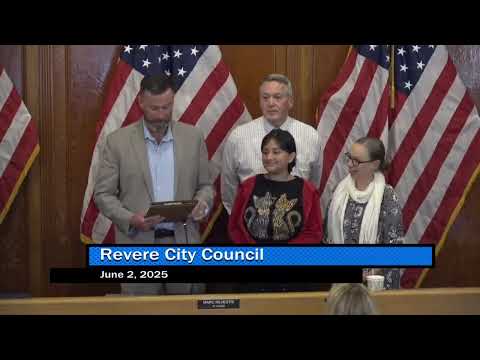
At the June 2 Revere City Council meeting, the City of Revere’s director of public health introduced representatives from the Northeast Massachusetts Mosquito Control and Wetlands Management District to present the district’s 2025 work plan and answer council questions.
Public Health Director Lauren Buck summarized the district’s role and said Revere’s marshland makes some mosquito activity unavoidable. Buck announced two municipal “barrier treatments” for school properties and parks: Monday, June 23 (rain date June 24) and Monday, Aug. 18 (rain date Aug. 19). She said the public health department coordinates weekly municipal spraying lists with the district.
District staff explained service categories: catch-basin larviciding in late May–June, arbovirus surveillance from May through September, property inspections on request, habitat mitigation, and adulticiding (truck-based ultra-low-volume, or ULV, applications). The district noted that municipal barrier treatments are separate from weekly adulticide runs and can have residual activity on vegetation.
During council Q&A, district staff and entomologists answered technical questions. The district stated that the products used are EPA-registered and approved by the Massachusetts pesticide board; both product types discussed are synthetic pyrethroids. One staff member explained the ULV adulticide is applied as 30-micron droplets calibrated to contact flying mosquitoes and said those applications have no residual effect. On pets and reentry, staff advised a short waiting period (about 15 minutes) after an adulticide pass; barrier treatments require overnight drying before regular access.
Officials described the resident-request process: residents must request property spraying weekly (requests must be placed by Wednesday at noon for truck runs on Thursday nights about 30 minutes after sunset). Municipal property requests are coordinated by the public health department and submitted to the district by Wednesday at noon for weekly scheduling; the first municipal list for the season began June 4. Staff said trucks have onboard weather stations and will not spray when winds exceed label limits; licensed applicators will not operate when conditions would carry spray outside target areas.
District staff cautioned that the label prohibits direct applications over waters of the U.S., streams, ponds and certain water supplies, and that exclusions or sensitive sites are managed through their GIS and onboard alarm systems. The district described barrier-treatment residuals that can last 30–90 days depending on product and reiterated that municipal coordination determines property inclusion.
Councilors asked about effects on community gardens, pools and pets; district staff said ULV adulticide is designed to loft and dissipate and that the barrier product affects organisms that land on treated vegetation but does not wash off easily once dry. Officials emphasized compliance with label restrictions (temperature, wind speed, precipitation) and said they calibrate sprayers each year.
Councilors were given the mosquito control district’s website and phone number for resident requests (www.nemassmosquito.org).