Get Full Government Meeting Transcripts, Videos, & Alerts Forever!
Get email alerts on the Rail Capacity And Operations topic
No spam. Unsubscribe anytime.
State officials outline plan to add seats and surge service on Losan rail corridor ahead of 2028 Games
Summary
California transportation officials told a legislative subcommittee they plan to add about 40% more seats on state-supported intercity trains by 2028 through new 0‑emission trainsets, leased legacy equipment and fleet overhauls, while urging clearer funding for supplemental service during major events.
California State Transportation Agency (CalSTA) officials and Los Angeles event coordinators told a California State Senate subcommittee on the Losan (Los Angeles–San Diego–San Luis Obispo) rail corridor that the state is planning a substantial increase in passenger rail capacity ahead of major international events in 2026–2028.
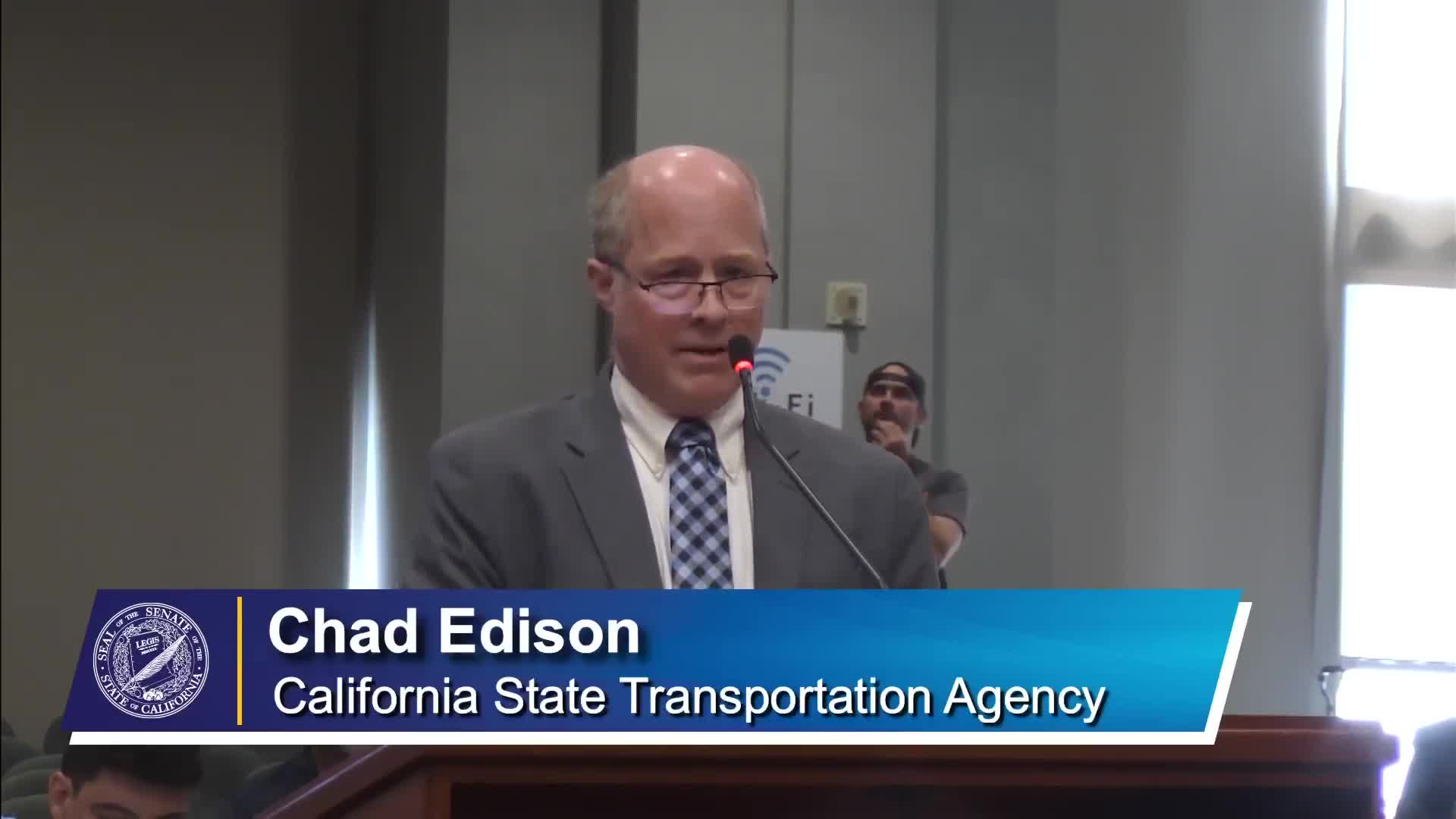
Chad Edison, chief deputy secretary of rail and transit at CalSTA, told the subcommittee that the state is targeting “about 40% to the total seats available across our inner city rail fleet statewide between now and 2028.” He said the plan combines newly ordered zero‑emission trainsets, short‑term leases of legacy equipment, and comprehensive overhauls of the state‑owned bilevel rail cars.
Why it matters: The subcommittee met at Los Angeles Union Station with local and state partners to press agencies on how to make the corridor reliable and scalable for three consecutive, high‑demand events — the 2026 FIFA World Cup, a 2027 Super Bowl and the 2028 Olympic and Paralympic Games — and for everyday regional travel. Lawmakers and agency staff said added capacity will be essential to move both visitors and residents without increasing highway congestion or emissions.
Most important facts
- Fleet and seat expansion: Edison said the state has 10 hydrogen fuel‑cell trainsets on order and options for 19 more; “Each of those train sets has over 200 seats on it,” he said. Deliveries of the state’s hydrogen trainsets are expected to begin at the end of 2027. He also described plans to lease legacy Caltrain equipment and to redeploy existing state fleet resources to Southern California for near‑term capacity gains.
- Service frequency and operational limits: Edison noted contractual and operational slot limits on freight‑owned track: the corridor is currently running up to 13 trains on the Los Angeles–San Diego segment but can run as many as 16; on the Los Angeles–Santa Barbara section there are up to seven slots and current service uses five. The state is negotiating with freight operators and regional partners to raise frequencies where possible.
- Maintenance and reliability work: Edison said the state will begin a comprehensive revitalization of 88 state‑owned bilevel passenger cars and overhaul locomotives to improve availability and reliability ahead of the Games.
- Event coordination and legacy planning: Paul Krekorian, executive director of the City of Los Angeles Office of Major Events, told the panel the Games present both an operational challenge and an opportunity to create long‑term travel habits. He said the 2028 Games will substantially expand travel demand and called for coordinated planning across agencies.
What officials asked for
Speakers emphasized the need for funding focused on service — not just infrastructure — including a substantially enlarged supplemental bus fleet and operational subsidies to run surge services during major events. Krekorian said some needs can be met now but that “the thing that keeps me most awake at night is the concern about whether or not we will have sufficient federal support and state support for the supplemental transportation needs.”
Quotes from the hearing
- Chad Edison, California State Transportation Agency: “We are looking at leasing legacy equipment from Caltrain and redeploying some of that fleet.” - Chad Edison on new trainsets: “Each of those train sets has over 200 seats on it and they can be operated in double train set or single train set configuration.” - Paul Krekorian, Office of Major Events: “This will be the largest Olympic games in the history of the Olympics movement.”
Context and next steps
Panelists said some equipment and frequency gains can be achieved prior to 2028, but many improvements require additional funding and coordination among the state, freight rail owners and regional operators. Edison and partners said more detailed cost estimates for supplemental service (for buses and surge trains) are in development and that the subcommittee and Legislature will be briefed when those numbers are complete.
Ending
Officials framed the seat and fleet expansion as a time‑limited opportunity tied to the upcoming mega‑events and as part of a longer‑term push to improve reliability and emissions performance across the corridor. Senators and agency staff said they expect further budget and operational proposals soon.