Get Full Government Meeting Transcripts, Videos, & Alerts Forever!
Get email alerts on the Gateway Land Swap topic
No spam. Unsubscribe anytime.
Jacksonville committee stalls Gateway land-swap debate; options for purchase or swap move to full council
Summary
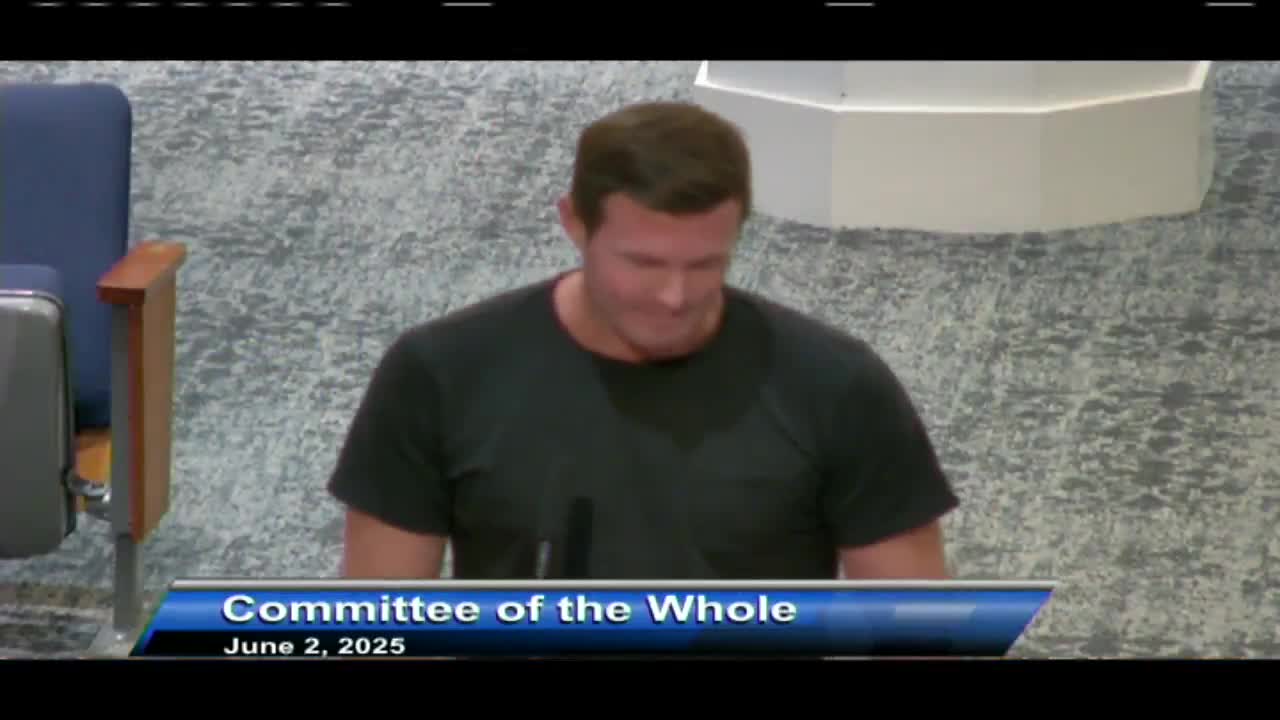
Jacksonville’s Committee of the Whole paused debate June 2 on a proposed land swap between the city and Gateway Jacksonville that would convey Riverfront Plaza Pad B and an East Landing option to the developer while transferring the city-owned 801 West Bay parcel to the University of Florida.
Jacksonville’s Committee of the Whole paused debate June 2 on a proposed land swap between the city and Gateway Jacksonville that would convey Riverfront Plaza Pad B and an East Landing option to the developer while transferring the city-owned 801 West Bay parcel to the University of Florida. The meeting lost its quorum before members could take formal action; committee staff and the city auditor outlined three ways the matter can proceed to full council for a decision.
The committee’s discussion focused on two competing approaches: a land-swap and redevelopment deal advanced by the Downtown Investment Authority (DIA) and Gateway Jacksonville, and a council-member proposal to purchase 801 West Bay outright for conveyance to UF. Proponents said the swap accelerates downtown activation and keeps future incentives in TIF (tax increment financing) rather than the general fund; critics said the swap had moved forward without the underwriting and pro forma financials needed to evaluate a multimillion-dollar incentive package.
Why it matters: The swap would tie delivery of a hotel, residential development and associated fees intended to maintain Riverfront Plaza to a disposition and redevelopment agreement (RDA) with Gateway. If approved later, the RDA would allow the city to repurchase conveyed parcels under specified conditions, and the developer could seek up to $20 million in incentives funded from TIF. Opponents and two DIA board members who voted against the disposition said they lacked sufficient budget and underwriting details to support the exchange.
Public comment and DIA perspectives were sharply split. Matthew Clark, head of Colliers’ urban division, urged council to "make a bold choice to move forward with the swap and help elevate Jacksonville's position on the national stage as the bold new city of the South." Jim Schwarz, a resident and local commentator, said, "I am opposed to the land swap…I support Councilman Salem's plan to purchase the property outright," adding he preferred purchase or lease over a swap he described as having "all the trappings of [a] backroom deal."
DIA officials and advisors outlined the tradeoffs. Laurie Boyer, CEO of the Downtown Investment Authority, said the DIA’s approval was shaped by several perceived benefits: returning a vacant asset to the tax rolls, capping future incentive requests, a buyout option to reacquire Pad B, and a mechanism requiring certain surcharges and association fees to cover park maintenance. Boyer told the committee the DIA “has no objection to the auditor amendments” the council auditor recommended to clarify audit rights, bonding and callback provisions for completion grants.
Several DIA board members and appointees said they voted no at the board meeting because they were not shown pro forma budgets or underwriting when the disposition was considered. Cameron Hooper, a DIA board member, said, "I didn't have enough information to give a vote. I only saw renderings," and said he wanted to see the budget and the capital stack before approving a disposition tied to potential incentives. Scott Wallers, another DIA appointee, cited process concerns and the absence of alternative dispositions presented to the board.
Council auditors summarized technical amendments they recommended for any RDA or implementing language: clarifying audit rights for operator agreements, setting a minimum $50-per-month-per-unit contribution for park maintenance (rather than an "endeavor" to charge that amount), requiring performance bonds or similar protections to secure incentives, and a five-year clawback on completion grants. The auditors also noted property‑specific constraints on the East Landing parcel, including a 2,614-square-foot lot at the southeast corner and multiple easements that could limit development.
Key numbers discussed in the meeting (as stated during the record): multiple appraisals have circulated; the council auditor and staff referenced an average appraisal/purchase figure discussed previously of $6,950,000 for 801 West Bay; Council Member Layden said Gateway indicated a willingness to lower a city repurchase price from $6,750,000 to $6,250,000 as part of his proposed amendment; DIA materials cited a buyout option figure for Pad B of roughly $6,000,002.50 and noted that TIF had recommended $12,000,000 in next year’s budget to cover incentives, with the RDA containing an explicit maximum incentive amount up to $20,000,000. The proposed RDA also sets development milestones (15 months for approvals; a 30‑month requirement to commence certain horizontal improvements) that can trigger the city's repurchase rights.
The committee lost its quorum middiscussion and did not report the matter out. City staff outlined three procedural routes to move the bills forward: 1) schedule another Committee of the Whole meeting to finish committee work (potentially delaying council action to June 24); 2) discharge the bills to full council so council can complete the committee work on the June 10 council meeting via floor amendments (floor amendments must be in writing and would require staff preparation—if new amendments appear during debate the item may need to be tabled to allow drafting); or 3) discharge and then waive council rules (13 votes required) to assign the bills to standing committees for the normal committee week of June 16 and then to full council on June 24.
Several council members said they were weighing timing against risk. Supporters argued the swap is a "turnkey" package that can deliver development faster and preserve general-fund dollars; critics said the city should not proceed without seeing Gateway’s full underwriting and pro forma financials and argued an outright purchase would keep the city’s options open for UF and other public priorities.
What’s next: Because no action was taken, the legislation remains pending. Staff told the committee that if the president discharges the land-swap bill, council members could offer written floor amendments on June 10; alternatively, the matter can be set for further committee work the week of June 16 and brought to council for final action on June 24. Council members also raised the priority of separately advancing University of Florida’s proposed graduate campus at LaVilla and said they did not intend the Gateway debate to block conveyance of 801 West Bay to UF if that can be negotiated.
Votes at a glance: No formal votes were taken during this meeting on the Gateway land-swap or related bills due to loss of quorum. (DIA previously approved the disposition by board vote; that DIA vote was not a council action.)
Ending note: Committee members and staff said they will continue to refine amendment language and expect the council auditor and city transactional staff to draft any floor amendments in advance if the president elects to discharge the bills to council for June 10 consideration.