Get Full Government Meeting Transcripts, Videos, & Alerts Forever!
Get email alerts on the Sensitive Crimes topic
No spam. Unsubscribe anytime.
Dane County commission flags gaps in shelters, mental-health and financial services as victimization rises
Summary
The Dane County Commission on Sensitive Crimes told a joint meeting of county committees that cuts to victim-service funding and limited shelter capacity are worsening risks for older adults, people with disabilities, children and victims of domestic and sexual violence.
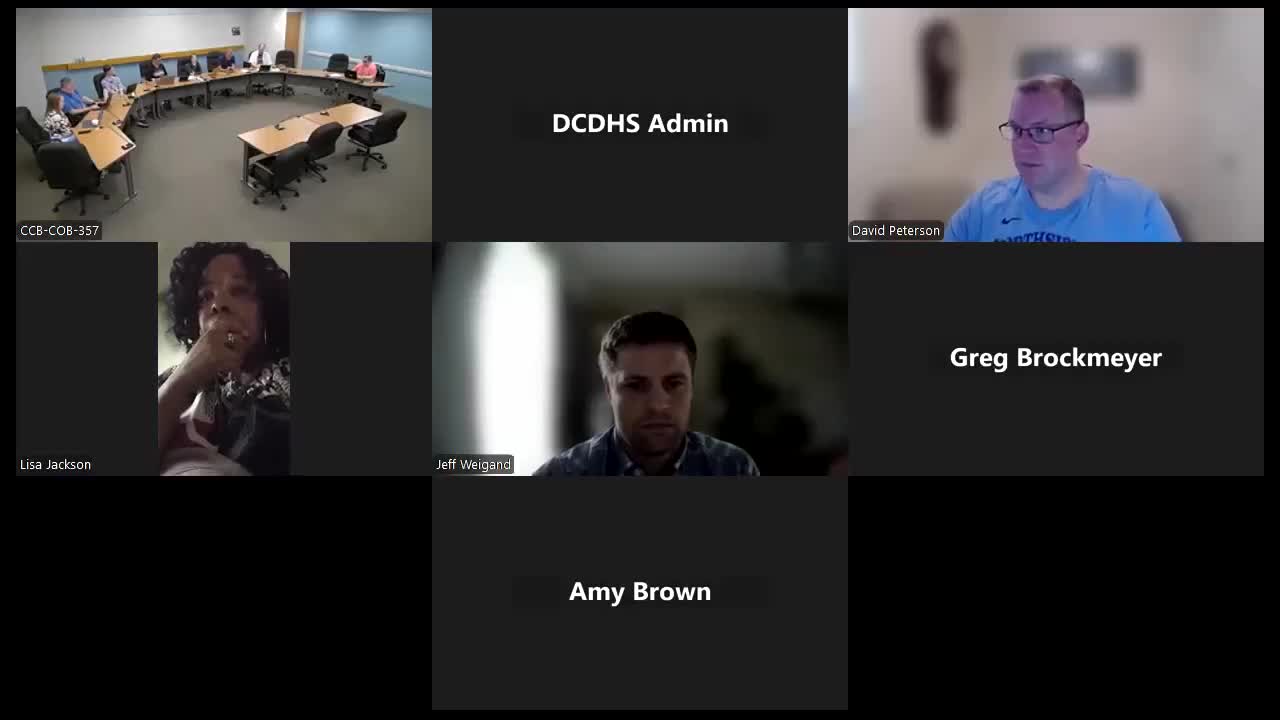
The Dane County Commission on Sensitive Crimes told a joint meeting of the county’s Policy, Public Safety & Justice and Health and Human Needs committees on May 22 that rising victimization and reduced funding have left serious gaps in services for victims across age and need groups.
Dana (chair, Dane County Commission on Sensitive Crimes) summarized the commission’s priorities and four coordinated community response (CCR) teams, saying the commission focuses on abuse involving older adults, people with intellectual and developmental disabilities (IDD), child abuse and neglect, and domestic violence and sexual assault. “We have people who are dying in our streets, and that is unacceptable,” Dana said.
The commission, an advisory body created by Dane County ordinance, recommended expanding crisis and in-home mental-health outreach, increasing access to forensic accounting and certified fiduciaries for elder financial abuse cases, and creating medical and shelter resources tailored to frail older adults. It also flagged shortages in trauma-informed, accessible counseling and the need for better transitional planning for people with IDD moving from child to adult services.
Why it matters: The commission said federal and state funding reductions—most notably a sharp drop in Victims of Crime Act (VOCA) pass-throughs to Wisconsin—have forced local victim-service providers to cut staff and programs. That reduction, combined with long waits for mental-health care and insufficient shelter capacity, leaves victims with fewer safe options and longer exposure to danger.
Key findings and recommendations
- Funding cliff: The commission described a statewide drop in VOCA funding that reduced Wisconsin’s annual award from about $44 million to roughly $13 million starting Oct. 1, forcing layoffs and service reductions among local providers. The commission said one local agency laid off half its staff and that Refugee/rape crisis and counseling programs saw six-figure cuts.
- Shelter capacity and hotel reliance: The commission reported that domestic-violence shelters are underfunded and operating short of beds. “We have only 30 that are open,” Dana said when asked how many DV shelter beds were currently available; she added that waiting lists change daily but involve “dozens.” Because shelters cannot always accept all who need help, agencies frequently use hotel vouchers.
- Elder abuse: The CCR for elder abuse recommended restoring or expanding mobile mental-health outreach teams, embedding geriatric-informed prescribers in home-based care, access to forensic accounting for complex financial-exploitation investigations, and more affordable certified fiduciaries to help exploited older adults manage money. The commission also said nursing case management embedded in Adult Protective Services (APS) would improve in-home assessments.
- People with IDD: The IDD CCR reported that people with intellectual and developmental disabilities are far more likely to be victimized and that residential staff, first responders and law enforcement need better training on behavioral health responses and forensic interviewing. The CCR called for affordable, IDD-informed counseling and consistent transition planning from children’s to adult long-term care.
- Child abuse and neglect: The child CCR said insufficient mental-health provider capacity and proposed Medicaid cuts could deepen a crisis. The group noted that housing instability is a child-safety issue, that relative caregivers often lack emergency funds for immediate needs, and that trafficking risks rise for older youth without safe housing or supports.
- Domestic violence and sexual assault (DV/SA): The DV/SA CCR highlighted long shelter waits, gaps in services for non-English speakers and men, shrinkage in treatment programs for people who perpetrate abuse, and the need to use diversion and deferred-prosecution options more consistently for youth with mental-health-related involvement in the justice system. The CCR described ongoing collaborations—Spanish-language men’s groups and hospital accompaniment MOUs—as promising local responses.
Operational details and context
- Commission structure: The sensitive-crimes commission has 16 members appointed by the county executive, meets monthly (noted as every third Thursday at 9:30 a.m.), and reports to the two county committees represented at the joint meeting.
- Definitions used in the presentation: Elder abuse was defined by the CCR as mistreatment resulting in harm to anyone aged 60 or older; IDD abuse covered persons 18 and older. The presentation cited lifetime victimization statistics for people with intellectual disabilities drawn from the CCR materials.
- Local variations in referrals: The commission noted inconsistent referral patterns among municipal police departments; for example, Madison Police Department referrals differ from those of other jurisdictions such as Fitchburg and Sun Prairie, affecting which youth are diverted from the criminal legal system.
Committee reaction and next steps
Supervisors and committee chairs acknowledged the scale of unmet needs and said the commission’s recommendations would inform future budgeting and interagency coordination. The chairs and some supervisors proposed a follow-up joint meeting focused on the county’s crisis system—CARES expansion, co-responder models and other crisis-response work—ideally before the next budget cycle.
The commission’s packet and CCR subcommittee minutes will be posted with the meeting materials. The presentation was provided as an informational item; no committee votes or formal actions were taken.
Ending
Committee chairs thanked the commission members and asked staff to relay appreciation to the CCRs. Supervisors said budget constraints would limit how much of the commission’s list can be funded in the short term, but they signaled intent to continue interagency collaboration and to explore targeted follow-up on crisis-system planning.