Milwaukee County administrative services director outlines capital needs, climate plan and workforce strategies
Loading...
Summary
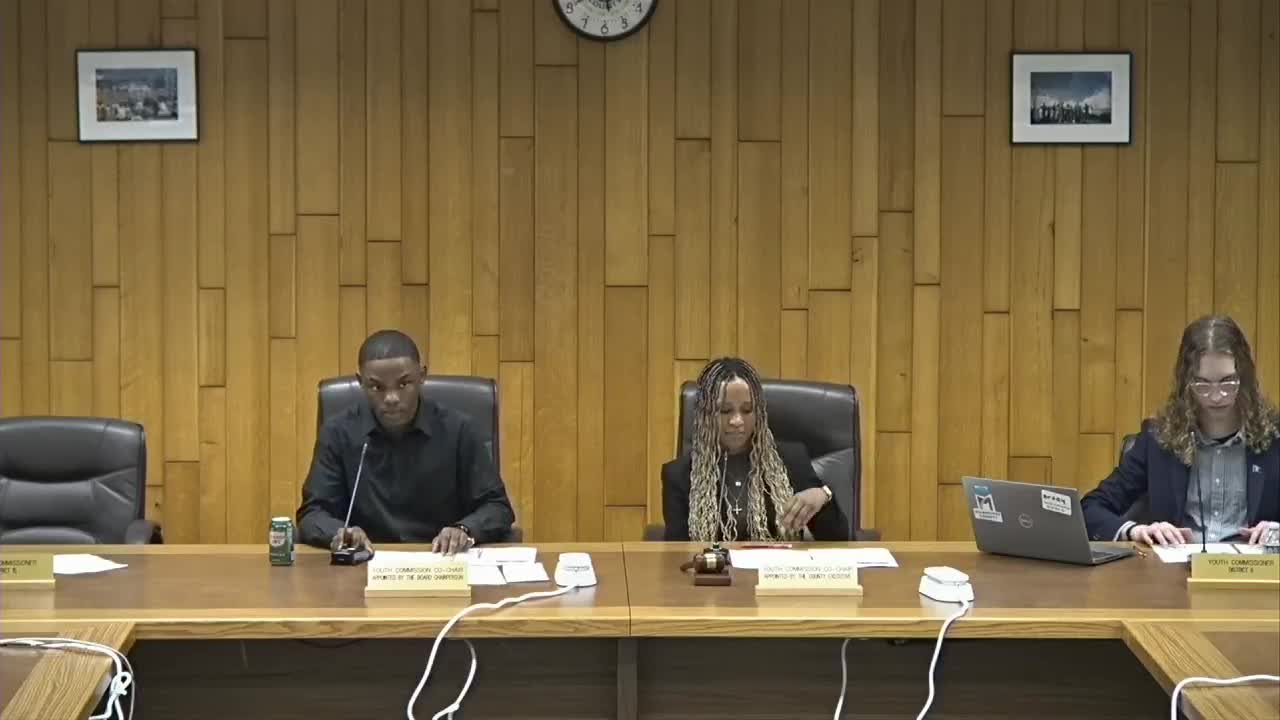
Aaron Hertzberg, Milwaukee County's director of the Department of Administrative Services, described the department's role in operating and supporting county government and outlined major capital needs, workforce and climate initiatives during a presentation to the Milwaukee County Youth Commission on May 21.
Aaron Hertzberg, Milwaukee County's director of the Department of Administrative Services, described the department's role in operating and supporting county government and outlined major capital needs, workforce and climate initiatives during a presentation to the Milwaukee County Youth Commission on May 21.
Hertzberg said DAS provides facilities management, information management (IT), real estate and economic development, risk management and procurement for the county and that those services allow direct-service departments to focus on programs such as parks, health and human services, emergency management and public safety. He cited a county operating budget of about $1.4 billion and said the county invests hundreds of millions more in multi-year capital projects.
Why it matters: Hertzberg framed DAS as an internal service provider whose decisions on buildings, IT and contracting affect service delivery countywide. He and commissioners discussed near-term capital choices and how county policy goals, such as the board's climate action plan, shape procurement and construction decisions.
Hertzberg gave several key figures and program examples: DAS employs about 309 people; Milwaukee County has roughly 5,000 total employees; DAS handles roughly $77 million to $92 million of the county's administrative expenditures depending on how categories are counted; the county used American Rescue Plan (ARPA) funds to make one-time capital investments (Hertzberg cited about $183 million received countywide and said roughly $116 million was invested in capital projects); and the county purchased 11 battery-electric buses as part of transit electrification pilots.
On facilities, Hertzberg described aging county buildings and the largest pending project, a replacement for the Public Safety Building. He estimated the courthouse/public-safety replacement project at roughly $400 million to $500 million and said funding and project design remain under study. He described a jointly planned forensic science and protective medicine facility in Wauwatosa that the county is building in partnership with the state, with the state expected to occupy approximately half of the new building.
Hertzberg said DAS is working to operationalize the county board's climate action resolution, adopted after a 2021 board resolution that set a goal of carbon neutrality by 2050. He said the county has adopted sustainability design standards that will be applied to major renovations and new construction and that staff and supervisors debated trade-offs between higher upfront costs and long-term energy savings. He also described apprenticeships and a lighting retrofit program that hired high-school apprentices for LED upgrades at community facilities.
Commissioners asked about relations with state and federal partners. Hertzberg described project-based negotiations, giving the forensic center and a proposed mental-health emergency center as examples of multi-party partnerships that combined county, state and nonprofit resources. He said federal or state policy changes can affect departments that DAS supports and that DAS plans for contingencies where possible.
Hertzberg described DAS priorities for 2026 budget planning, continued implementation of the climate action plan, courthouse security upgrades, new health and human services and forensic facilities (noting ARPA funding was used for aspects of those projects), and a pilot small-business grant program under board consideration.
Hertzberg concluded by emphasizing measurement and accountability: the department tracks KPIs such as employee composition, procurement timelines and emissions and said the board often requests periodic reports on progress.
Ending: Hertzberg invited further questions and said DAS staff are available to meet with commissioners and community groups to explain processes and explore partnership opportunities.